Understanding Ancestors vs Descendants: Complete Guide to Family Lineage
What Defines an Ancestor?
An ancestor is a person from whom you are descended – someone who lived before you in your direct family line. While technically your parents are your ancestors, we typically use this term to refer to relatives more distant than grandparents, such as great-grandparents and beyond. Your ancestors form the roots of your family tree, representing your heritage and genetic background.
The concept of ancestry extends beyond just biological relationships. In many cultures, ancestors hold special significance and are honored through various traditions and ceremonies. Many people feel a deep connection to their ancestors and seek to learn more about them through genealogical research, DNA testing, and family history exploration.
When investigating your family history, you're essentially tracing your ancestral lines backward through time. This fascinating journey can reveal not just names and dates but stories of resilience, migration, and cultural heritage that directly influenced who you are today. Have you ever found yourself exhibiting traits or interests similar to a great-grandparent you never met? This genetic and cultural inheritance is part of what makes ancestral connections so meaningful.
In legal contexts, the term ancestor can sometimes have a different meaning. It may refer to the person from whom an estate has been lawfully obtained, which doesn't necessarily imply a blood relationship. This distinction is important in inheritance law and estate planning, where the rights of legal ancestors and descendants are carefully defined.
Understanding Descendants and Their Significance
A descendant is someone who comes after you in your family lineage – your children, grandchildren, great-grandchildren, and so on. While you are a descendant of your ancestors, those who come after you are your descendants. The relationship works in both directions along the timeline of your family history.
Descendants inherit not just genetic material but often cultural traditions, family stories, and sometimes material possessions as well. Many people feel a responsibility toward their descendants, working to preserve family heritage and create a positive legacy that will benefit future generations. This forward-thinking perspective can be a powerful motivator in life decisions.
In genealogical terms, tracing descendants is known as forward genealogy or descendancy research. This approach can be particularly useful for finding living relatives who might share an interest in family history or for connecting with distant cousins who might possess family artifacts, photographs, or stories. I've personally found that connecting with previously unknown cousins through descendancy research has yielded family photographs I would never have otherwise discovered.
Legal systems often differentiate between types of descendants. Lineal descendants are blood relatives in the direct line of descent – children, grandchildren, etc. Collateral descendants, on the other hand, are relatives who descend from a sibling of an ancestor, such as nieces, nephews, and cousins. These distinctions can be important in matters of inheritance, medical history, and legal rights.
The Reciprocal Relationship: Connecting Past and Future
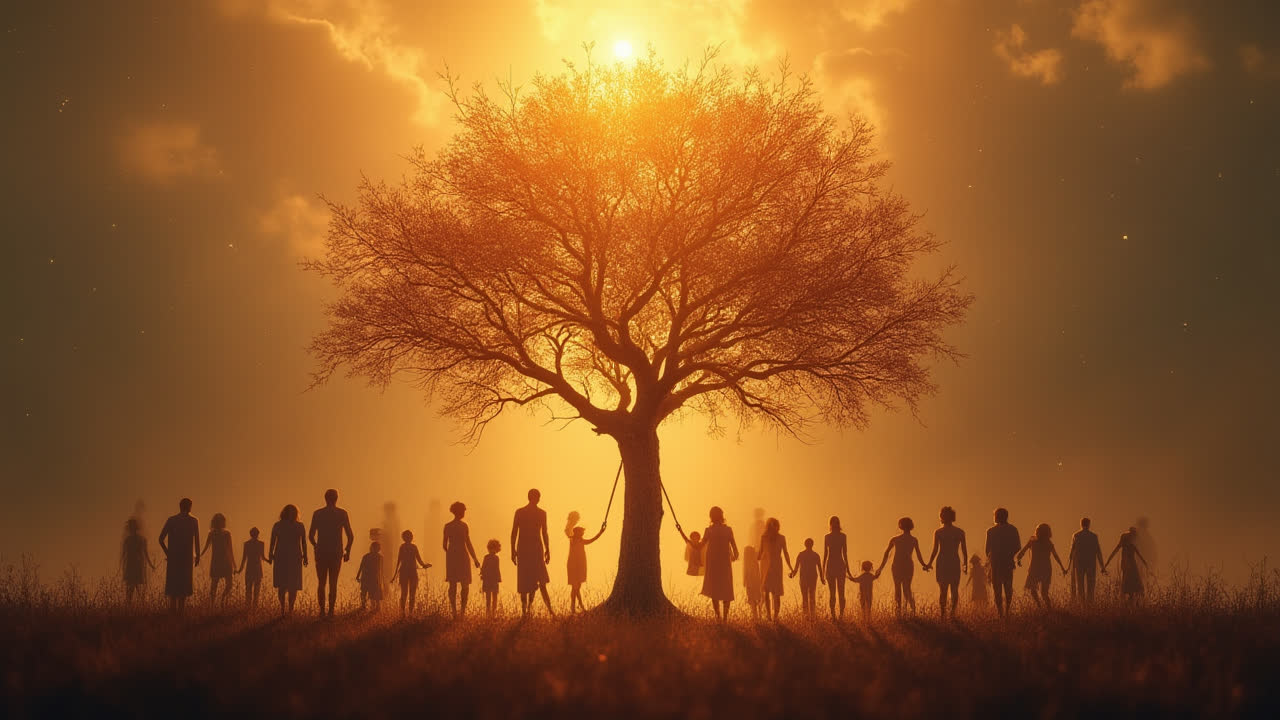
The beauty of the ancestor-descendant relationship lies in its reciprocal nature. You stand at a unique point in your family continuum, simultaneously being both a descendant of those who came before and an ancestor to those who will come after. This perspective places each of us as a crucial link in an unbroken chain stretching back into the distant past and forward into the future.
Understanding this dual role can profoundly impact how we view our place in history. We inherit the genetic, cultural, and sometimes material legacy of our ancestors, and we simultaneously shape what we will pass on to our descendants. Isn't it fascinating to consider that the choices we make today might influence family members generations from now, just as our ancestors' decisions shaped our current circumstances?
This reciprocal relationship is often visualized through family trees, which map both ancestral and descendant relationships in a format that helps clarify these connections. A standard family tree typically shows ancestors branching upward and descendants branching downward, making it easier to understand the directional nature of these relationships.
The ancestor-descendant relationship also contains a temporal dimension that's worth considering. While we can research and discover information about our ancestors, our descendants remain unknown to us – they exist in a future we will likely never see. This asymmetry creates an interesting dynamic where we know from whom we came but can only imagine who will come after us.
Ancestor vs. Descendant: Comparison Table
| Comparison Point | Ancestor | Descendant |
|---|---|---|
| Temporal Direction | Lived before you in the past | Lives after you in the future |
| Relationship Example | Great-grandparents, great-great-grandparents | Children, grandchildren, great-grandchildren |
| Genealogical Research Direction | Backward in time (ancestral research) | Forward in time (descendancy research) |
| Family Tree Position | Above you (branches upward) | Below you (branches downward) |
| Legal Significance | Source of inherited estate/property | Recipient of inheritance/estate |
| Cultural Connection | Source of traditions, heritage, and identity | Recipients of passed-down traditions and culture |
| Genetic Relationship | Source of genetic material | Recipient of genetic material |
| Time Perspective | Historical figures you can research | Future individuals you may never know |
Practical Applications of Understanding Ancestral and Descendant Relationships
The concepts of ancestors and descendants have practical applications beyond just semantic clarity. Understanding these relationships is fundamental to several important fields and personal endeavors:
- Family History Research: Genealogists use these concepts as the foundation of their work, tracing both backward (ancestors) and sometimes forward (descendants) to map family connections.
- Genetic Health Planning: Knowledge of ancestral health patterns can help identify potential genetic predispositions, while awareness of descendant relationships informs genetic counseling decisions.
- Inheritance and Estate Planning: Legal systems rely on clearly defined ancestor-descendant relationships to determine inheritance rights and succession planning.
- Cultural Preservation: Many traditions, languages, and cultural practices are preserved through the conscious effort to maintain connections between ancestors and descendants.
These applications highlight why clarity about these terms matters beyond mere semantic precision. When researching your family history, confusing ancestors with descendants could lead you down completely wrong research paths. Similarly, in legal contexts, misunderstanding these relationships could potentially affect inheritance rights or property transfers.
I've found that creating a visual representation of your family tree can significantly help in understanding these relationships. Whether you use specialized genealogy software, online family tree tools, or even just sketch a simple diagram on paper, seeing the directional flow of generations can clarify these concepts in a way that words alone sometimes cannot.
Cultural Perspectives on Ancestors and Descendants
Different cultures view the relationships between ancestors and descendants in fascinatingly diverse ways. In many East Asian traditions, ancestor veneration plays a central role in religious and family practices. Ancestors are believed to have a continuing influence on the lives of their descendants, and regular rituals honor their memory and seek their blessing.
Indigenous cultures around the world often emphasize the responsibility that current generations have toward both ancestors and descendants. Many Native American traditions, for example, speak of considering the impact of decisions on seven generations forward—demonstrating a profound awareness of the descendant relationship and the obligations it creates.
Western societies have typically focused more on individual achievement than ancestral connections, but even here, there's a growing interest in genealogy and heritage. The popularity of DNA testing and family history websites suggests a universal human desire to understand our place in the continuum of generations—to know from whom we've descended and, perhaps, to imagine who might descend from us.
These cultural perspectives reflect different ways of valuing and understanding the connections between generations. They remind us that the ancestor-descendant relationship isn't just a biological fact but a profound human experience that shapes how we understand ourselves and our place in the world. Sometimes I wonder how future generations will view their connection to us—will they feel the same curiosity about their ancestors that many of us feel today?
Frequently Asked Questions About Ancestors and Descendants
Can siblings be both ancestors and descendants to each other?
No, siblings cannot be ancestors or descendants to each other. They share common ancestors (their parents, grandparents, etc.), but they exist in the same generation of the family tree. The ancestor-descendant relationship requires a generational difference—one must come before the other in the family lineage. Siblings are instead considered "collateral relatives" because they share ancestral lines but are not in a direct line of descent from one another.
How far back can most people trace their ancestors?
The ability to trace ancestors varies widely depending on cultural, historical, and socioeconomic factors. In many Western countries with good record-keeping, most people can reliably trace their ancestry back 4-6 generations (to the early-mid 1800s) through vital records and census data. Some families with well-documented histories might go back 10-15 generations or more. Royal families and certain cultures with strong genealogical traditions (like Chinese clan records or Icelandic sagas) may have documented lineages extending back 30+ generations. However, for many people whose ancestors were enslaved, displaced by war, or belonged to cultures without written record-keeping, the ancestral trail may go cold after just 2-3 generations.
Why is it important to distinguish between lineal and collateral descendants?
The distinction between lineal descendants (direct offspring like children and grandchildren) and collateral descendants (nieces, nephews, cousins) is crucial in several contexts. In inheritance law, lineal descendants often have priority in succession when there is no will. In medical genetics, certain conditions follow either direct lineage or may appear in collateral lines. For genealogical research, understanding these different relationship paths helps clarify family connections and avoid research errors. Finally, in some cultural traditions, obligations to lineal descendants may differ from those to collateral relatives, affecting everything from caregiving responsibilities to ceremonial roles in family events.
Conclusion: Bridging Past and Future
Understanding the difference between ancestors and descendants gives us a clearer picture of our place in the continuum of family history. The distinction is straightforward yet profound: ancestors are those who came before us in our family line, while descendants are those who come after us. This temporal direction is the key difference that defines these reciprocal relationships.
By recognizing our dual role as both descendants of the past and potential ancestors to the future, we gain a more complete understanding of our family connections and personal legacy. The study of these relationships through genealogy, cultural traditions, and family storytelling helps us connect with our heritage while also considering what we'll pass on to future generations.
Whether you're researching your family history, planning your estate, or simply seeking to understand your place in the grand tapestry of human connections, the clear distinction between ancestors and descendants serves as a fundamental organizing principle. These concepts may seem simple on the surface, but they connect us to the deepest questions of identity, heritage, and our place in the human story.