Animal vs Plant Mitosis: Key Differences Explained
Introduction to Mitosis in Animals and Plants
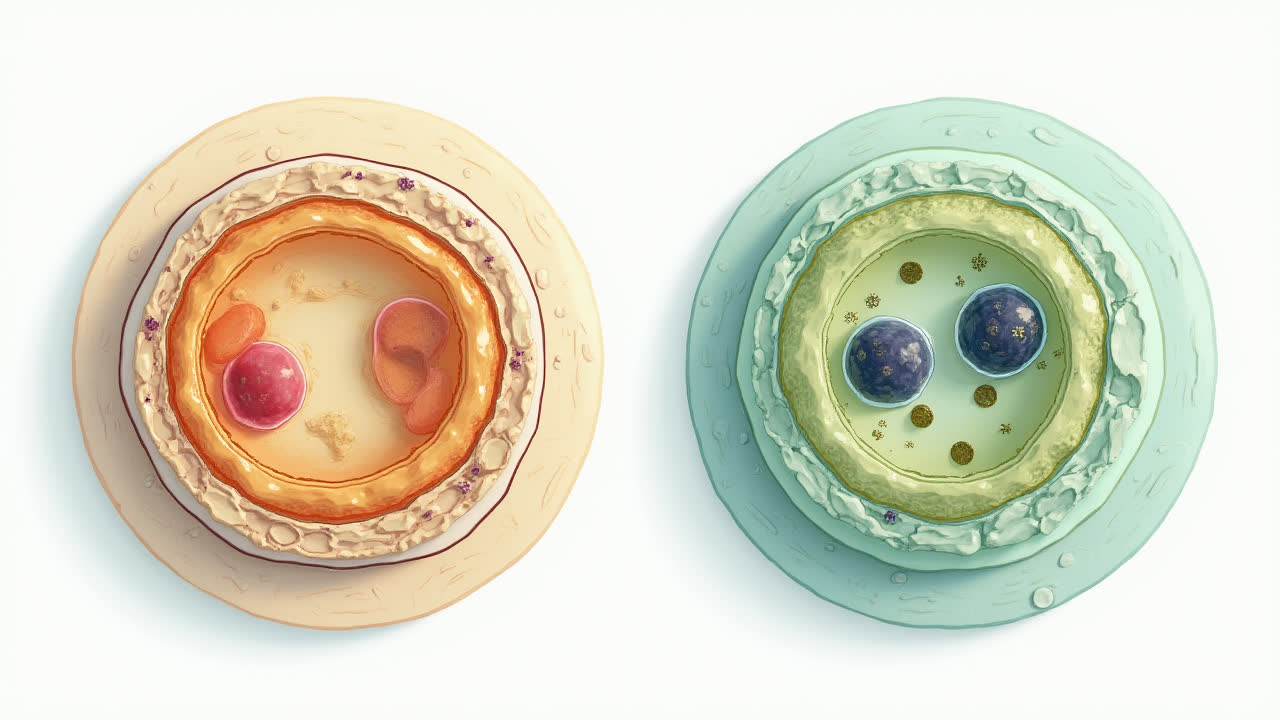
Cellular division is a fundamental process that enables growth, repair, and reproduction in all living organisms. Animal mitosis and plant mitosis represent two variations of this essential biological process, each with distinctive characteristics tailored to their respective cellular structures. While both follow the same general sequence of events, several key differences set them apart, particularly in how they organize their mitotic spindles and complete cytokinesis.
At its core, mitosis is a type of cell division that ensures each new daughter cell receives an identical set of chromosomes. This process maintains genetic consistency throughout an organism's life. Have you ever wondered why plant cells form a cell plate during division while animal cells pinch in the middle? Or why plants can organize spindle fibers without centrioles? These fascinating differences reflect evolutionary adaptations to their unique cellular environments.
This comprehensive guide explores the similarities and differences between animal and plant mitosis, delving into the intricate mechanisms that drive cellular reproduction in these two kingdoms of life. Whether you're a student, educator, or simply curious about cellular biology, understanding these distinctions provides valuable insights into the diverse ways organisms perpetuate their existence on a cellular level.
Understanding the Basics of Mitosis
Before diving into the specific differences, it's important to understand what mitosis actually is. Mitosis is a part of the cell cycle where replicated chromosomes are separated into two identical sets, forming two distinct nuclei. This process is followed by cytokinesis, which divides the cell's cytoplasm, resulting in two daughter cells. The primary purpose of mitosis is to increase the number of cells for growth, tissue repair, and regeneration.
The process of mitosis occurs in four primary stages: prophase, metaphase, anaphase, and telophase. During prophase, the chromatin condenses into visible chromosomes, and the mitotic spindle begins to form. In metaphase, the chromosomes align along the cell's equator, known as the metaphase plate. Anaphase involves the separation of sister chromatids, which move toward opposite poles of the cell. Finally, during telophase, the chromosomes reach the poles, nuclear envelopes reform around each set, and the cell prepares for cytokinesis.
What makes this process particularly intriguing is how it manifests differently in animal and plant cells, despite serving the same fundamental purpose. These differences aren't arbitrary but have evolved in response to the unique structural and functional requirements of animal and plant cells. I've noticed that understanding these variations not only enhances our knowledge of cellular biology but also highlights the incredible adaptability of life forms at the cellular level.
Key Differences Between Animal and Plant Mitosis
Mitotic Spindle Formation
The most significant difference between animal cell division and plant cell division lies in how they form their mitotic spindles. In animal cells, a pair of centrioles located near the nucleus serves as the microtubule organizing center (MTOC). These centrioles help arrange microtubules into the spindle apparatus that will eventually separate the chromosomes. As the cell prepares for division, the centrioles duplicate and move to opposite poles of the cell, establishing the bipolar spindle structure.
Plant cells, however, lack centrioles entirely. Instead, their spindle fibers form from the nuclear envelope region without these organizing structures. This remarkable adaptation demonstrates nature's flexibility—plants have evolved an alternative mechanism to achieve the same outcome. The microtubules in plant cells nucleate near the nuclear envelope and organize themselves into a functional mitotic spindle without the need for centralized organizing centers.
Cell Shape Changes
Another notable difference occurs in how the cells change shape during division. Animal cells typically become more rounded during mitosis as their internal cytoskeleton reorganizes. The microtubules that normally maintain the cell's shape disassemble to form the mitotic spindle, causing this characteristic rounding. You might think of it as the cell "preparing its workspace" for the complex task of division.
Plant cells, contrastingly, maintain their rigid shape throughout mitosis. This shape retention is primarily due to their cell walls, which provide structural support regardless of the cytoskeletal changes occurring within. Unlike their animal counterparts, plant cells don't need to undergo dramatic shape changes to accommodate the division process. Sometimes I'm amazed at how these seemingly simple differences reflect deeper evolutionary adaptations to different cellular environments.
Cytokinesis Process
Perhaps the most visually distinctive difference between animal and plant mitosis is how the cytoplasm divides during cytokinesis. Animal cells complete cytokinesis through a process called cleavage furrow formation. The cell membrane pinches inward along the cell's equator, creating a deepening furrow that eventually separates the two daughter cells. This process resembles pinching a balloon in the middle until it forms two separate compartments.
Plant cells, with their rigid cell walls, cannot undergo this pinching process. Instead, they form a structure called the cell plate at the cell's center. This plate begins at the center of the cell and grows outward toward the existing cell walls. The phragmoplast, a structure derived from the mitotic spindle, serves as a scaffold for the developing cell plate. Eventually, this cell plate matures into a new cell wall, completing the separation of the daughter cells. Isn't it fascinating how plants have developed such a different approach to solve the same fundamental challenge?
Similarities Between Animal and Plant Mitosis
Despite their differences, animal and plant mitosis share many fundamental similarities. Both processes serve the same biological purposes: increasing cell numbers during growth, repairing damaged tissues, and regenerating body parts. The core genetic process—the precise duplication and distribution of chromosomes—remains identical in both types of cells.
The four main phases of mitosis—prophase, metaphase, anaphase, and telophase—occur in the same sequence with similar events in both animal and plant cells. During prophase, both cell types experience chromosome condensation and nuclear envelope breakdown. In metaphase, chromosomes from both cell types align along the metaphase plate. Anaphase in both cases involves the separation of sister chromatids, which move toward opposite poles. And during telophase, both animal and plant cells reform their nuclear envelopes around the segregated chromosomes.
These shared features highlight the evolutionary conservation of the mitotic process, suggesting its emergence early in eukaryotic evolution, before the divergence of plant and animal lineages. The fundamental mechanism of chromosome segregation has remained remarkably consistent despite billions of years of separate evolution, underscoring its critical importance to eukaryotic life.
Comparison Table: Animal vs Plant Mitosis
| Feature | Animal Mitosis | Plant Mitosis |
|---|---|---|
| Centrioles | Present and organize the mitotic spindle | Absent |
| Cell Shape During Division | Becomes rounded | Maintains original shape |
| Spindle Type | Amphiastral (with asters) | Anastral (without asters) |
| Cytokinesis Method | Cleavage furrow formation | Cell plate formation |
| Spindle During Cytokinesis | Degenerates before cytokinesis | Remains as phragmoplast |
| Midbody | Present | Absent |
| Location in Organism | Throughout the body | Primarily in meristematic tissue |
| Hormone Induction | No specific hormone identified | Induced by cytokinin |
The Role of the Cell Wall in Plant Mitosis
The presence of a cell wall in plants significantly influences how mitosis proceeds in these organisms. Unlike animal cells, which are enclosed only by a flexible plasma membrane, plant cells have an additional, more rigid layer—the cell wall—surrounding them. This structural difference necessitates unique adaptations in how plant cells divide.
The cell wall restricts the physical changes a plant cell can undergo during division. While animal cells can simply pinch in the middle to separate, plant cells must build a new wall between the dividing cells. This construction project requires special machinery and coordination. The rigidity of the cell wall also explains why plant cells don't round up during mitosis as animal cells do—they're literally boxed in by their own walls.
Furthermore, the cell wall influences where and how new cellular materials are deposited during division. The formation of the cell plate, which eventually develops into a new cell wall, must precisely connect with the existing wall to ensure structural integrity. This process requires intricate coordination between the cytoskeleton, membrane trafficking systems, and cell wall synthesis machinery. In my observations of plant cell division, I've always been impressed by this elaborate construction process—it's like watching a tiny cellular contractor building a wall from the inside out!
The evolutionary adaptation of the cell plate mechanism represents an elegant solution to the problem of dividing cells encased in rigid walls. By building the new boundary from within, plants ensure that their cellular architecture remains intact throughout the division process. This approach contrasts sharply with the animal cell's strategy of constriction but achieves the same end result: two separate, functional daughter cells.
Specialized Aspects of Plant Mitosis
Plant mitosis exhibits several specialized features that reflect plants' unique cellular organization and developmental patterns. One notable specialization is that plant cell division is primarily restricted to specific regions called meristems. Unlike animal cells, which can divide throughout the organism, plant cells typically only divide actively in these meristematic tissues, located at the tips of roots and shoots and in a thin layer called the cambium within stems.
This localized division pattern allows plants to grow continuously throughout their lives—a characteristic called indeterminate growth. The meristematic cells retain their embryonic features and division capacity, continuously producing new cells that then differentiate into specialized tissues. This growth strategy differs significantly from that of animals, which generally have determinate growth patterns with most cell division occurring during development.
Another fascinating specialization is the hormonal regulation of plant cell division. While animal mitosis doesn't appear to be controlled by specific hormones, plant mitosis is strongly influenced by plant hormones, particularly cytokinins. These hormones promote cell division in meristematic regions and interact with other hormones like auxins to coordinate growth patterns. The hormonal control of mitosis enables plants to respond to environmental conditions by adjusting their growth accordingly.
The phragmoplast, a plant-specific structure that appears during late mitosis, represents another specialization. This microtubule-based structure guides vesicles containing cell wall materials to the division plane, facilitating the formation of the cell plate. The phragmoplast essentially repurposes components of the mitotic spindle rather than degrading them as occurs in animal cells. This efficient recycling of cellular machinery showcases the resourcefulness of plant cell division mechanisms.
Frequently Asked Questions About Animal and Plant Mitosis
Why do plant cells form a cell plate instead of a cleavage furrow?
Plant cells form a cell plate instead of a cleavage furrow primarily because of their rigid cell walls. The cell wall prevents the plasma membrane from pinching inward as it does in animal cells. Instead, plant cells build a new dividing structure (the cell plate) from the inside out, which eventually connects with the existing cell wall. This method accommodates the physical constraints imposed by the cell wall while still achieving the separation of daughter cells. The cell plate forms through the fusion of vesicles that contain cell wall precursors, guided by the phragmoplast structure.
How do plant cells organize their mitotic spindles without centrioles?
Plant cells organize their mitotic spindles through a centriole-independent mechanism. Instead of using centrioles as microtubule organizing centers (MTOCs), plant cells nucleate microtubules around the nuclear envelope. These microtubules self-organize into a bipolar spindle configuration through the action of motor proteins and microtubule-associated proteins (MAPs). The nuclear envelope itself acts as a site for microtubule nucleation, with specialized regions serving functions similar to MTOCs in animal cells. This alternative mechanism demonstrates evolutionary divergence in spindle formation while maintaining the essential function of chromosome segregation.
What evolutionary advantages do the differences in animal and plant mitosis provide?
The differences in animal and plant mitosis reflect evolutionary adaptations to their distinct cellular environments and life strategies. For plants, the cell plate method of cytokinesis allows for precise control over cell division planes, which is crucial for determining plant architecture and growth patterns. The localization of mitosis to meristematic regions enables plants to grow continuously throughout their lives while maintaining structural integrity. For animals, the cleavage furrow method provides flexibility in cell shape and arrangement, facilitating the complex tissue organizations needed for mobility and rapid responses to environmental changes. The presence of centrioles in animal cells may also support the formation of cilia and flagella, structures important for animal cell function but largely absent in plants.
Conclusion: The Significance of Mitotic Differences
The differences between animal and plant mitosis highlight the remarkable adaptability of the basic cell division process to meet the specific needs of different organisms. While the fundamental goal—accurate replication and distribution of genetic material—remains constant, the mechanisms have been tailored to accommodate different cellular architectures and life strategies.
The centriole-dependent spindle formation in animal cells versus the self-organizing spindles in plant cells demonstrates that evolution can find multiple solutions to the same problem. Similarly, the contrasting methods of cytokinesis—cleavage furrow versus cell plate formation—show how cellular processes adapt to structural constraints like the plant cell wall.
Understanding these differences enhances our appreciation of cellular diversity and provides insights into the evolutionary history of eukaryotic cells. It also has practical implications for fields ranging from agriculture to medicine, informing approaches to manipulating cell division for beneficial purposes. Next time you look at a growing plant or healing wound, you might pause to appreciate the intricate cellular choreography making it all possible—two variations on the same mitotic theme, each perfectly adapted to its cellular context.