Chipmunk vs Squirrel: 8 Key Differences You Need to Know
Have you ever found yourself wondering whether that cute little rodent scurrying across your yard is a chipmunk or squirrel? While these furry creatures might seem similar at first glance, they have several distinguishing characteristics that set them apart. Both belong to the same family, Sciuridae, but they differ in appearance, habitat, size, and behavior.
I remember the first time I spotted a chipmunk in my backyard garden. Initially, I thought it was a baby squirrel until I noticed those distinctive stripes running down its back. That moment sparked my curiosity about these adorable rodents and their differences. In this comprehensive guide, we'll explore everything you need to know about chipmunks and squirrels, helping you become an expert at identifying these woodland creatures.
Understanding Squirrels: Characteristics and Habitat
Squirrels are medium-sized rodents with bushy tails and sharp claws that help them climb trees with impressive agility. These adaptable creatures can be found on almost every continent except Australia and Antarctica. They've managed to thrive in various environments, from dense forests to urban parks and suburban neighborhoods.
There are three main types of squirrels: tree squirrels, ground squirrels, and flying squirrels. Tree squirrels, as their name suggests, typically make their homes in tree hollows or build nests (called dreys) in the branches. Ground squirrels prefer to dig burrows underground, while flying squirrels have a special membrane between their front and back legs that allows them to glide from tree to tree.
When it comes to appearance, squirrels display a variety of colors ranging from black to grey, red, and brown, depending on the species. Their large, bushy tails serve multiple purposes – they help with balance while climbing, provide warmth during cold weather, and can be used for communication with other squirrels. Have you ever noticed how a squirrel will flick its tail when it feels threatened? That's actually a warning signal to other squirrels in the area!
Squirrels are omnivorous creatures with a diet that primarily consists of nuts, seeds, fruits, and fungi. However, they won't hesitate to supplement their diet with eggs, small insects, caterpillars, and even young snakes when the opportunity arises. During autumn, you'll often see squirrels frantically gathering and burying nuts – they're preparing food caches for the winter months ahead. Unlike some rodents, most squirrel species don't hibernate; instead, they rely on these stored food supplies to sustain them through the cold season.
All About Chipmunks: Distinctive Features and Behavior
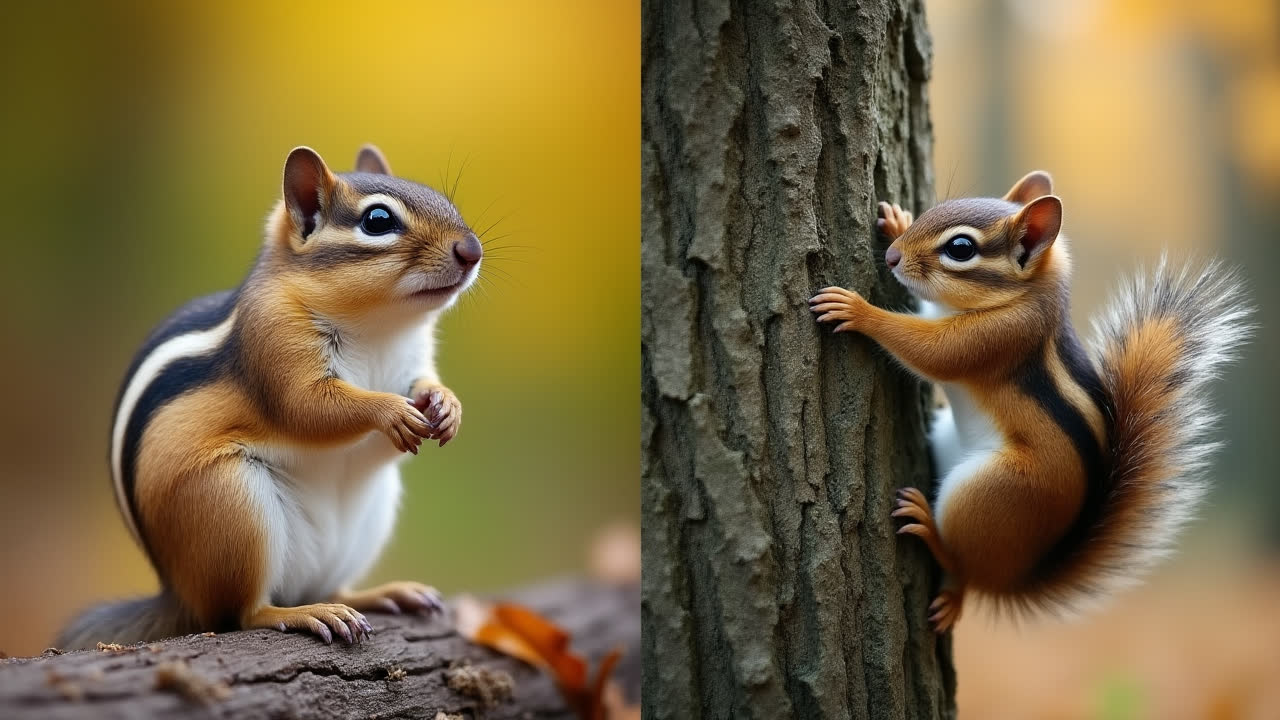
Chipmunks are among the smallest members of the squirrel family, recognized by their chubby cheeks, perky ears, and most distinctively, the alternating black and white stripes that run down their backs. These adorable little creatures typically have a warm brown base coloration that beautifully complements their striped pattern. If you've ever wondered why they have those prominent cheek pouches, it's because they use them to transport food back to their burrows – sometimes stuffing them so full they can double the width of their head!
While squirrels have a global presence, chipmunks have a much more limited distribution. Out of the 25 recognized chipmunk species, 24 are native to North America. The lone exception is the Siberian chipmunk, which can be found in parts of northeast Asia. Most chipmunks prefer woodland habitats where they can find plenty of cover from predators and access to their favorite foods.
Similar to ground squirrels, chipmunks create elaborate burrow systems underground. These burrows can extend several feet below the surface and often feature multiple entrances, sleeping chambers, and dedicated storage areas for food. It's quite remarkable how such small creatures can engineer such complex homes! Sometimes I spend hours watching the chipmunks in my local park, marveling at how industriously they work on expanding their underground mansions.
When it comes to diet, chipmunks share the omnivorous tendencies of their squirrel cousins. They consume a variety of plant materials, including berries, mushrooms, nuts, seeds, and grains. They'll also opportunistically eat insects, baby birds, frogs, and bird eggs when available. One fascinating behavior unique to chipmunks is their method of food storage – they stuff extra food into those expandable cheek pouches until they're completely full, then transport the load back to their burrow for safekeeping.
Unlike most squirrels, chipmunks do hibernate during the winter months, although their hibernation isn't continuous. They enter a state of torpor, where their body temperature drops and their heart rate slows down. However, they wake up periodically to feed on their stored food supplies before returning to their dormant state. This pattern continues until spring arrives and they can resume their normal activities.
Chipmunk vs Squirrel: Detailed Comparison
Now that we've explored the general characteristics of both chipmunks and squirrels, let's take a closer look at their key differences. Understanding these distinctions will help you identify which of these adorable rodents you're observing in the wild or in your backyard.
| Characteristic | Chipmunks | Squirrels |
|---|---|---|
| Size | Smaller (8-10 inches including tail) | Larger (varies by species, 14-20+ inches including tail) |
| Appearance | Warm brown with alternating black and white stripes on back | Variety of colors (black, grey, red, brown) without stripes |
| Tail | Shorter, less bushy | Longer, very bushy |
| Habitat | Primarily North America (except Siberian chipmunk) | Worldwide except Australia and Antarctica |
| Hibernation | Hibernate during winter (with periodic waking) | Most species do not hibernate |
| Cheek Pouches | Prominent cheek pouches for carrying food | No prominent cheek pouches |
| Nesting | Primarily in underground burrows | Tree hollows, leaf nests, or underground (depending on species) |
| Activity | Mostly ground-dwelling | Tree-dwelling or ground-dwelling (species dependent) |
Similarities Between Chipmunks and Squirrels
Despite their differences, chipmunks and squirrels share several common traits due to their close relationship within the Sciuridae family. Understanding these similarities can provide insight into the evolutionary advantages that have helped these rodents thrive across various environments.
Both chipmunks and squirrels are rodents with similar basic body structures. They have four sharp incisors that continuously grow throughout their lifetime, requiring them to constantly gnaw on objects to keep these teeth from becoming too long. They also share similar skeletal structures adapted for agility and rapid movement, which helps them evade predators in the wild.
When it comes to diet, both creatures are omnivorous with comparable feeding habits. They primarily consume plant-based foods like nuts, seeds, and fruits, but will also eat small insects and occasionally other small animals or eggs. This dietary flexibility has contributed significantly to their survival success, allowing them to adapt to food availability throughout different seasons.
Another similarity lies in their food storage behavior. Both chipmunks and ground squirrels create burrows where they store food for future consumption. This habit of caching food is particularly important during the autumn months when they prepare for the winter season. Did you know that squirrels can remember the locations of thousands of nuts they've buried? And sometimes, the nuts they forget to retrieve end up sprouting into new trees – making these rodents important seed dispersers in forest ecosystems!
Both animals also demonstrate remarkable intelligence and problem-solving abilities. Anyone who has tried to "squirrel-proof" a bird feeder knows just how resourceful and persistent these creatures can be! They can learn to navigate complex obstacles and remember solutions to challenges they've encountered before. This cognitive flexibility, combined with their physical adaptations, has enabled both chipmunks and squirrels to thrive even in human-modified environments.
How to Identify Chipmunks and Squirrels in Your Backyard
If you're interested in identifying the rodents visiting your yard, there are several key features to look for. First and foremost, check for the distinctive stripes. Chipmunks always have those characteristic black and white stripes running down their backs, while squirrels never have this striped pattern. This is probably the quickest and most reliable way to distinguish between the two.
Size is another important indicator. Chipmunks are noticeably smaller than most squirrels, with adult chipmunks reaching only about a third of the size of an adult squirrel. Pay attention to the tail as well – squirrels have large, bushy tails that they often hold up while running or sitting, whereas chipmunks have shorter, less fluffy tails that they usually keep lower to the ground.
Behavior can also provide clues to identification. If you see a rodent climbing high up in trees and leaping from branch to branch, it's likely a tree squirrel. Chipmunks, while capable climbers, spend much more time on the ground and rarely venture to the higher parts of trees. Additionally, if you observe a rodent stuffing its cheeks with food until they bulge outward, that's almost certainly a chipmunk with its specialized cheek pouches.
The time of year might help with identification too. During winter months in colder regions, chipmunks are less likely to be seen as they spend much of their time in their burrows, either hibernating or living off their stored food. Squirrels, on the other hand, remain active year-round in most areas, even during winter snowfalls. I still remember watching gray squirrels playing in the snow last January, while the chipmunks that had been so active in my garden during summer were nowhere to be seen!
Conservation and Coexistence with Chipmunks and Squirrels
Both chipmunks and squirrels play important roles in their ecosystems. As seed dispersers, they help in forest regeneration by burying nuts and seeds that may later germinate. They also serve as prey for various predators, including hawks, owls, foxes, and snakes, making them vital links in the food chain.
If you enjoy watching these charismatic creatures but don't want them damaging your property, there are several ways to peacefully coexist. Creating a designated feeding area away from your home can help deter them from gardens and bird feeders. Offering nuts in shells, sunflower seeds, or corn can provide them with alternative food sources.
For gardens, using physical barriers like chicken wire around vegetable beds can prevent unwanted digging. Natural deterrents such as planting mint or using predator urine (available at garden centers) around the perimeter of your property might also discourage them from settling in unwanted areas. Remember that these animals are just trying to survive, and with a little tolerance and creative management, we can share our spaces with these fascinating rodents.
It's worth noting that both chipmunks and squirrels can become accustomed to human presence and may even take food directly from people in parks and other public spaces. While this might seem charming, it's generally better not to encourage such behavior, as it can lead to dependence on humans for food and potentially increase conflict. Occasionally throwing a few unsalted nuts their way during a park visit is one thing, but regular hand-feeding can disrupt their natural behaviors and diet.
Frequently Asked Questions About Chipmunks and Squirrels
Are chipmunks and squirrels considered pests?
Whether chipmunks and squirrels are considered pests depends largely on context and perspective. In natural environments, they're beneficial native wildlife that contribute to ecosystem health through seed dispersal and as prey for larger animals. However, they can become problematic when they damage gardens, gnaw on structures, or nest in unwanted places like attics. Rather than viewing them as pests, consider implementing humane deterrents if they're causing issues. Creating designated feeding areas away from your home, using physical barriers around gardens, and sealing entry points to buildings can help manage potential conflicts while allowing these rodents to fulfill their ecological roles.
What should I do if I find a baby chipmunk or squirrel?
If you find a baby chipmunk or squirrel, it's best to observe from a distance before intervening. Many young rodents that appear abandoned are actually being monitored by their mothers, who may be temporarily foraging for food. If the baby appears injured, is being stalked by a predator, or has been in the same spot for several hours without maternal visits, contact a licensed wildlife rehabilitator for guidance. Never attempt to raise wildlife yourself, as this is illegal in most places and deprives the animal of learning crucial survival skills. Wildlife rehabilitators have the expertise and legal permissions to properly care for these animals until they can be safely released back into the wild.
Do chipmunks and squirrels carry diseases?
Like many wild animals, both chipmunks and squirrels can potentially carry diseases, though direct transmission to humans is relatively rare. They may harbor parasites such as fleas and ticks, which can transmit diseases like Lyme disease. Some squirrels and chipmunks may also carry bacteria like Salmonella or viruses such as rabies (though rabies is uncommon in rodents). The best approach is to appreciate these animals from a distance – never handle wild chipmunks or squirrels, even if they appear friendly. Keep your living spaces sealed against entry, and if you find evidence of these rodents in your home, use gloves and masks when cleaning up droppings or nesting materials. If you must handle a sick or injured animal, always use thick gloves and contact a wildlife professional promptly.
Conclusion: Appreciating Our Small Woodland Neighbors
Understanding the differences between chipmunks and squirrels enhances our appreciation for the diversity of wildlife that shares our environment. While both belong to the same family and share several similarities, their distinctive characteristics – from the chipmunk's striking stripes and cheek pouches to the squirrel's bushy tail and greater size – make each uniquely adapted to their ecological niche.
Next time you spot one of these furry creatures in your backyard or during a woodland walk, take a moment to observe its behavior and physical features. Is it sporting those telltale stripes of a chipmunk? Or perhaps it's demonstrating the impressive acrobatics typical of tree squirrels? These small moments of connection with nature can bring unexpected joy and foster a greater sense of stewardship for our local ecosystems.
Whether you're a wildlife enthusiast, a casual observer, or simply someone who enjoys the antics of these charismatic rodents, I hope this guide has provided you with valuable insights into the fascinating world of chipmunks and squirrels. After all, these small creatures have big personalities and important roles to play in our shared environment.