Detritivores vs Decomposers: Key Differences in Nutrient Cycling
Detritivores vs Decomposers: Understanding Their Vital Roles in Ecosystems
Have you ever wondered what happens to dead leaves, fallen trees, or animal carcasses in nature? They don't just pile up endlessly, thanks to detritivores and decomposers—nature's cleanup crew. These organisms play crucial roles in breaking down organic matter and recycling nutrients back into the ecosystem. Though often confused with each other, they employ distinctly different methods and occupy unique ecological niches.
In any healthy ecosystem, the process of decomposition is essential for maintaining the continuous flow of nutrients. Without these specialized organisms, dead organic matter would accumulate, and vital nutrients would remain locked away rather than returning to the soil where plants can access them. The beautiful cycle of life relies heavily on these often-overlooked creatures that work tirelessly beneath our feet and throughout our natural world.
As we explore the fascinating world of decomposition processes, we'll uncover the key differences between these two groups of organisms, examine their unique characteristics, and understand why their roles are so vital for ecosystem health. From the earthworms tunneling through soil to the microscopic fungi breaking down complex organic compounds, each plays an indispensable part in nature's recycling system.
What Are Detritivores?
Detritivores are heterotrophic organisms that feed on detritus—dead organic material such as leaves, twigs, dead animals, and other forms of decaying matter. What makes them unique is their method of consumption: they orally ingest particulate organic material (POM) and digest it internally. This process helps break down larger pieces of organic matter into smaller fragments, accelerating decomposition.
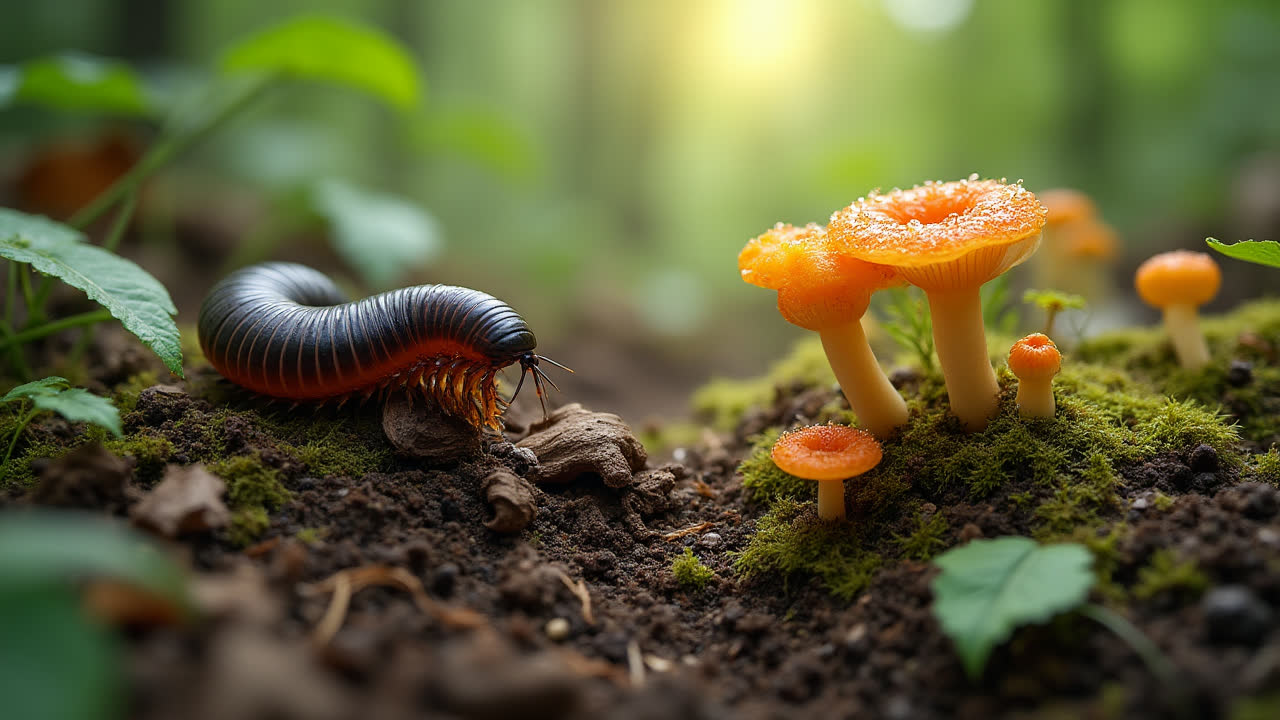
When we look at the forest floor or beneath the soil surface, we find numerous examples of detritivores hard at work. Earthworms are perhaps the most well-known detritivores, consuming soil and organic matter as they burrow, which simultaneously aerates the soil and mixes organic material throughout different soil layers. Other common terrestrial detritivores include millipedes, woodlice, beetles, flies, and many other invertebrates.
In aquatic ecosystems, detritivores are equally important. Crustaceans like crabs and lobsters, along with echinoderms such as sea stars and sea cucumbers, serve as marine detritivores. These organisms scavenge the ocean floor, consuming dead organic matter that sinks from above. I've personally observed this fascinating process while snorkeling, watching small crabs meticulously picking through debris on the seafloor—nature's underwater cleaning service in action!
The contribution of detritivores extends beyond mere consumption of dead matter. As they digest organic material, they break down complex substances into simpler compounds. Their excretions contain water-soluble nutrients that leach into the soil, increasing its mineral content. This process, known as humification, results in the formation of humus—a rich, organic component of soil that enhances its fertility and structure.
Understanding Decomposers
Decomposers represent a broader category that includes all organisms involved in breaking down organic matter. In fact, detritivores are actually a type of decomposer, but the term "decomposers" more commonly refers to organisms like fungi and bacteria that break down organic material in a fundamentally different way than detritivores do.
Unlike detritivores, these primary decomposers—often called saprophytes—don't ingest organic matter orally. Instead, they secrete digestive enzymes onto dead material, breaking down complex organic compounds externally before absorbing the resulting simpler nutrients. This process is crucial for decomposing substances that many detritivores cannot digest, such as lignin in wood or cellulose in plant cell walls.
Fungi exemplify this process perfectly. Have you ever noticed mushrooms growing on a fallen log? What you're seeing is just the fruiting body—the vast majority of the fungus exists as a network of thread-like hyphae penetrating throughout the wood, secreting enzymes and absorbing nutrients. This extensive network allows fungi to access and break down organic material much more thoroughly than most detritivores can.
Bacteria represent another critical group of decomposers, operating on an even smaller scale. These microscopic organisms can be found virtually everywhere in the environment and can break down an astonishing variety of organic compounds. Some specialized bacteria can even decompose synthetic materials that most other organisms cannot touch. Their incredible metabolic diversity makes them indispensable in nutrient cycling processes.
Another type of decomposer worth mentioning is the scavenger—organisms that specifically consume the feces of other animals (a process called coprophagy). Insects like certain flies, wasps, and cockroaches fall into this category. Though perhaps not the most glamorous ecological role, these organisms perform an essential service by breaking down waste material that might otherwise become a source of disease.
Comparing Detritivores and Decomposers
When examining these two groups, we find several key differences in how they operate, though both are ultimately working toward the same ecological goal—breaking down dead organic matter and recycling nutrients.
| Characteristic | Detritivores | Decomposers |
|---|---|---|
| Definition | Organisms that feed on dead and decomposing organic matter through oral ingestion | Organisms that decompose organic material through various methods |
| Classification | A specific type of decomposer | Broader category including detritivores, scavengers, and saprophytes |
| Digestion Method | Internal digestion after oral consumption | Varies: external digestion (saprophytes) or consumption of specific materials (scavengers) |
| Size | Generally larger, visible organisms | Range from microscopic bacteria to visible fungi |
| Examples | Earthworms, millipedes, woodlice, crabs, sea cucumbers | Fungi, bacteria, certain insects (as scavengers) |
| Primary Action | Breaking down larger organic particles into smaller ones | Chemical breakdown of organic compounds |
| Ecological Level | Found at various trophic levels | Primarily at the base of food webs |
| Nutrients Recycled | Help recycle carbon, nitrogen, phosphorus | Critical for complete nutrient cycling, especially of complex compounds |
Ecological Importance
The ecological significance of both detritivores and decomposers cannot be overstated. Together, they form the backbone of nutrient cycling in virtually all ecosystems. Without their activities, nutrients would remain locked in dead organic matter, unavailable to plants and other producers that form the base of food webs.
In forest ecosystems, for instance, the leaf litter layer would grow ever deeper without decomposition, eventually smothering new plant growth. Instead, these organisms transform dead leaves into nutrient-rich soil. I remember walking through a deciduous forest in autumn once, crunching through freshly fallen leaves. Returning to the exact spot the following spring, I found those leaves had largely disappeared—transformed by detritivores and decomposers into valuable nutrients feeding the forest.
In agricultural settings, these organisms contribute significantly to soil fertility. Farmers and gardeners often try to enhance decomposition processes through composting, which essentially accelerates natural decomposition by creating ideal conditions for detritivores and decomposers. The rich, dark compost that results is testament to the transformative power of these organisms.
Beyond nutrient cycling, detritivores like earthworms perform additional valuable services such as soil aeration and mixing. Their tunneling activities create channels for water infiltration and root growth, while their movement mixes organic matter throughout the soil profile. Meanwhile, fungal decomposers form extensive underground networks that can connect with plant roots, creating mutually beneficial relationships that enhance plant nutrient uptake.
In aquatic systems, both groups are equally important. When aquatic plants die or organic matter enters water bodies, decomposers prevent the accumulation of this material, which would otherwise consume oxygen as it decayed, potentially leading to hypoxic conditions detrimental to aquatic life.
FAQs About Detritivores and Decomposers
Are all fungi considered decomposers?
Not all fungi function as decomposers. While many fungi are indeed saprophytic decomposers that break down dead organic matter, others form symbiotic relationships with plants (mycorrhizal fungi) or act as parasites. However, even mycorrhizal fungi can sometimes switch to decomposer roles when their plant partners die. Decomposer fungi are particularly important in breaking down lignin in wood, a tough structural compound that few other organisms can digest effectively.
How do detritivores benefit soil health?
Detritivores contribute to soil health in multiple ways. As they consume and digest organic matter, they break it down into smaller particles, increasing the surface area available for microbial decomposers. Their movements through soil create channels that improve aeration and water infiltration. Additionally, their excretions contain partially digested organic matter rich in nutrients that plants can absorb. Earthworms in particular mix organic material throughout different soil layers, bringing nutrients deeper into the soil profile where plant roots can access them.
Can ecosystems function without decomposers?
No, ecosystems cannot function properly without decomposers. Without these organisms, dead organic matter would accumulate indefinitely, and the nutrients contained within this material would remain locked away rather than being recycled. Plants would eventually suffer from nutrient deficiencies as essential elements like nitrogen, phosphorus, and others remained unavailable in undecomposed organic matter. The continuous cycling of nutrients that decomposers facilitate is absolutely essential for ecosystem sustainability and productivity.
Conclusion
The distinction between detritivores and decomposers might seem academic at first glance, but understanding their different approaches to breaking down organic matter helps us appreciate the intricate balance of natural systems. While detritivores physically consume and fragment organic matter, decomposers like fungi and bacteria work at the chemical level, breaking complex compounds into their simplest forms.
Together, these organisms form an essential ecological cleanup crew that ensures nutrients continue to cycle through ecosystems rather than becoming permanently locked away in dead organic matter. Their work connects the end of one life cycle to the beginning of another, demonstrating the beautiful interconnectedness of all living things.
Next time you see an earthworm tunneling through garden soil or spot mushrooms sprouting from a decaying log, take a moment to appreciate these humble but hardworking organisms. They may not be as charismatic as some wildlife, but their ecological importance is second to none. Without detritivores and decomposers quietly performing their vital roles, life as we know it simply couldn't exist.