Monocot vs Dicot Root: Key Differences You Need to Know
Monocot vs Dicot Root: Key Differences You Need to Know
When studying plant biology, understanding the fundamental differences between monocot and dicot roots is crucial. As someone who's spent countless hours in the botany lab examining root structures, I can tell you these differences go far beyond just their appearance!
Plants are generally classified into monocotyledons (monocots) and dicotyledons (dicots), and their root systems are quite distinct. You might wonder, what's the big deal about plant roots anyway? Well, these underground heroes do more than just anchor plants - they're the lifeline that brings essential nutrients and water to the entire organism.
Understanding the Basics: What Are Monocot and Dicot Roots?
Let's start with the fundamentals. The main difference between monocot and dicot root systems lies in their structure and function. Monocot roots are fibrous, creating a web-like network of thin roots near the soil surface. Think of them as nature's sponge - spreading wide to capture moisture efficiently.
On the flip side, dicot roots develop a taproot system with one dominant main root diving deep into the soil, kind of like a plant's version of an anchor. This taproot sends out smaller lateral branches, creating a hierarchical structure that's quite different from the democratic network of monocot roots.
In my years of gardening, I've noticed how monocot plants like grasses can quickly recover from drought because their shallow root network quickly absorbs surface water. Dicot plants, however, often fare better in deeper soils where their taproots can access water reserves that surface-feeding roots can't reach.
Structural Characteristics: More Than Meets the Eye
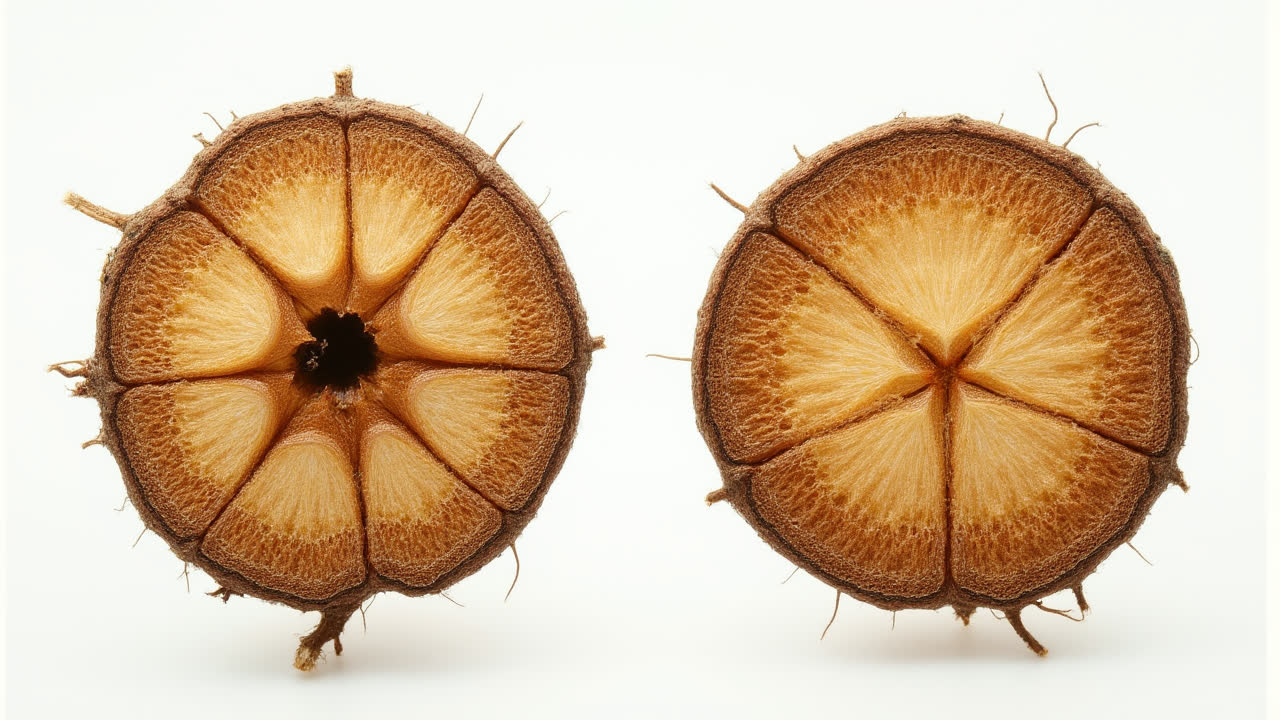
When you examine these roots under a microscope (yes, I've done this many times!), several fascinating differences emerge. The vascular bundle arrangement in monocot roots follows a circular pattern, while dicot roots have their vascular tissues arranged more centrally.
Here's something interesting: monocot roots contain more vascular bundles compared to dicot roots. It's like having multiple small pipelines versus fewer, larger ones. This difference affects how water and nutrients are transported throughout the plant. Have you ever wondered why some plants are better at surviving in certain soil conditions? This structural difference plays a big role!
The cortex, that protective layer beneath the outer root surface, differs significantly too. Monocot roots typically have a wider cortex, which helps with water storage and absorption. This is why plants like corn can thrive in drier conditions - their roots are built to make the most of available moisture.
| Feature | Monocot Root | Dicot Root |
|---|---|---|
| Root Type | Fibrous or adventitious | Taproot system |
| Growth Pattern | Wide network of thin roots | Single thick primary root |
| Depth | Shallow, close to surface | Deep penetration |
| Vascular Bundles | Numerous (8 or more) | Limited (2-8) |
| Pith | Well-developed | Absent |
| Secondary Growth | Absent | Present |
| Cambium | Absent | Present |
| Xylem Shape | Round or oval | Angular or polygonal |
| Cortex Width | Very wide | Comparatively narrow |
| Examples | Maize, banana, palm | Pea, beans, peanut |
Functional Differences in Daily Plant Life
The functional differences between these root systems directly impact how plants adapt to their environment. From my experience working with various plant species, I've observed that fibrous root systems excel at preventing soil erosion - perfect for groundcovers and lawn grasses.
Taproot systems, meanwhile, are nature's way of helping plants access deeper water sources. I've seen carrot plants survive prolonged dry spells by tapping into moisture reserves far below the surface. This is why vegetables like radishes and turnips can thrive even when surface soil becomes parched.
Secondary Growth: A Key Distinguishing Factor
One crucial difference that often surprises students is the presence of secondary growth in dicot roots. This thickening allows dicot roots to become woody over time - think about how tree roots can grow so massive they crack sidewalks! Monocot roots, however, lack this ability since they don't have the vascular cambium necessary for secondary growth.
This limitation isn't necessarily a disadvantage. Many monocots compensate by producing more adventitious roots, creating an extensive network that can outperform taproots in certain conditions. It's like comparing a network of small streams to a single large river - both have their unique advantages.
Practical Applications in Agriculture and Gardening
Understanding these differences isn't just academic - it has real-world applications. When planning crop rotations, farmers consider root system differences to optimize soil usage. Plants with different root systems can access nutrients from various soil levels, reducing competition and improving yields.
In my garden, I often plant shallow-rooted vegetables like lettuce alongside deep-rooted crops like tomatoes. This companion planting maximizes space utilization while preventing nutrient competition. Have you tried mixing monocots and dicots in your garden? The results might surprise you!
The resilience of fibrous root systems makes them ideal for erosion control on slopes, while taproots are better for breaking up compacted soil in areas that need improved drainage. Nature really has designed each system for specific purposes.
Evolutionary Perspectives
From an evolutionary standpoint, these different root systems represent distinct solutions to the same challenge: how to efficiently extract resources from soil. Monocots typically evolved in environments where accessing surface water was crucial, while dicots developed adaptations for deeper soil exploration.
This explains why we see so many grass species (monocots) in prairies and savannas where rainfall is seasonal but surface water availability varies. In contrast, forest understories often feature dicots that must compete for deep soil resources beneath larger trees.
Common Misconceptions
Let me clear up a few things that confuse even seasoned gardeners. First, not all dicots have prominent taproots - some develop modified root systems based on their environment. Second, the age of the plant matters; young dicot seedlings might appear fibrous before developing their characteristic taproot.
Another myth is that monocot roots are always weaker than dicot roots. In reality, the collective strength of a fibrous root system can exceed that of a single taproot. I've seen lawn grasses resist uprooting better than young trees with developing taproots!
FAQ Section
What is the main structural difference between monocot and dicot roots?
The primary structural difference is that monocot roots are fibrous with numerous thin roots forming a network, while dicot roots have a taproot system with one dominant main root. Monocot roots also have scattered vascular bundles and a well-developed pith, whereas dicot roots have centrally arranged vascular bundles and no pith.
Can monocot roots undergo secondary growth like dicot roots?
No, monocot roots cannot undergo secondary growth because they lack vascular cambium. This tissue is essential for producing secondary xylem and phloem, which enables dicot roots to grow thicker over time. This is why you'll never see a monocot develop woody roots like trees do.
Which root system is better for preventing soil erosion?
Monocot roots with their fibrous system are generally better for preventing soil erosion. The extensive network of thin roots creates a dense mat that holds soil particles together more effectively than dicot taproots. This is why grasses are commonly used for erosion control on slopes and riverbanks.
Conclusion
Understanding the differences between monocot and dicot roots isn't just botanical trivia - it's fundamental knowledge that helps us appreciate plant adaptations and make better gardening decisions. Whether you're cultivating crops, designing landscapes, or simply nurturing houseplants, recognizing these root system differences will guide your plant care strategies.
Next time you're in the garden, take a moment to consider what's happening beneath the soil. Those tiny grass roots forming an intricate web and the carrot's sturdy taproot diving deep - they're both perfect examples of nature's ingenuity in solving the same problem through different approaches. Happy gardening!