Electrostatic vs Magnetostatic: Understanding the Core Differences
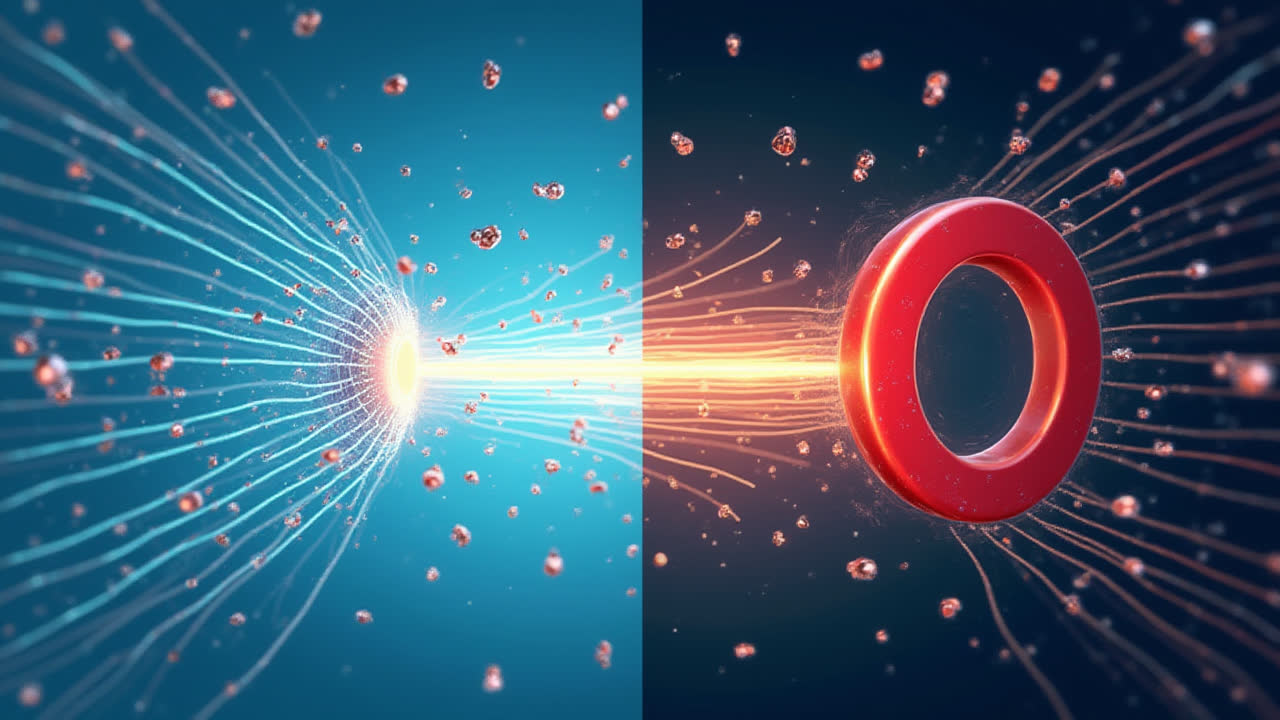
Have you ever wondered why a balloon sticks to your wall after being rubbed on your hair, or how a compass needle always points north? The answers lie in two fascinating branches of physics: electrostatics and magnetostatics. These two fields might sound similar, but they describe fundamentally different phenomena that shape our understanding of the physical world and enable countless technologies we rely on daily.
While both electrostatics and magnetostatics fall under the broader umbrella of electromagnetism, they address distinct aspects of this fundamental force of nature. Understanding the difference between these two concepts isn't just academic knowledge—it's the foundation for everything from smartphone technology to medical imaging equipment.
What is Electrostatics?
Electrostatics is the branch of physics that deals with electric charges at rest and the forces between them. When I first learned about this concept, I was amazed by how something so invisible could exert such powerful effects. The key principle at work here is Coulomb's Law, which describes how electric charges interact with each other. This fundamental law states that the force between two point charges is directly proportional to the product of their magnitudes and inversely proportional to the square of the distance between them.
I remember a science demonstration in school where our teacher showed us how a plastic rod rubbed with fur could pick up tiny pieces of paper. That simple demonstration showed electrostatic attraction in action! What's happening is that the plastic rod gains a negative charge through friction, which then attracts the neutral paper by inducing a temporary positive charge on its surface. This same principle explains everything from static cling in laundry to the operation of photocopiers.
In everyday applications, electrostatics plays a crucial role that often goes unnoticed. Electrostatic precipitators clean industrial emissions by removing particulate matter from smoke. When you get a laser printout, you're benefiting from electrostatic principles that allow toner particles to be precisely positioned on paper. Even in healthcare, electrostatic concepts enable technologies like electrosurgery and air purification systems that remove allergens and pathogens from the air we breathe.
Perhaps one of the most dramatic manifestations of electrostatics is lightning—a massive electrostatic discharge between clouds and the ground. This natural phenomenon, which has both fascinated and terrified humans throughout history, demonstrates the immense energy that can be stored in separated electric charges. Storm clouds build up separation of charge through complex processes involving ice particles and water droplets, eventually leading to the dramatic discharges we see during thunderstorms.
What is Magnetostatics?
Magnetostatics, on the other hand, focuses on magnetic fields that do not change with time and the static magnetic forces they produce. Unlike electrostatics, which deals with stationary charges, magnetostatics addresses the magnetic fields created by steady electric currents or permanent magnets. The fundamental laws governing magnetostatics are Ampère's Law and the Biot-Savart Law, which describe how electric currents generate magnetic fields.
I've always found magnets particularly fascinating—there's something almost magical about watching two objects attract or repel each other without any visible connection. As a kid, I spent hours playing with magnets, watching how they would snap together or push apart depending on their orientation. What I didn't realize then was that I was observing magnetostatic forces in action. These forces arise from the alignment of microscopic current loops within the material, creating what we experience as magnetic attraction or repulsion.
The applications of magnetostatics in our daily lives are incredibly diverse. Every electric motor in your household appliances—from your refrigerator compressor to your electric toothbrush—relies on magnetostatic principles. Hard disk drives in computers use magnetic fields to store data. Magnetic resonance imaging (MRI) machines in hospitals use powerful magnetic fields to generate detailed images of the human body without harmful radiation. Even the humble compass, which has guided explorers for centuries, works because Earth itself generates a magnetostatic field through internal processes in its core.
Speaking of Earth's magnetic field, it's one of the most significant large-scale examples of magnetostatics in nature. This planetary-scale magnetic field not only helps humans navigate but also serves as a protective shield against harmful solar radiation. Without it, life as we know it might not be possible on Earth. The field is generated by the movement of molten iron in the outer core, creating a self-sustaining geodynamo that has persisted for billions of years.
Key Differences Between Electrostatic and Magnetostatic
While both electrostatic and magnetostatic phenomena are part of the electromagnetic force, they differ in several fundamental ways. Understanding these differences helps clarify how each operates in the physical world and explains why certain technologies rely on one principle rather than the other.
| Aspect | Electrostatic | Magnetostatic |
|---|---|---|
| Basic Definition | Deals with stationary electric charges and their interactions | Deals with steady electric currents and their associated magnetic fields |
| Source | Electric charges (stationary) | Moving electric charges (currents) or permanent magnets |
| Field Behavior | Electric field lines start and end on charges | Magnetic field lines form closed loops with no beginning or end |
| Force Law | Coulomb's Law: F = k × (q₁ × q₂)/r² | Lorentz Force Law: F = q(v × B) |
| Governing Principles | Gauss's Law and the relation between electric field and potential | Ampère's Law and Gauss's Law for magnetism |
| Direction of Force | Along the line joining the charges | Perpendicular to both the current direction and magnetic field |
| Nature of Poles | Can have isolated positive or negative charges | Always exists as magnetic dipoles; no magnetic monopoles observed |
| Energy Storage | Stored in capacitors | Stored in inductors and permanent magnets |
Similarities Between Electrostatic and Magnetostatic
Despite their differences, electrostatic and magnetostatic phenomena share several important characteristics that highlight their common origin in the electromagnetic force. These similarities help physicists develop unified theories and technologies that leverage both aspects of electromagnetism.
- Field Representation: Both electric and magnetic fields can be visualized using field lines that indicate the direction of the force experienced by a test charge or a magnetic pole.
- Inverse Square Law: Both follow an inverse square relationship, meaning the strength of the field decreases with the square of the distance from the source.
- Energy Storage: Both electric and magnetic fields can store potential energy, which can be harnessed for various applications.
- Mathematical Description: Both are vector fields that can be described using similar mathematical tools and techniques.
- Superposition Principle: The net effect of multiple sources (charges or currents) is the vector sum of the individual contributions.
I've often thought about how elegant it is that these seemingly different phenomena are actually just different manifestations of the same fundamental force. When James Clerk Maxwell unified electricity and magnetism in the 19th century, it was one of the greatest achievements in the history of physics. This unification eventually led to our understanding of electromagnetic waves, including light, radio waves, and X-rays—all of which combine both electric and magnetic components in a dynamic, time-varying way.
Real-World Applications and Examples
The principles of electrostatics and magnetostatics find applications in countless technologies and natural phenomena. Here are some noteworthy examples that showcase the practical significance of these concepts:
Electrostatic Applications
- Electrostatic Precipitators: Used in industrial settings to remove particulate matter from gas streams, helping reduce air pollution.
- Xerography: The technology behind photocopiers and laser printers, where electrostatic charges control the placement of toner on paper.
- Electrostatic Painting: A technique where paint particles are electrostatically charged to ensure even coating and reduced waste.
- Touch Screens: Many touch screens detect changes in the electrostatic field when your finger (which conducts electricity) touches the screen.
- Dust Collection: Electrostatic dusters attract dust particles through static electricity, making cleaning more efficient.
Magnetostatic Applications
- Electric Motors and Generators: Convert between electrical and mechanical energy using magnetic fields.
- Magnetic Storage: Hard drives, magnetic stripe cards, and older recording media store information using magnetized materials.
- MRI Machines: Create detailed images of soft tissues using powerful magnetic fields and radio waves.
- Magnetic Levitation (Maglev): High-speed trains that float above the track due to magnetic repulsion, reducing friction.
- Transformers: Use magnetic coupling between coils to transfer electrical energy between circuits, often changing voltage levels.
I remember visiting a science museum where they had a demonstration of a maglev train model. Watching that small train hover above the track without any visible means of support was mind-blowing! It perfectly illustrated how our understanding of magnetostatics has enabled technologies that would have seemed like magic just a century ago. Isn't it amazing how these fundamental physics concepts translate into such transformative technologies?
Frequently Asked Questions
How are electrostatic and magnetostatic forces different in terms of their direction?
Electrostatic forces act along the line joining the two charges, either attracting (opposite charges) or repelling (like charges) each other. In contrast, magnetostatic forces act perpendicular to both the direction of current flow and the magnetic field. This fundamental difference in force direction explains why magnetic forces can cause rotation in electric motors, while electrostatic forces tend to cause linear motion. This perpendicular relationship in magnetism is mathematically represented by the cross product in the Lorentz force equation.
Can electrostatic and magnetostatic fields exist independently of each other?
In static situations, yes—electrostatic and magnetostatic fields can exist independently. A stationary electric charge creates only an electric field with no magnetic component. Similarly, a steady current in a wire creates a magnetic field without an electric field (in the reference frame of the wire). However, when charges accelerate or fields change with time, electric and magnetic fields become coupled according to Maxwell's equations, giving rise to electromagnetic waves where electric and magnetic fields exist together and perpetuate each other.
Why don't magnetic monopoles exist, while electric monopoles (isolated charges) do?
The non-existence of magnetic monopoles is one of the fundamental asymmetries between electricity and magnetism. Mathematically, this is expressed in Gauss's law for magnetism, which states that the divergence of the magnetic field is always zero. Physically, this means that magnetic field lines always form closed loops. While electric charges can exist in isolation (like a single electron), magnetic poles always come in north-south pairs. This is because magnetism ultimately arises from moving charges (either macroscopic currents or microscopic electron spins and orbital motions), which naturally create dipole fields. Despite extensive searches, no magnetic monopoles have been conclusively detected, though some theories predict they might exist as elementary particles.
Conclusion
Electrostatics and magnetostatics represent two complementary aspects of the electromagnetic force that governs so much of our physical world. While electrostatics deals with the forces between stationary electric charges, magnetostatics concerns itself with the magnetic fields created by steady currents. Understanding their differences and similarities not only enriches our appreciation of physics but also explains the working principles behind countless technologies we rely on daily.
From the static cling of laundry fresh from the dryer to the powerful magnets in an MRI machine, these fundamental concepts manifest themselves in both subtle and dramatic ways throughout our lives. As our technologies continue to evolve, our mastery of electromagnetic principles allows us to develop ever more sophisticated devices that harness these forces for human benefit.
The next time you use a touchscreen, turn on an electric motor, or see lightning flash across the sky, take a moment to appreciate the elegant physics at work—the interplay of charges and currents that makes our modern world possible. Isn't it remarkable how understanding these invisible forces has transformed human civilization?