Endo vs Exo Diels-Alder: Understanding the Crucial Stereochemical Differences
In the fascinating world of organic chemistry, few reactions showcase stereochemical elegance as beautifully as the Diels-Alder reaction. When studying this cycloaddition process, chemists often encounter two important terms: endo and exo. But what exactly do these terms mean, and why do they matter so much in synthetic organic chemistry? The stereochemical orientation in these reactions can dramatically influence product outcomes and reaction pathways.
The Diels-Alder reaction is a powerful tool in a chemist's arsenal, allowing for the construction of complex cyclic molecules from simpler components. At its core, this reaction involves a conjugated diene (a molecule with two double bonds) and a dienophile (a molecule with one double bond, typically containing electron-withdrawing groups). When these molecules come together, they form a new six-membered ring through a concerted mechanism. But here's where it gets interesting - depending on how these molecules approach each other, we can get distinctly different products: endo or exo.
What is the Endo Diels-Alder Reaction?
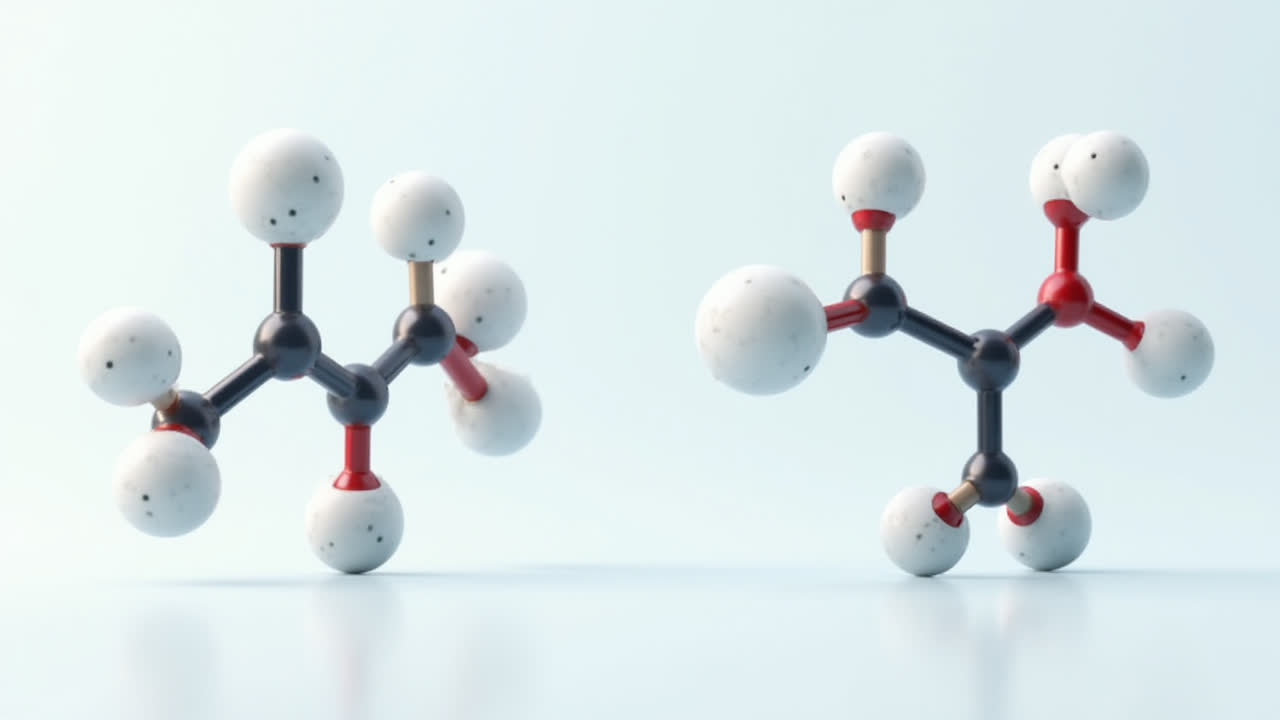
The endo Diels-Alder reaction represents a specific stereochemical outcome where the substituents on the dienophile point inward toward the newly formed six-membered ring. This orientation happens when the dienophile approaches the diene in a particular way during the reaction. Imagine the diene as an open hand and the dienophile as a small object approaching it - in the endo approach, the bulky part of the object faces toward your palm rather than away from it.
Why does this matter? Well, the endo product often forms faster under typical reaction conditions, making it what chemists call the "kinetic product." This preferential formation is sometimes explained by secondary orbital interactions between the π-systems of the diene and the electron-withdrawing groups on the dienophile. These interactions stabilize the transition state, lowering the activation energy and speeding up the reaction pathway to the endo product.
In practical terms, if you're running a Diels-Alder reaction at lower temperatures and for shorter reaction times, you're likely to observe a higher proportion of the endo product. This is particularly true when using dienophiles with strong electron-withdrawing groups like carbonyl-containing compounds (such as maleic anhydride), which can participate in those secondary orbital interactions.
Understanding the Exo Diels-Alder Reaction
On the flip side, we have the exo Diels-Alder reaction. In this stereochemical outcome, the substituents on the dienophile point outward, away from the newly formed six-membered ring. Using our hand analogy again, the bulky part of the approaching object faces away from your palm. This orientation typically results in less crowding and steric hindrance in the final product.
While the exo product might form more slowly under kinetic conditions, it often represents the more stable "thermodynamic product." This means that given enough time and energy (higher temperatures), the reaction mixture may shift toward favoring the exo product. This is because the outward orientation of substituents can minimize steric repulsions between bulky groups, resulting in a more energetically favorable arrangement in the long run.
Synthetic chemists can leverage this thermodynamic preference by adjusting reaction conditions. For instance, running Diels-Alder reactions at elevated temperatures for extended periods might increase the proportion of exo products. Additionally, using dienophiles with bulkier substituents can sometimes favor the exo pathway due to increased steric considerations during the approach.
Comparing Endo and Exo Approaches: The Stereochemical Dance
Understanding the subtle interplay between endo and exo approaches gives organic chemists powerful control over reaction outcomes. Let's think about it like a dance between molecules - the way they approach each other determines the final position they'll take. In the molecular world, this dance is influenced by factors such as temperature, solvent, catalyst presence, and the specific structural features of the reacting partners.
Have you ever wondered why nature seems to favor certain stereochemical outcomes? In biological systems, enzymes often control the approach of reacting molecules to ensure specific stereochemical results. This exquisite control is something chemists strive to replicate in the laboratory, and understanding endo/exo selectivity is a step toward that goal.
The endo-exo selectivity isn't just an academic curiosity - it has profound implications for synthetic routes to complex molecules. When designing a multi-step synthesis toward a natural product or pharmaceutical compound, chemists must carefully consider which stereochemical outcome will lead them closer to their target. Sometimes, getting the wrong stereochemistry at an early stage can make it impossible to reach the desired final structure!
Practical Applications and Importance in Synthesis
The stereochemical control offered by Diels-Alder reactions makes them invaluable tools in the synthesis of complex molecules. From natural products to pharmaceuticals, the ability to selectively create endo or exo products allows chemists to construct intricate three-dimensional structures with precise control.
For example, in the synthesis of certain antibiotics, getting the correct stereochemistry at key ring junctions is crucial for biological activity. The Diels-Alder reaction provides a means to establish these stereogenic centers in a single step, rather than through multiple sequential reactions. This efficiency is one reason why the Diels-Alder reaction earned its discoverers, Otto Diels and Kurt Alder, the Nobel Prize in Chemistry in 1950.
Modern synthetic approaches often employ catalysts to enhance endo/exo selectivity. Lewis acids like aluminum chloride or boron trifluoride can coordinate with dienophiles, making them more reactive and influencing their approach trajectory. More recently, chiral catalysts have been developed that can control not just endo/exo selectivity but also which face of the diene or dienophile participates in the reaction, allowing for even finer stereochemical control.
Comparison Table: Endo vs Exo Diels-Alder Reactions
| Feature | Endo Diels-Alder | Exo Diels-Alder |
|---|---|---|
| Substituent Orientation | Points inward toward newly formed ring | Points outward away from newly formed ring |
| Formation Preference | Kinetic product (forms faster) | Thermodynamic product (more stable) |
| Favored Conditions | Lower temperatures, shorter reaction times | Higher temperatures, longer reaction times |
| Steric Considerations | More crowded final structure | Less crowded final structure |
| Orbital Interactions | Secondary orbital interactions may stabilize transition state | Fewer secondary orbital interactions |
| Effect of Electron-Withdrawing Groups | Strong electron-withdrawing groups enhance endo selectivity | Bulky substituents may favor exo approach |
| Reversibility | Can convert to exo product under thermodynamic conditions | Typically represents the equilibrium endpoint |
| Examples of Dienophiles | Maleic anhydride, maleimides, quinones | Cyclopropenes, strained alkenes with bulky groups |
Key Factors Influencing Endo/Exo Selectivity
When planning a Diels-Alder reaction, several factors can influence whether you'll get predominantly endo or exo products. Understanding these variables gives synthetic chemists powerful tools to steer reactions toward desired outcomes:
- Temperature effects: Lower temperatures typically favor endo products (kinetic control), while higher temperatures can shift the equilibrium toward exo products (thermodynamic control).
- Solvent selection: Polar solvents can enhance reaction rates and sometimes influence selectivity by stabilizing charged transition states differently.
- Pressure: High-pressure conditions can accelerate Diels-Alder reactions and sometimes enhance endo selectivity due to the typically more compact transition state for endo approach.
- Catalysts: Lewis acids and other catalysts can dramatically influence selectivity by coordinating with the dienophile and altering its electronic and steric properties.
- Structural modifications: Adding bulky groups to either the diene or dienophile can steer selectivity based on steric considerations.
I'm always fascinated by how seemingly small changes in reaction conditions can completely flip the stereochemical outcome. In my own laboratory experiences, I've seen Diels-Alder reactions that gave almost exclusively endo products at room temperature shift to predominantly exo products when heated to reflux for extended periods. These observations highlight the delicate balance between kinetic and thermodynamic control in these systems.
Common Misconceptions About Endo and Exo Selectivity
Despite its importance in organic chemistry, there are several persistent misconceptions about endo/exo selectivity in Diels-Alder reactions that I'd like to address:
First, the "endo rule" - while it's often taught that Diels-Alder reactions preferentially give endo products, this is not a universal law. The preference can be highly dependent on the specific substrates and conditions. Some systems naturally favor exo products, particularly when steric factors dominate over electronic effects.
Second, many students believe that endo and exo products differ only in relative energy, but in reality, they represent distinct reaction pathways with different transition states. The kinetic preference for endo products arises from transition state stabilization, not just from the relative stability of the final products.
Third, there's a common assumption that endo/exo selectivity is an all-or-nothing phenomenon, when in fact, most Diels-Alder reactions produce mixtures of both isomers. The challenge for synthetic chemists is often not getting exclusive formation of one isomer, but rather achieving a useful level of selectivity (like >95:5 ratios) through careful optimization.
FAQ: Endo and Exo Diels-Alder Reactions
Why is the endo product favored in many Diels-Alder reactions?
The endo product is often favored kinetically in Diels-Alder reactions due to secondary orbital interactions between the π-electron system of the diene and the electron-withdrawing groups on the dienophile. These interactions can stabilize the transition state leading to the endo product, lowering its activation energy compared to the pathway leading to the exo product. This effect is particularly pronounced with dienophiles containing carbonyl groups or other strong electron-withdrawing substituents that can participate in these secondary interactions. However, it's important to note that this preference can be overridden by steric factors with bulky substituents or by thermodynamic control at higher temperatures.
How can I control whether a Diels-Alder reaction gives endo or exo products?
Controlling endo/exo selectivity in Diels-Alder reactions involves manipulating several factors. For higher endo selectivity, use lower temperatures, shorter reaction times, and dienophiles with strong electron-withdrawing groups. Lewis acid catalysts like AlCl₃ or ZnCl₂ can also enhance endo selectivity by coordinating with the dienophile and amplifying secondary orbital interactions. Conversely, for greater exo selectivity, consider higher temperatures, longer reaction times (allowing for equilibration to the more thermodynamically stable product), bulkier substituents on the reactants, or specialized catalysts designed to favor exo approach. In some cases, high pressure can influence selectivity as well, typically favoring endo products due to their more compact transition states.
What techniques can I use to determine endo/exo ratios in reaction products?
Several analytical techniques can help determine endo/exo ratios in Diels-Alder reaction products. Nuclear Magnetic Resonance (NMR) spectroscopy is most commonly used, with characteristic chemical shifts and coupling patterns that differ between endo and exo isomers. The proximity of substituents in the endo isomer often creates distinctive shielding or deshielding effects that can be identified in ¹H-NMR spectra. Gas Chromatography (GC) or High-Performance Liquid Chromatography (HPLC) can also separate the isomers for quantification, especially when coupled with mass spectrometry. For crystalline products, X-ray crystallography provides definitive structural information, though it requires obtaining suitable crystals. In complex cases, computational methods can help predict NMR shifts or other properties to assist in structural assignments.
Conclusion: The Delicate Dance of Molecular Approaches
The distinction between endo and exo Diels-Alder reactions highlights the exquisite stereochemical control possible in organic synthesis. These different approaches - whether the substituents point inward (endo) or outward (exo) - give chemists powerful tools to construct complex molecular architectures with precise three-dimensional arrangements.
Understanding the factors that influence endo/exo selectivity allows synthetic chemists to design reaction conditions that favor their desired stereochemical outcome. This control is particularly crucial in the synthesis of natural products, pharmaceuticals, and other complex molecules where the spatial arrangement of atoms directly impacts function.
As our understanding of these stereochemical principles continues to deepen, new catalytic systems and reaction conditions are being developed to achieve even greater levels of selectivity. The Diels-Alder reaction, with its endo and exo pathways, remains as relevant today as when it was first discovered - a testament to its enduring importance in organic chemistry.