EPS vs XPS: Expanded vs Extruded Polystyrene Comparison Guide
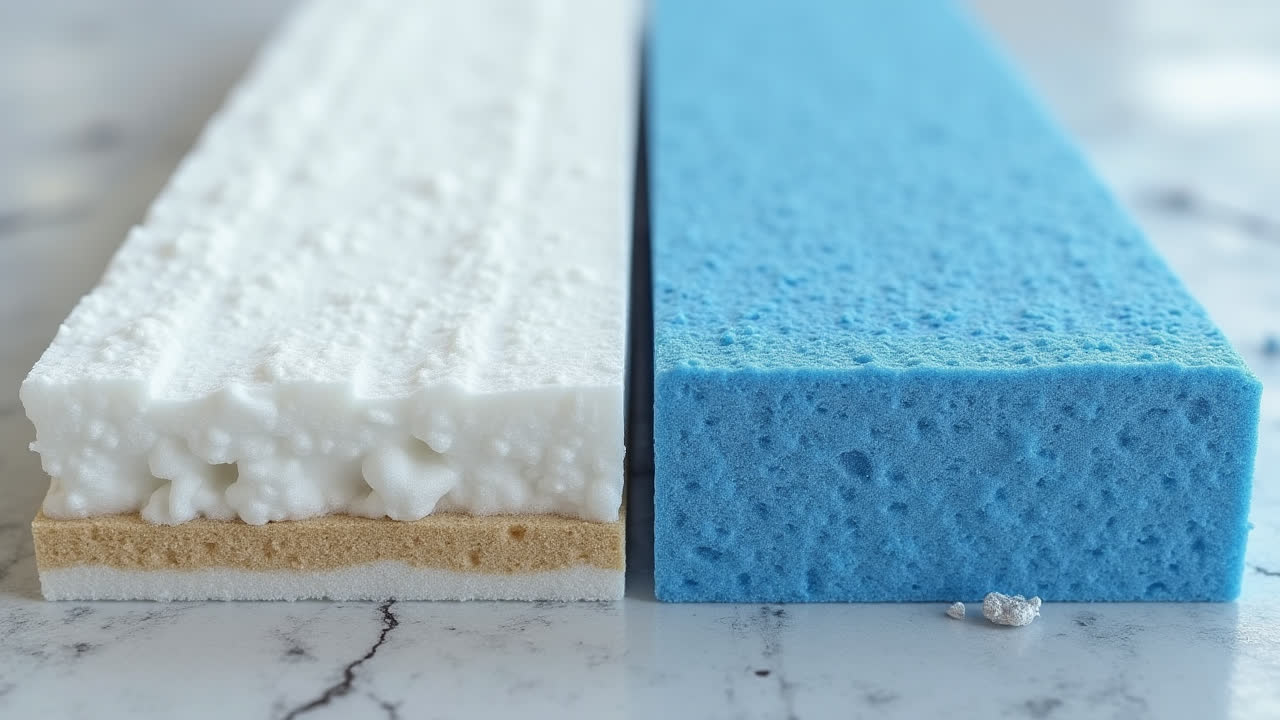
EPS vs XPS: Expanded vs Extruded Polystyrene Comparison Guide
If you've ever found yourself wondering about the difference between expanded and extruded polystyrene, you're definitely not alone! These two insulation materials might sound like they're basically the same thing, but trust me—they have some pretty significant differences that can really impact your insulation projects.
Having worked with both materials over the years, I can tell you that choosing between EPS and XPS isn't always straightforward. It's kind of like choosing between two good friends—they both have their strengths, but sometimes one is just better suited for certain situations.
What Actually is Expanded Polystyrene (EPS)?
Think of EPS as the spongy, lightweight cousin in the polystyrene family. You know those little foam beads you see when you break open packaging? That's basically what expanded polystyrene is made from! The manufacturing process is pretty fascinating—tiny polystyrene beads get steamed and expanded, kind of like popcorn, until they form a foam.
What's cool about EPS is that it has these closed-cell structures that trap air, making it a decent insulator. It's super lightweight, which makes it easy to work with on construction sites. I remember installing EPS panels on my first home renovation project—they were so light I could carry several sheets at once, which definitely saved my back!
EPS finds its way into so many applications: construction insulation, packaging (you've probably received fragile items wrapped in this stuff), marine buoyancy systems, and even lightweight fill for civil engineering projects. One thing you might not realize is that those decorative moldings on historic-looking buildings? Sometimes they're actually made from EPS!
Understanding Extruded Polystyrene (XPS)
Now, extruded polystyrene is the heavier, more robust sibling. Instead of beads getting expanded, XPS is created through a continuous extrusion process. Imagine pushing playdough through a mold, but with melted polystyrene—that's kind of how XPS is made!
The result? A much denser, more uniform material with smaller, tighter cells. This gives XPS some pretty impressive properties that make it my go-to choice for certain applications, especially when moisture is a concern.
You'll often see XPS in foundation insulation, flat roof applications, and cold storage facilities. One memorable project I worked on involved insulating a basement that had previous water damage—we absolutely needed XPS for its water resistance. In retrospect, that was the right call because that basement stayed dry through several flooding seasons.
Side-by-Side Comparison: EPS vs XPS
| Property | Expanded Polystyrene (EPS) | Extruded Polystyrene (XPS) |
|---|---|---|
| Density | Lower density (0.9-3.0 lbs/ft³) | Higher density (1.3-5.0 lbs/ft³) |
| R-value per inch | 3.6-4.2 | 4.5-5.0 |
| Moisture Resistance | Moderate (can absorb water) | Excellent (minimal water absorption) |
| Compressive Strength | Lower (10-20 psi typical) | Higher (15-60 psi typical) |
| Cost | More affordable | More expensive |
| Typical Applications | Basic insulation, packaging | Foundation insulation, flat roofs |
| Cell Structure | Open, interconnected beads | Closed, uniform cells |
| Installation Ease | Easier (lighter weight) | Moderate (heavier, stiffer) |
Key Differences That Matter in Real-World Applications
From my experience, the biggest differences come down to three main areas: moisture resistance, cost, and application suitability. XPS is a beast when it comes to keeping water out—I've seen it survive in wet conditions where EPS would have failed miserably.
However, EPS shouldn't be written off entirely. For above-grade applications where moisture isn't a major concern, EPS can be the smarter choice from a cost-benefit perspective. I always tell my clients that it's not about which material is "better"—it's about which one is right for their specific project needs.
One interesting observation: XPS tends to hold its insulating value better over time in challenging conditions. I've revisited projects years later and found that XPS maintained its performance, while EPS sometimes showed signs of degradation if exposed to moisture.
Similarities Worth Mentioning
Both EPS and XPS are derived from polystyrene, which means they share some fundamental characteristics. They're both recyclable (though the recycling infrastructure varies by location), both provide decent thermal insulation, and both are lightweight compared to traditional insulation materials.
Here's something cool: both materials can be cut and shaped on-site with simple tools. I've used everything from hot knives to regular saws to customize sheets to fit awkward spaces. This flexibility is one reason why polystyrene-based insulation remains popular in the construction industry.
Making the Right Choice for Your Project
When should you choose EPS? If you're working on a residential attic insulation project with tight budget constraints, EPS might be your best friend. It performs well in dry conditions and won't break the bank.
When is XPS the better option? Foundation work, flat roofs, and any application where moisture exposure is likely. The higher cost can be justified by the superior performance and longevity in challenging conditions.
Remember, the "right" choice depends on your specific circumstances. Sometimes I've had to mix and match—using XPS in vulnerable areas and EPS where the conditions are more forgiving. It's all about understanding the strengths and limitations of each material.
Frequently Asked Questions
Is XPS really worth the extra cost compared to EPS?
It depends on your application. If moisture resistance and long-term performance are critical (like in foundation insulation), the extra cost of XPS typically pays off through better durability and maintained insulation value. For basic applications where moisture isn't a concern, EPS can be the more economical choice.
Can I use EPS in basements or below-grade applications?
While EPS can be used in basements, it's not the ideal choice for below-grade applications due to its lower moisture resistance. If you do use EPS in basements, you'll need to ensure proper waterproofing measures are in place, such as vapor barriers and drainage systems. XPS is generally the preferred choice for these applications.
Which material has better environmental credentials?
Both EPS and XPS have environmental impacts, but they differ slightly. EPS generally has a lower manufacturing energy requirement and can be recycled more easily. However, both materials are derived from petroleum-based products. The most environmentally friendly choice often depends on local recycling capabilities and the longevity of the installation—a material that lasts longer may have a better overall environmental footprint.
Final Thoughts on EPS vs XPS
At the end of the day, both expanded and extruded polystyrene have their place in the construction world. The choice between them shouldn't be based on which is "better" in general, but which is better for your specific application.
I've seen too many projects where someone chose the more expensive option thinking it would automatically be better, only to realize they were paying for features they didn't need. Conversely, I've seen projects suffer because someone went with the cheaper option in applications where the premium features of XPS were actually necessary.
The key takeaway? Understand your project requirements, consider your environmental conditions, and make an informed decision. Whether you go with EPS or XPS, proper installation is crucial for getting the best performance out of either material. Good luck with your insulation project!