Landing Page vs Home Page: 9 Critical Differences You Should Know
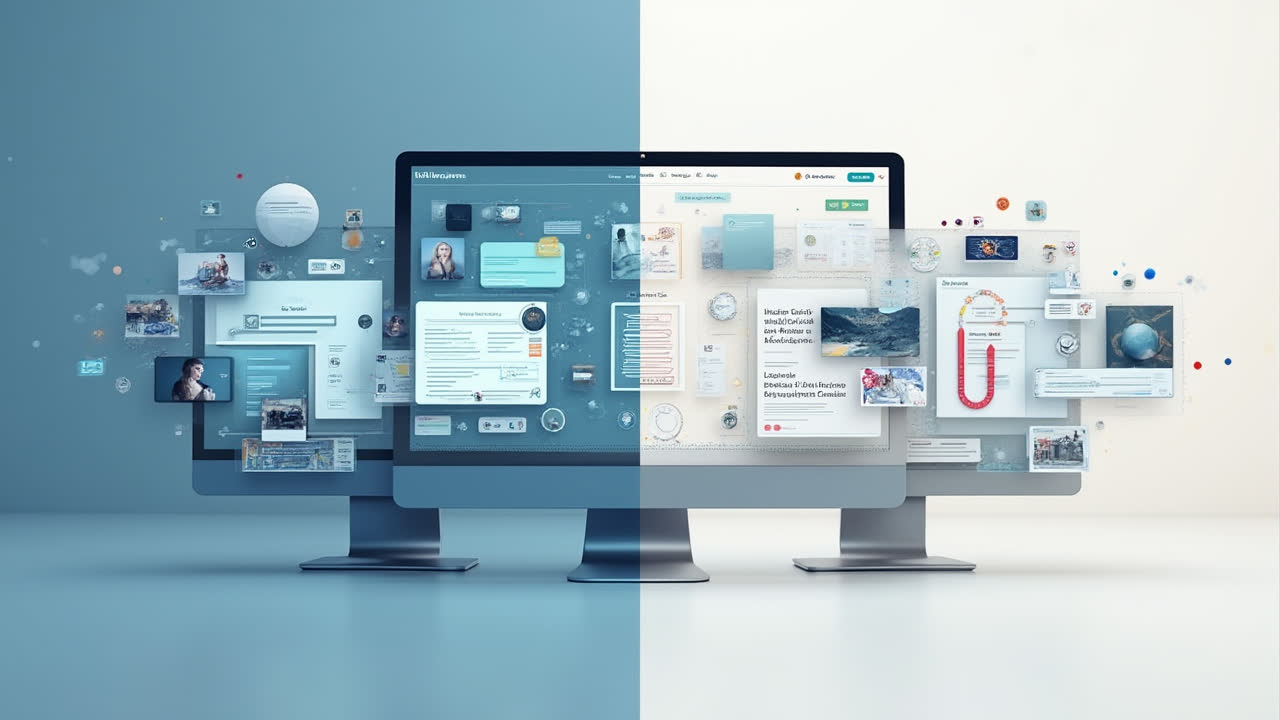
When building an effective website, understanding the difference between landing pages and home pages is crucial for optimizing conversion rates and improving user experience. Many website owners confuse these two page types, leading to missed opportunities in their digital marketing strategy. Have you ever wondered why some websites convert visitors better than others? The secret often lies in how they use their landing and home pages.
In my years of website development, I've seen countless businesses struggle with this fundamental distinction. A home page welcomes visitors to your entire website ecosystem, while a landing page focuses on a specific marketing campaign or goal. Getting this wrong can cost you valuable leads and sales.
This comprehensive guide will explore the key differences, purposes, and best practices for both landing pages and home pages. By the end, you'll understand exactly which type of page to use for different marketing objectives and how to optimize each for maximum effectiveness.
What Is a Landing Page? Definition and Purpose
A landing page is a specialized web page designed for a specific marketing campaign with a single focused objective. Unlike other pages on your website, landing pages typically appear in response to clicking on online advertisements, email links, or search engine results. Their primary purpose is conversion – getting visitors to take a specific action like signing up for a newsletter, downloading an ebook, or making a purchase.
I recently worked with an e-commerce client who was struggling with low conversion rates. After implementing dedicated landing pages for their PPC campaigns (instead of directing traffic to the home page), their conversion rate jumped by 34%. That's the power of a well-designed landing page!
Landing pages are also called lead capture pages, static pages, or destination pages. They're intentionally designed to limit navigation options and direct visitor attention toward a single call-to-action. This focused approach eliminates distractions and increases the likelihood of conversion.
What makes landing pages particularly valuable is their measurability. Because they're linked to specific campaigns, marketers can track click-through rates and conversion metrics to evaluate campaign effectiveness. This data-driven approach allows for continuous optimization and improved ROI on marketing spend.
What Is a Home Page? Definition and Purpose
The home page serves as the main entrance to your website – it's what visitors see when they type your domain name into their browser. Think of it as the front door to your digital property, welcoming visitors and guiding them toward various areas of your site. Unlike landing pages, home pages provide a broad overview of your brand, products, services, and content.
When I redesigned my own website last year, I spent weeks perfecting my home page. Why? Because I know it's the most visited page and forms the critical first impression for new visitors. Your home page must quickly communicate your value proposition while providing clear navigation to other important sections.
Home pages typically feature navigation menus, recent content, featured products, and multiple calls-to-action. They're designed to accommodate various user intents rather than focusing on a single conversion goal. For example, an educational website's home page might contain links to different subject tutorials, while an e-commerce site would showcase product categories and special offers.
Another common feature of home pages is personalization for returning visitors. Many websites allow users to create accounts, and upon login, the home page adapts to display personalized content based on user preferences or history. This functionality enhances user experience by making the content more relevant to each visitor.
Landing Page vs Home Page: Key Differences Comparison
Understanding the fundamental differences between landing pages and home pages allows you to use each strategically in your digital marketing efforts. Let's examine the most important distinctions between these two crucial page types:
| Comparison Point | Landing Page | Home Page |
|---|---|---|
| Primary Purpose | Drive conversions for a specific campaign or goal | Introduce visitors to the website and provide navigation |
| Navigation Elements | Minimal or none to avoid distractions | Comprehensive menu system to access all site sections |
| Call-to-Actions | Single, focused CTA for conversion | Multiple CTAs for different user journeys |
| Content Focus | Specific product, service, or offer | Brand overview and variety of content types |
| Traffic Sources | Ads, email campaigns, specific marketing efforts | Direct traffic, organic search, brand awareness |
| Design Complexity | Simple, focused design with minimal elements | More complex with various sections and features |
| Metrics for Success | Conversion rate, cost per acquisition | Bounce rate, pages per session, overall engagement |
| Longevity | Often temporary for specific campaigns | Permanent with regular updates |
These differences highlight why using the right page type for each marketing objective is essential. I've seen businesses waste thousands of advertising dollars by driving paid traffic to their home page instead of a dedicated landing page. The result? High bounce rates and poor conversion performance.
When to Use a Landing Page vs Home Page
Knowing when to use each page type can significantly impact your marketing success. Here's my practical guide on which page to use in different scenarios:
When to Use Landing Pages:
- Running paid advertising campaigns (Google Ads, Facebook Ads, etc.)
- Promoting a specific product launch or limited-time offer
- Gathering leads for a particular service or segment
- Testing different marketing messages or designs
- Creating campaign-specific conversion funnels
- When you need detailed analytics for a specific marketing initiative
When to Use Home Pages:
- Introducing new visitors to your brand and overall value proposition
- Providing navigation to various sections of your website
- Highlighting recent content, news, or company updates
- Showcasing the breadth of your products or services
- Building overall brand identity and recognition
- Serving as a starting point for exploratory visitors
I recently advised a client who was promoting a new webinar through social media. Instead of linking to their home page, we created a dedicated landing page that focused exclusively on the webinar benefits and registration. This simple change boosted sign-up rates by over 60% compared to their previous approach.
Pro Tip: Don't be afraid to create multiple landing pages for different audience segments or marketing channels. Testing different approaches can reveal what resonates best with your audience.
Optimizing Your Landing Page for Conversions
Creating an effective landing page requires a strategic approach focused on conversion optimization. Based on my experience working with dozens of clients, here are key best practices to maximize your landing page performance:
1. Clear and Compelling Headline
Your headline should immediately communicate the value proposition and grab attention. Make it specific, action-oriented, and benefit-driven. For example, "Double Your Email Open Rates in 30 Days" is far more compelling than "Email Marketing Tips."
2. Focused Content
Keep text concise and focused on benefits, not features. Use bullet points to highlight key advantages and address common objections. Remember that your landing page has one job: convincing visitors to take a specific action.
3. Strong Visual Elements
Include high-quality images or videos that support your message. Product demonstrations, customer testimonials, or explanatory videos can significantly boost conversion rates by building trust and demonstrating value.
4. Prominent Call-to-Action
Make your CTA button stand out through size, color, and position. Use action-oriented text that creates urgency or excitement. Test different variations to find what works best with your audience.
5. Social Proof
Incorporate testimonials, reviews, case studies, or trust badges to build credibility. Seeing that others have benefited from your offer reduces perceived risk and increases conversion likelihood.
Sometimes the smallest details can make the biggest difference. One client saw a 23% increase in conversions simply by changing their CTA button from "Submit" to "Get My Free Guide Now." These seemingly minor tweaks can have substantial impacts on your bottom line.
Optimizing Your Home Page for User Experience
While landing pages focus on conversion, home pages need to balance multiple objectives while providing an excellent user experience. Here are essential optimization strategies for your home page:
1. Clear Value Proposition
Visitors should understand what you offer and why it matters within seconds of arriving. Place your value proposition prominently at the top of the page using concise, benefit-focused language.
2. Intuitive Navigation
Design a logical, user-friendly navigation system that helps visitors find what they're looking for quickly. Use familiar patterns and terminology to reduce cognitive load.
3. Strategic Content Hierarchy
Organize content based on importance, with the most critical elements appearing higher on the page. Use visual cues like size, color, and white space to guide attention to key areas.
4. Mobile Responsiveness
Ensure your home page looks and functions perfectly on all devices. With mobile traffic exceeding desktop for many websites, this isn't optional – it's essential for survival in today's digital landscape.
5. Page Speed
Optimize loading times by compressing images, leveraging browser caching, and minimizing code. Even a one-second delay can significantly impact bounce rates and conversions.
I recently worked with an artisan bakery whose home page was beautiful but slow-loading and cluttered. After streamlining the design and improving load time, their online order rate increased by 28%, proving that functionality trumps excessive design elements.
When a Home Page Can Function as a Landing Page
In some cases, your home page might serve double duty as a landing page. This is most common for small businesses, solo entrepreneurs, or companies with a single flagship product. If you're considering this approach, here are situations where it might work:
Appropriate Scenarios:
- Small businesses with limited resources for multiple pages
- Single-product companies where the entire site focuses on one offering
- Personal brands where the individual is the primary "product"
- Early-stage startups still defining their market position
If your home page needs to function as a landing page, focus on incorporating key landing page elements while maintaining necessary navigation. This might include a prominent CTA above the fold, compelling benefit statements, and social proof elements.
However, I'd usually recommend creating separate landing pages even for small businesses. The costs of building additional pages are relatively low compared to the potential conversion benefits. My freelance photographer friend saw her booking rate triple after creating dedicated landing pages for different types of photo shoots, rather than directing all traffic to her home page.
FAQs About Landing Pages and Home Pages
Can a website have multiple landing pages but only one home page?
Yes, and this is actually the recommended approach for most websites. While you'll only have one main home page, you can (and should) create multiple landing pages for different marketing campaigns, audience segments, or products. Each landing page can be optimized for specific keywords and conversion goals, allowing you to tailor your message to different traffic sources and customer needs.
How do I measure the effectiveness of my landing page versus my home page?
Landing pages and home pages should be measured with different metrics because they serve different purposes. For landing pages, focus on conversion rate, cost per acquisition, and campaign ROI. For home pages, pay attention to bounce rate, pages per session, average session duration, and navigation patterns. Use analytics tools like Google Analytics to track these metrics and A/B testing platforms to experiment with different designs and content approaches for both page types.
Should my landing page and home page have similar designs?
While your landing page and home page should share brand elements like colors, fonts, and logo for consistency, they often require different design approaches. Your home page needs comprehensive navigation and multiple content sections, while landing pages should have minimal distractions and a focused design that guides visitors toward a single action. That said, maintaining some visual consistency helps build trust and brand recognition, especially for visitors who might later explore your main website after converting on a landing page.
Conclusion: Using Both Page Types Strategically
Understanding the difference between landing pages and home pages isn't just academic knowledge—it's a practical distinction that directly impacts your marketing results. Home pages serve as your website's front door, welcoming visitors and guiding them to various sections of your site. Landing pages function as specialized conversion tools designed to maximize response to specific marketing initiatives.
In my experience, the most successful websites use both page types strategically. They maintain a well-designed, informative home page that builds brand credibility and helps visitors navigate their site. Simultaneously, they create targeted landing pages for specific campaigns, products, or audience segments to optimize conversion rates.
Remember that optimization is an ongoing process, not a one-time effort. Regularly test different approaches, monitor your analytics, and refine your pages based on user behavior and conversion data. The digital landscape continues to evolve, and your approach to landing pages and home pages should evolve with it.
What's your experience with landing pages versus home pages? Have you found one to be more effective for your specific business needs? The answer often depends on your unique goals, audience, and marketing strategy—there's no one-size-fits-all solution in the dynamic world of web design and digital marketing.