Plains vs Plateaus: 7 Key Differences You Should Know
Introduction to Plains and Plateaus
When looking at a topographic map of Earth, you'll notice various landforms that shape our planet's surface. Among these diverse geological features, plains and plateaus stand out as two of the most prominent flat landforms that cover significant portions of our world. Despite their apparent similarity in offering flat surfaces, these landforms differ significantly in their formation, elevation, and impact on human civilization.
Have you ever wondered why certain flat areas support thriving agriculture while others appear barren and inhospitable? The answer often lies in understanding whether you're dealing with a plain or a plateau. Plains cover more than one-third of Earth's land surface and have historically supported major civilizations, while plateaus present unique challenges and opportunities due to their elevated nature.
In this comprehensive guide, we'll explore the fundamental differences between these two landforms, their various types, and their significance to both the natural world and human activities. Whether you're a geography enthusiast, a student, or simply curious about Earth's diverse landscapes, understanding these distinctions will give you a deeper appreciation of our planet's complex surface features.
What Are Plains?
Plains are extensive areas of flat or gently rolling land with relatively low elevation compared to surrounding regions. These vast stretches of flat terrain typically have minimal elevation changes, making them appear almost level to the human eye. One of the most distinctive characteristics of plains is their low-lying nature, often situated at or slightly above sea level.
Plains can form through various geological processes, with each formation method creating unique characteristics. The most common formation processes include sediment deposition by rivers, erosion of higher landforms, lava flows that cool and solidify, and the gradual retreat of seas from coastal areas. This diversity in formation leads to different types of plains, each with its own set of features and benefits.
What makes plains particularly valuable to human civilization is their fertility and accessibility. The flat terrain makes transportation and construction relatively straightforward, while the soils—especially in alluvial plains—are often rich in nutrients. It's no coincidence that many of the world's major agricultural regions and metropolitan areas are situated on plains. The Great Plains of North America, the Indo-Gangetic Plain in South Asia, and the Northern European Plain have all supported dense human populations throughout history.
Types of Plains
Plains come in various forms based on their formation and location. Understanding these distinctions helps explain their different characteristics and uses:
- Coastal Plains - These form along coastlines where the land meets the sea. They're generally the result of sea level changes or the accumulation of sediments carried by rivers to the ocean. The Atlantic Coastal Plain in the eastern United States is a prime example, stretching from New Jersey to Florida.
- Alluvial Plains - Formed by rivers depositing sediments over flood plains during periodic flooding, these plains are exceptionally fertile. The Mississippi River Valley features extensive alluvial plains that support intensive agriculture.
- Glacial Plains - When glaciers retreat, they leave behind flat areas where the ice once stood. The Northern European Plain was largely shaped by glacial activity during the Ice Age.
- Lava Plains - Created by volcanic activity where lava flows cool and form flat surfaces. The Columbia Plateau in the northwestern United States formed this way.
- Lacustrine Plains - These develop from dried-up lake beds, often resulting in extremely flat terrain. The Great Plains of North America include areas that were once ancient lake beds.
What Are Plateaus?
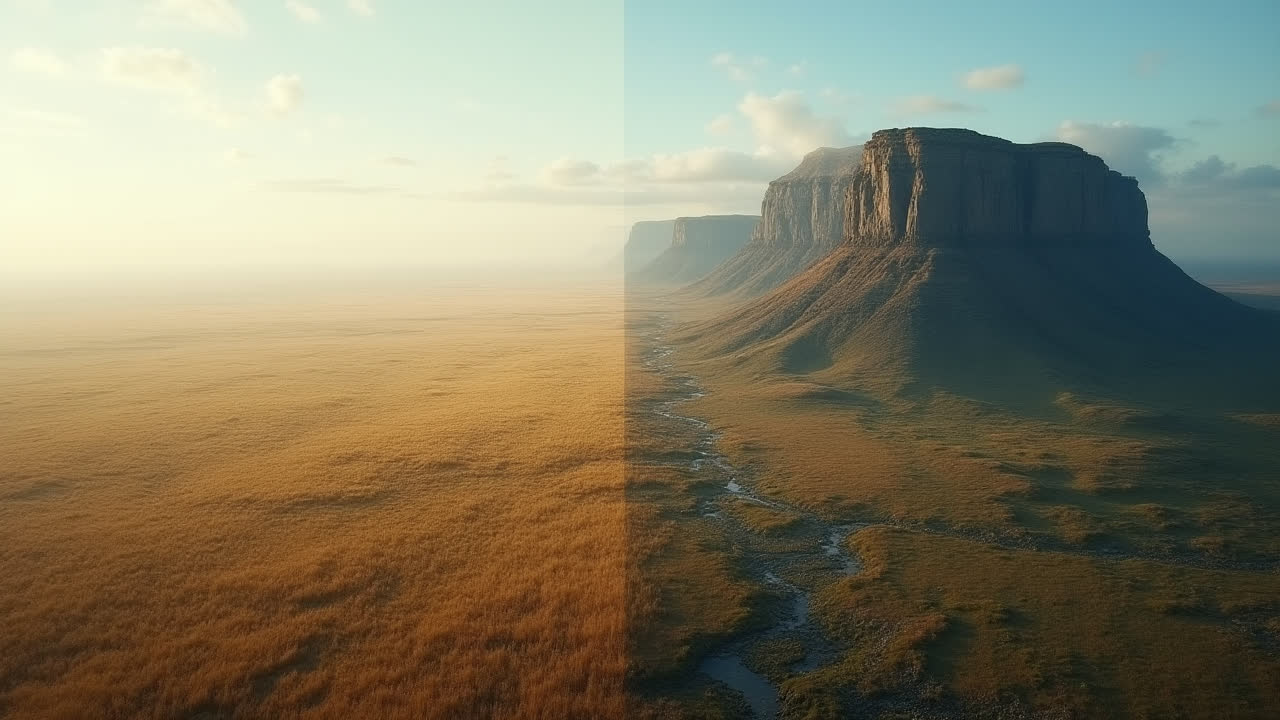
Unlike plains, plateaus are elevated landforms with relatively flat tops that rise abruptly from the surrounding terrain. Often called tablelands or high plains, plateaus represent a fascinating geological feature where substantial areas have been uplifted while maintaining their flat upper surface. This unique combination of flatness and elevation distinguishes plateaus from both plains and mountains.
The formation of plateaus can occur through several geological processes. Some plateaus form when tectonic forces push large sections of Earth's crust upward without significant folding or faulting. Others result from extensive lava flows that build up layer upon layer until they create an elevated flat surface. Erosion can also play a role when surrounding areas are worn away, leaving a resistant section standing higher than its surroundings.
Life on plateaus presents distinctive challenges and opportunities compared to plains. The elevated nature of plateaus often creates cooler climates than surrounding lowlands at similar latitudes. This can lead to unique ecosystems and specialized agriculture. Additionally, many plateaus are rich in mineral resources due to the geological processes that formed them, making them valuable for mining and resource extraction.
Some of the world's most impressive plateaus include the Tibetan Plateau (the highest and largest plateau on Earth), the Colorado Plateau (known for the Grand Canyon), and the Deccan Plateau in India. Each offers distinctive landscapes and has influenced human settlement patterns in significant ways.
Types of Plateaus
Plateaus can be classified into several types based on their formation and relationship to surrounding landforms:
- Intermontane Plateaus - Surrounded by mountains on all sides, these plateaus sit in the middle of mountain ranges. The Tibetan Plateau, nestled between the Himalayan and Kunlun mountain ranges, is the most prominent example.
- Continental Plateaus - Bordered by plains or oceans on at least one side, these extensive plateaus can cover large portions of continents. The African Plateau, covering much of the southern and eastern parts of Africa, falls into this category.
- Piedmont Plateaus - Located at the base of mountain ranges, these plateaus form a transition between mountains and plains. The Piedmont Plateau along the eastern edge of the Appalachian Mountains in the United States is a classic example.
- Volcanic Plateaus - Created by extensive lava flows that build up over time, these plateaus often contain rich volcanic soils. The Columbia Plateau in the northwestern United States was formed by massive basaltic lava flows.
- Dissected Plateaus - These were once flat but have been carved by erosion into complex landscapes of valleys and ridges while retaining their overall elevated nature. The Allegheny Plateau in the eastern United States shows this characteristic.
Key Differences Between Plains and Plateaus
Understanding the distinctions between plains and plateaus helps explain their different roles in both natural ecosystems and human activities. I've personally observed these differences while traveling across various landscapes, and it's fascinating how these seemingly simple landforms can vary so dramatically in their characteristics and impact.
| Characteristic | Plains | Plateaus |
|---|---|---|
| Elevation | Low-lying, at or slightly above sea level | Significantly elevated above surrounding areas |
| Surface Character | Generally flat or gently rolling | Flat or slightly undulating at the top with steep edges |
| Formation Process | Deposition, erosion, or sea level changes | Uplift, volcanic activity, or erosion of surrounding areas |
| Climate | Varies widely but often moderate | Typically cooler than surrounding lowlands at the same latitude |
| Agricultural Potential | Often highly fertile, especially alluvial plains | Variable fertility; often limited by climate or soil conditions |
| Human Settlement | Typically densely populated | Less densely populated, with settlements often concentrated at edges |
| Alternative Names | Lowlands, flatlands | Tablelands, high plains, mesas (smaller plateaus) |
| Water Drainage | Often slow, with meandering rivers | Rapid at edges, often creating waterfalls and deep valleys |
Human Interaction with Plains and Plateaus
Throughout history, humans have interacted differently with plains and plateaus, adapting to their unique characteristics for settlement, agriculture, and resource extraction. These different approaches reflect the distinct challenges and opportunities each landform presents.
Plains and Human Civilization
Plains have historically been the cradles of many great civilizations due to their favorable conditions for agriculture and settlement. The fertile soils of alluvial plains, in particular, have supported intensive farming for thousands of years. I recall visiting the Indo-Gangetic Plain and being amazed by the patchwork of fields stretching to the horizon—a landscape shaped by millennia of agricultural activity.
The flat terrain of plains also facilitates transportation and urban development. It's no coincidence that many of the world's largest cities are located on plains. From New York City on the Atlantic Coastal Plain to Beijing on the North China Plain, these flat landscapes have enabled the growth of sprawling urban centers. The ease of road and railway construction on level ground has further enhanced connectivity between settlements on plains.
However, plains also present certain challenges. Their flat nature can make them susceptible to flooding, especially in river basins. Many civilizations developed sophisticated water management systems to control flooding and harness the benefits of seasonal river overflows. Modern cities on plains often require extensive flood control infrastructure to protect urban areas from inundation.
Plateaus and Human Adaptation
Human settlement on plateaus follows different patterns compared to plains. The elevated nature of plateaus often creates distinct microclimates that require specialized agricultural practices. In some cases, plateau environments support unique crops not viable in surrounding lowlands. The coffee grown on the Ethiopian Plateau, for instance, benefits from the cooler temperatures and distinct rainfall patterns of its elevated location.
Plateaus frequently contain valuable mineral resources due to their geological formation processes. Mining activities on plateaus have driven economic development in many regions, from the copper mines of the Colorado Plateau to the diamond mines of the Deccan Plateau. These resources have attracted human settlement even to plateaus with challenging living conditions.
The edges of plateaus, where rapid elevation changes occur, often present both challenges and opportunities. These transitional zones frequently feature dramatic landscapes like waterfalls and gorges that have become tourism hotspots. The Grand Canyon, carved into the Colorado Plateau, draws millions of visitors annually to witness its spectacular scenery shaped by the interaction of water with the plateau's geology.
Environmental Significance of Plains and Plateaus
Beyond their importance to human activities, plains and plateaus play crucial roles in Earth's environmental systems. These landforms influence climate patterns, support distinctive ecosystems, and affect biodiversity in significant ways.
Plains often function as vast biological corridors, allowing species to migrate across large distances without encountering major geographical barriers. Before extensive human development, the Great Plains of North America supported enormous herds of bison and other grazing animals that migrated seasonally across these expansive grasslands. Even today, plains regions support diverse wildlife adapted to open environments.
The soils of plains represent some of Earth's most valuable carbon reservoirs. Grassland plains, in particular, store substantial amounts of carbon in their extensive root systems and soil organic matter. Proper management of these ecosystems can contribute significantly to carbon sequestration efforts to mitigate climate change.
Plateaus, with their varied elevations and often isolated nature, frequently function as biodiversity hotspots. The isolation created by elevated plateaus can lead to the evolution of endemic species found nowhere else. The unique flora and fauna of South Africa's Cape Floral Region, situated on a plateau area, exemplify this phenomenon. Many plateaus also create rain shadow effects, influencing precipitation patterns across wide regions.
Both landforms face environmental challenges in the modern era. Plains have experienced extensive conversion to agriculture and urban development, leading to habitat loss and fragmentation. Plateaus often contend with issues like overgrazing, deforestation, and mining impacts. Conservation efforts for both landforms require balancing human needs with maintaining ecological integrity.
Frequently Asked Questions About Plains and Plateaus
How do plains and plateaus affect climate patterns?
Plains and plateaus influence climate patterns in different ways. Large plains can create continental climate conditions with hot summers and cold winters due to the absence of moderating influences from oceans or mountains. They also allow weather systems to move unimpeded across large areas. Plateaus, being elevated landforms, typically experience cooler temperatures than surrounding lowlands at the same latitude (approximately 6.5°C cooler for every 1,000 meters of elevation). They can also create rain shadow effects, where one side receives abundant precipitation while the other remains dry. The Tibetan Plateau, for example, significantly influences the Asian monsoon system, affecting weather patterns across much of the continent.
Can a landform be both a plain and a plateau?
While plains and plateaus are distinct landforms, some regions can exhibit characteristics of both depending on the scale and perspective. For example, the Great Plains of North America gradually increase in elevation from east to west, reaching heights of over 1,500 meters near the Rocky Mountains. This western section could be considered a high plain or plateau when viewed in isolation. Similarly, large plateaus may contain relatively flat areas that function as smaller plains within the elevated region. The terminology sometimes overlaps, with terms like "high plains" referring to elevated flat areas that share characteristics with both landforms. However, in strict geological classification, a landform is typically categorized as either a plain or a plateau based on its dominant characteristics and formation process.
Which plains and plateaus are considered the most significant worldwide?
Several plains and plateaus stand out for their size, ecological importance, or human significance. Among plains, the Indo-Gangetic Plain supports nearly a billion people across multiple countries, making it one of the most densely populated regions on Earth. The Amazon Basin, while containing some varied topography, includes vast plains that support the world's largest rainforest ecosystem. The Eurasian Steppe, stretching from Hungary to Manchuria, represents the world's largest continuous grassland plain. For plateaus, the Tibetan Plateau is both the highest (averaging 4,500 meters above sea level) and most extensive plateau on Earth, covering 2.5 million square kilometers. The Colorado Plateau in the United States is famous for its spectacular erosional features including the Grand Canyon. The Deccan Plateau in India, formed by ancient volcanic activity, covers much of the southern Indian peninsula and has significantly influenced the subcontinent's history and development.
Conclusion: The Diverse Roles of Plains and Plateaus
Plains and plateaus, while both characterized by relatively flat surfaces, represent distinctly different landforms that have shaped Earth's geography and human history in profound ways. The low-lying, accessible nature of plains has made them centers of agriculture, urban development, and transportation networks. Meanwhile, the elevated character of plateaus has created unique environments that offer different resources and challenges for human adaptation.
As we've explored throughout this article, the differences between these landforms extend far beyond simple elevation. Their formation processes, climate influences, ecological roles, and interactions with human civilization each follow distinct patterns that have contributed to the rich diversity of our planet's landscapes.
Understanding these two major landforms helps us appreciate the complex interplay between geology, climate, ecology, and human activity that has shaped our world. Whether we're considering conservation efforts, agricultural planning, or simply appreciating the varied beauty of Earth's surface, recognizing the unique characteristics of plains and plateaus enriches our perspective on the planet we call home.