Possum vs Opossum: Complete Guide to Key Differences
Have you ever spotted a furry creature with a pointed snout rummaging through your backyard at night and wondered, "Is that a possum or an opossum?" Despite their similar names and appearances, these two marsupials have distinct differences that set them apart. The confusion between possums and opossums is common, with many people using the terms interchangeably. However, these creatures come from different parts of the world and possess unique characteristics worth exploring.
When I first encountered what I thought was a possum in my garden while visiting relatives in Australia, I was surprised to learn that what I was familiar with back home in North America was actually an opossum. This sparked my curiosity about these fascinating marsupials and their distinctive features. In this comprehensive guide, we'll delve into the key differences between possums and opossums, including their habitats, physical characteristics, behaviors, and much more.
Understanding Possums: The Australian Marsupial
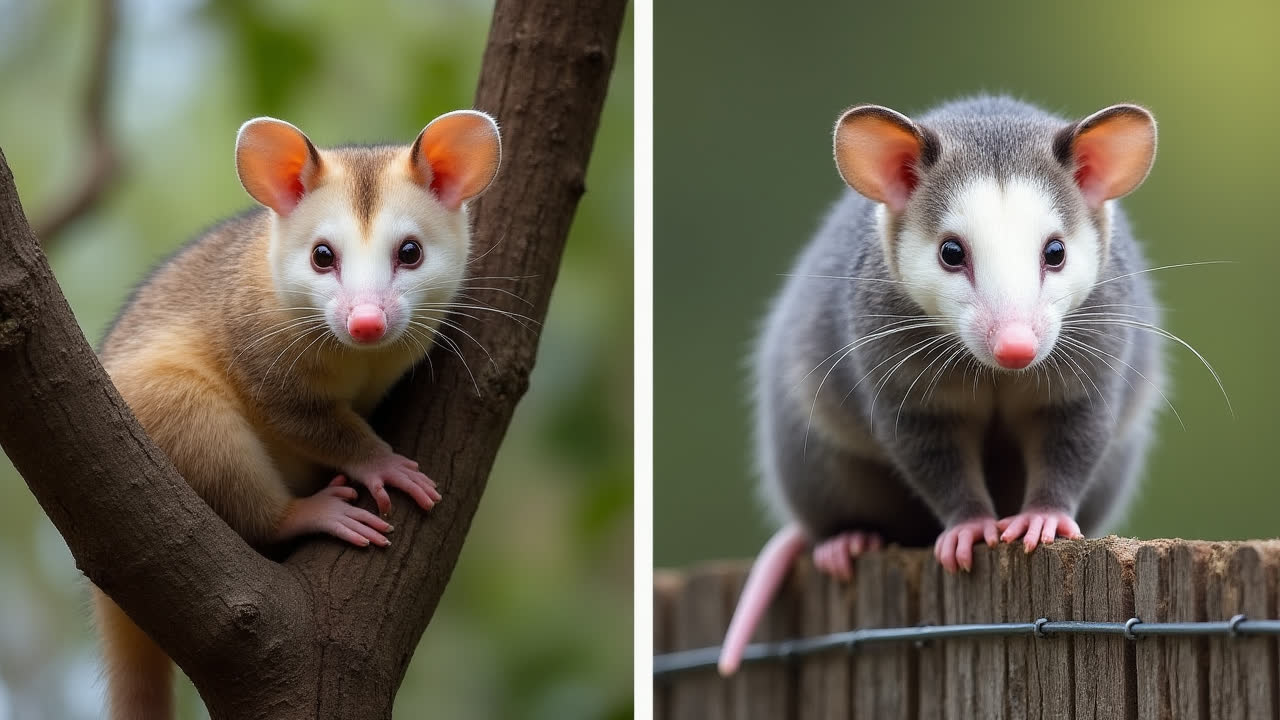
Possums are native to Australia and belong to the family Phalangeridae. The name "possum" was actually derived from their North American counterparts due to their similar appearance. These adorable marsupials are commonly known as brushtail possums, with their most distinctive feature being their bushy, fleshy tail covered with fur.
Australian possums typically display four primary color variations: silver-gray, brown, black, or gold. Compared to opossums, possums have larger ears and softer, bushier fur that gives them a cuddlier appearance. Another common variety is the ringtail possum, which, as the name suggests, has a characteristic ringed tail.
These marsupials have adapted well to various Australian habitats, from forests to urban environments. I've heard stories from Australian friends about possums making themselves at home in residential areas, sometimes even moving into roof spaces! Their ability to thrive in different environments showcases their impressive adaptability.
Possums are generally considered more visually appealing than their North American relatives. With their soft fur, expressive eyes, and bushy tails, they often elicit "aww" responses from those who encounter them. Isn't it fascinating how two similar creatures can evoke such different reactions based on their appearance?
Exploring Opossums: North America's Native Marsupial
Opossums, belonging to the family Didelphidae, are the only marsupials native to North America. The name "opossum" was given by John Smith, an English colonist of the Jamestown colony in the 1600s. These creatures are commonly referred to as Virginia North American opossums.
Unlike their Australian cousins, opossums have a distinctive white face with a grayish-white body. Their feet and ears are typically black, adding to their unique appearance. Perhaps the most notable characteristic of opossums is their rat-like, hairless tail, which often contributes to their reputation as being less visually appealing than possums.
One fascinating aspect of opossum behavior is their defense mechanism known as "playing possum." When threatened, opossums can enter a catatonic state where they mimic the appearance and smell of a sick or dead animal. I once witnessed this behavior while camping in the woods – an opossum that wandered into our campsite appeared to "play dead" when my dog barked at it. After we moved away, it gradually "came back to life" and scurried off!
Despite their sometimes intimidating appearance with pointed teeth and rat-like tails, opossums play important ecological roles. They consume ticks and other pests, helping to control their populations naturally. Some studies suggest that a single opossum can eat thousands of ticks in a season, potentially reducing the spread of Lyme disease and other tick-borne illnesses.
Opossums have also developed remarkable adaptations for survival. Their partially opposable thumbs on their hind feet allow them to grasp branches and objects effectively. Did you know that opossums have an unusually high resistance to snake venom? This adaptation helps them survive encounters with venomous snakes, which they occasionally prey upon.
Key Differences: Possum vs Opossum Comparison
Understanding the differences between possums and opossums helps clarify the distinct nature of these two marsupial species. While they share some similarities as marsupials, their evolutionary paths have led to significant variations in their physical characteristics, behaviors, and habitats.
| Feature | Possum | Opossum |
|---|---|---|
| Taxonomy | Family Phalangeridae | Family Didelphidae |
| Geographic Origin | Australia | North America |
| Common Name | Common Brushtail Possum | Virginia North American Opossum |
| Coloration | Silver-gray, brown, black, or gold | White face with grayish-white body |
| Tail | Fleshy and covered with fur | Rat-like and hairless |
| Ears | Larger | Smaller, typically black |
| Fur Texture | Soft and bushy | Coarse, long, and flat |
| Defense Mechanism | Climbing and hiding | "Playing possum" (appearing dead) |
As the table clearly illustrates, despite their similar names and general marsupial characteristics, possums and opossums represent distinct species adapted to their respective environments. The irony in their naming – with the Australian animal being named after the North American one due to resemblance – adds an interesting historical twist to their story.
Behavioral Similarities and Differences
While possums and opossums have distinct physical characteristics, they do share some behavioral traits common to marsupials. Both species are primarily nocturnal, preferring to forage for food during the night and rest during daylight hours. This nocturnal lifestyle helps them avoid potential predators and reduces competition with diurnal animals.
Both possums and opossums are opportunistic omnivores with diverse diets. They consume a variety of foods including fruits, vegetables, insects, small vertebrates, eggs, and carrion. This dietary flexibility contributes to their survival success in different environments. I've noticed that the possum visiting my friend's garden in Sydney has a particular fondness for fallen fruit, while the opossums in my area seem to be excellent at finding insects and small creatures.
When it comes to reproduction, both species follow the marsupial pattern of giving birth to relatively undeveloped young that continue their development in the mother's pouch. However, there are differences in their reproductive strategies. Opossums typically have larger litters, sometimes producing up to 20 joeys (though not all survive), while possums usually have fewer offspring per litter.
The defense mechanisms employed by these marsupials differ significantly. Opossums are famous for "playing possum" – entering a state resembling death when threatened. In contrast, possums rely more on climbing abilities and agility to escape danger. The different evolutionary pressures in their respective environments have clearly shaped these distinct survival strategies.
In terms of lifespan, possums generally enjoy longer lives than opossums. Australian possums commonly live 10-12 years in the wild, while North American opossums typically only survive 2-4 years. This stark difference in longevity reflects their different ecological niches and adaptive strategies.
Ecological Roles and Human Interactions
Both possums and opossums play important ecological roles in their native habitats. As omnivores, they help control insect populations and contribute to seed dispersal through their consumption and subsequent distribution of fruit seeds. Their scavenging behaviors also aid in cleaning up carrion, contributing to ecosystem health.
Opossums have a particularly beneficial relationship with humans due to their voracious appetite for ticks, which can transmit Lyme disease and other illnesses. A single opossum can consume thousands of ticks in a season, making them valuable allies in controlling tick populations. Isn't it interesting how an animal often considered unappealing can provide such important ecological services?
Human interactions with these marsupials vary by region and species. In Australia, possums are protected by law, reflecting their cultural and ecological significance. However, they can sometimes become nuisances in urban areas when they take up residence in roofs or damage gardens. North American opossums, while beneficial in many ways, are sometimes viewed with suspicion or fear due to misconceptions about their appearance and behavior.
Conservation challenges differ for these marsupials as well. Australian possums face habitat loss from urbanization and agriculture, while some species are threatened by introduced predators. North American opossums, though generally adaptable, face threats from vehicle collisions, habitat destruction, and persecution based on misunderstandings about their nature.
Both possums and opossums have adapted remarkably well to human-modified landscapes. Many species have learned to thrive in urban and suburban environments, finding new food sources and shelter opportunities. This adaptability speaks to their evolutionary success and resilience in changing conditions.
Frequently Asked Questions About Possums and Opossums
Are possums and opossums dangerous to humans or pets?
Generally, neither possums nor opossums pose significant threats to humans or pets. Both animals are typically non-aggressive and prefer to avoid confrontation. Opossums may hiss, growl, or show their teeth when threatened, but this is primarily a defensive display. They rarely attack unless cornered, and their "playing dead" response is usually their first defense mechanism. Australian possums are even less likely to show aggression toward humans. However, like any wild animal, they should be observed from a distance and not handled without proper training. If you find either animal in your home, it's best to contact wildlife professionals for safe removal.
What should I do if I find a baby possum or opossum?
If you find a baby possum or opossum (joey), check the immediate area for the mother, as she may be nearby. Baby opossums often cling to their mother's back once they're old enough to leave the pouch, and they can sometimes fall off. If the mother is dead or not present, and the baby appears healthy, place it in a warm, secure container with a soft cloth and contact your local wildlife rehabilitation center immediately. Do not attempt to feed or provide water to the joey, as improper care can be harmful. Wildlife rehabilitators have the proper training and permits to care for these protected animals and give them the best chance of survival.
Do possums and opossums carry diseases that can affect humans?
Contrary to common misconceptions, opossums are actually less likely than many mammals to carry rabies due to their low body temperature, which creates an inhospitable environment for the virus. However, they can potentially carry other diseases and parasites such as leptospirosis, tuberculosis, and spotted fever. Australian possums may carry certain bacterial infections and parasites. For both animals, the risk of disease transmission to humans is relatively low when normal precautions are taken. Avoid direct contact with these animals or their waste, wash hands thoroughly after cleaning areas where they may have been, and never handle them without appropriate protection. If you're bitten or scratched, clean the wound immediately and seek medical attention.
Conclusion: Understanding Our Marsupial Neighbors
The distinction between possums and opossums extends far beyond their names, encompassing differences in habitat, appearance, behavior, and ecological roles. While Australian possums charm with their furry tails and appealing appearance, North American opossums contribute valuable ecosystem services despite their less conventional looks.
Both these marsupials have successfully adapted to changing environments, including human-dominated landscapes. Their resilience speaks to the remarkable adaptability of marsupial species, which have evolved unique strategies for survival in their respective regions.
Understanding the differences between possums and opossums not only clears up common confusion but also fosters appreciation for these fascinating creatures. By recognizing their distinct characteristics and contributions to our ecosystems, we can promote coexistence and conservation efforts tailored to their specific needs.
Next time you spot one of these nocturnal marsupials, take a moment to appreciate its unique adaptations. Whether it's a bushy-tailed Australian possum or a resilient North American opossum, these creatures represent remarkable evolutionary success stories worth celebrating and protecting.