Prokaryotic vs Eukaryotic Gene Expression: Key Differences Explained
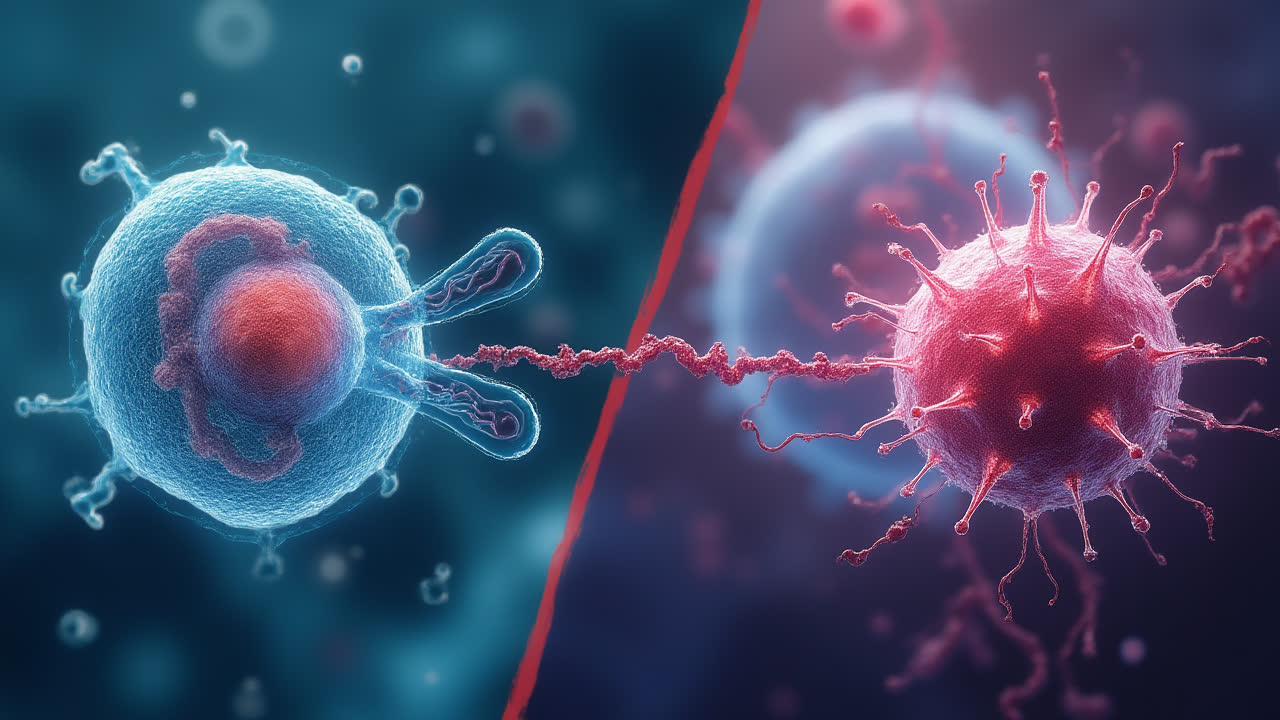
Understanding the differences between prokaryotic and eukaryotic gene expression is fundamental to grasping how cells function and produce proteins. These processes represent some of the most fascinating aspects of cellular biology, as they demonstrate how genetic information flows from DNA to functional proteins. Have you ever wondered why these mechanisms evolved differently in simple bacteria versus complex organisms like humans?
Gene expression is the process by which the information encoded in a gene is used to synthesize a functional gene product – typically a protein. This process involves multiple steps including transcription (DNA to RNA) and translation (RNA to protein). However, the way these steps occur varies dramatically between prokaryotes (bacteria and archaea) and eukaryotes (plants, animals, fungi, and protists).
In this comprehensive guide, we'll explore the key differences between these two fundamental gene expression systems, their unique characteristics, and why these differences matter in biological function and evolution. Whether you're a biology student or simply curious about how your cells work, this exploration will provide valuable insights into these essential cellular processes.
Understanding Prokaryotic Gene Expression
Prokaryotic gene expression occurs entirely in the cytoplasm since prokaryotic cells lack a nucleus. This is one of the defining characteristics that sets it apart from the eukaryotic process. The simplicity of prokaryotic cells leads to a more streamlined gene expression process that has evolved for efficiency and rapid response to environmental changes.
In prokaryotes, genes are often organized into functional units called operons. These are clusters of functionally-related genes that are transcribed together as a single mRNA molecule. Famous examples include the Lac operon and Trp operon in bacteria like E. coli. This organization allows prokaryotes to coordinate the expression of related genes efficiently.
The transcription process in prokaryotes utilizes a single type of RNA polymerase that requires a sigma factor and a specific DNA sequence called the Pribnow box to initiate transcription. Once transcription begins, the mRNA that's produced doesn't require extensive processing before translation can begin. In fact, one of the most remarkable aspects of prokaryotic gene expression is that translation often begins while transcription is still ongoing – a phenomenon known as coupled transcription-translation.
This coupling is possible because both processes occur in the same cellular compartment (the cytoplasm). As the 5' end of the mRNA is being synthesized during transcription, ribosomes can immediately attach and begin translating it into a protein, even before the entire mRNA molecule is complete. This efficiency is particularly beneficial for prokaryotes, which often need to respond rapidly to changing environmental conditions.
Regulation of gene expression in prokaryotes primarily occurs at the transcriptional level. Mechanisms like the activation or repression of operons allow cells to control which genes are expressed and when. This regulation is typically in response to environmental signals, such as the presence or absence of specific nutrients. By controlling transcription initiation, prokaryotes can efficiently manage their metabolic resources and adapt to changing conditions.
Exploring Eukaryotic Gene Expression
Eukaryotic gene expression presents a more complex system compared to prokaryotes, reflecting the more sophisticated cellular organization of eukaryotic organisms. The process is spatially segregated, with transcription occurring inside the nucleus and translation taking place in the cytoplasm. This compartmentalization introduces additional layers of regulation and processing between the two main steps of gene expression.
Unlike prokaryotes, eukaryotes employ three different RNA polymerases to transcribe different types of RNA molecules. RNA polymerase I synthesizes ribosomal RNA (rRNA), RNA polymerase II produces messenger RNA (mRNA), and RNA polymerase III generates transfer RNA (tRNA). Each polymerase is specialized for its specific function and requires different promoter elements and transcription factors.
A striking feature of eukaryotic genes is the presence of non-coding sequences called introns that interrupt the protein-coding regions (exons). After initial transcription, the primary mRNA transcript must undergo extensive processing before it can be translated. This processing includes three main modifications:
- Addition of a 5' cap – a modified guanine nucleotide that protects the mRNA from degradation and assists in ribosome binding
- Addition of a 3' poly-A tail – a string of adenine nucleotides that increases mRNA stability and facilitates export from the nucleus
- RNA splicing – the removal of introns and joining of exons to create the mature mRNA molecule
These post-transcriptional modifications transform the primary transcript into a mature mRNA molecule that can exit the nucleus and undergo translation in the cytoplasm. Eukaryotic translation utilizes 80S ribosomes, which are larger and more complex than the 70S ribosomes found in prokaryotes.
Regulation of eukaryotic gene expression is remarkably complex, occurring at multiple levels: the epigenetic level (through DNA methylation and histone modifications), transcriptional level (via enhancers, silencers, and transcription factors), post-transcriptional level (through RNA processing and stability), translational level (via initiation factors), and post-translational level (through protein modifications). This multi-layered regulation allows for precise control of gene expression in response to a wide variety of signals and developmental cues.
Key Differences Between Prokaryotic and Eukaryotic Gene Expression
| Feature | Prokaryotic Gene Expression | Eukaryotic Gene Expression |
|---|---|---|
| Location | Entire process occurs in the cytoplasm | Transcription in nucleus, translation in cytoplasm |
| RNA Polymerase | Single type | Three types (I, II, and III) |
| Gene Organization | Operons (clusters of related genes) | Individual genes with their own promoters |
| mRNA Structure | Polycistronic (codes for multiple proteins) | Monocistronic (codes for a single protein) |
| Introns | Absent (continuous coding sequence) | Present (interrupt coding sequences) |
| Post-transcriptional Modifications | Minimal or absent | Extensive (5' cap, 3' poly-A tail, splicing) |
| Transcription-Translation Coupling | Coupled (occur simultaneously) | Uncoupled (separate in time and space) |
| Ribosomes | 70S ribosomes | 80S ribosomes |
| Regulation | Primarily at transcriptional level | Multiple levels (epigenetic, transcriptional, post-transcriptional, translational, post-translational) |
Functional Implications of These Differences
The structural and mechanistic differences between prokaryotic and eukaryotic gene expression reflect the different evolutionary pressures and functional requirements of these cell types. Prokaryotes have evolved for efficiency and rapid response, while eukaryotes have developed more complex regulatory mechanisms that allow for greater specificity and coordination in multicellular organisms.
Prokaryotic gene expression is optimized for speed and resource efficiency. The coupling of transcription and translation allows prokaryotes to quickly respond to environmental changes, such as the sudden availability of a nutrient or the presence of a toxin. The operon structure enables coordinated expression of functionally related genes, ensuring that all components of a metabolic pathway are produced together when needed.
In contrast, eukaryotic gene expression prioritizes precision and regulatory complexity over raw speed. The spatial separation of transcription and translation, along with extensive mRNA processing, introduces numerous checkpoints at which gene expression can be regulated. This complexity allows for the fine-tuned control necessary for cellular differentiation and development in multicellular organisms.
The presence of introns in eukaryotic genes, while seeming inefficient at first glance, provides several advantages. Introns facilitate alternative splicing, whereby different combinations of exons can be joined together to produce different protein isoforms from a single gene. This mechanism greatly increases the protein diversity that can be generated from a limited number of genes. Additionally, some introns contain regulatory elements that influence transcription rates or mRNA stability.
The multiple layers of regulation in eukaryotic gene expression also enable more sophisticated responses to complex signaling networks. For instance, post-translational modifications like phosphorylation, glycosylation, and ubiquitination can rapidly alter protein function, localization, or stability without requiring new gene expression. This provides an additional level of control that is particularly important in contexts like cell signaling, where rapid and reversible changes in protein activity are essential.
Evolutionary Perspectives
The differences between prokaryotic and eukaryotic gene expression reflect their distinct evolutionary histories. Prokaryotes, which appeared first in evolutionary history, evolved streamlined systems optimized for rapid reproduction and adaptation to changing environments. Eukaryotes, which emerged later, developed more complex cellular architecture and regulatory mechanisms that facilitated the evolution of multicellularity and specialized cell types.
Interestingly, mitochondria and chloroplasts – organelles believed to have originated from symbiotic relationships with prokaryotes – retain aspects of prokaryotic gene expression. These organelles have their own genomes and transcription/translation machinery that more closely resemble prokaryotic systems than eukaryotic ones, providing support for the endosymbiotic theory of their origin.
The compartmentalization of eukaryotic cells into membrane-bound organelles, particularly the nucleus, was a critical evolutionary innovation that enabled the separation of transcription and translation. This separation allowed for the development of intricate RNA processing mechanisms and more complex regulation of gene expression, which in turn facilitated the evolution of complex multicellular organisms with diverse cell types.
While prokaryotic and eukaryotic gene expression differ in many ways, they also share fundamental similarities that reflect their common ancestry. Both systems use DNA as the genetic material, RNA as an intermediate, and ribosomes for protein synthesis. The genetic code is largely conserved across all domains of life, with only minor variations in some organisms. These commonalities point to a shared evolutionary origin for all living systems, despite the diverse mechanisms they have evolved for expressing their genetic information.
FAQ: Prokaryotic vs Eukaryotic Gene Expression
Why is prokaryotic gene expression faster than eukaryotic?
Prokaryotic gene expression is faster primarily because transcription and translation occur simultaneously in the same cellular compartment. As mRNA is being synthesized, ribosomes can immediately attach to the 5' end and begin protein synthesis before transcription is complete. Additionally, prokaryotic mRNA doesn't require extensive processing (no intron removal, no 5' cap or poly-A tail addition), and prokaryotic genes are often organized in operons that allow for coordinated expression of functionally related genes. These features create a streamlined process optimized for rapid response to environmental changes.
What are the main advantages of complex eukaryotic gene expression?
The complex nature of eukaryotic gene expression offers several advantages. First, it enables more sophisticated regulation at multiple levels (epigenetic, transcriptional, post-transcriptional, translational, and post-translational), allowing for fine-tuned control appropriate for specialized cell types in multicellular organisms. Second, processes like alternative splicing of introns create protein diversity from a limited number of genes. Third, post-transcriptional modifications enhance mRNA stability and control. Finally, the compartmentalization of different processes provides additional regulatory checkpoints and allows for the evolution of more complex cellular functions and structures necessary for multicellular life.
How do differences in prokaryotic and eukaryotic gene expression impact biotechnology applications?
The differences in prokaryotic and eukaryotic gene expression significantly influence biotechnology applications. Prokaryotic systems like E. coli are often preferred for producing simple proteins due to their rapid growth and easy genetic manipulation. However, they lack the machinery for many post-translational modifications required for complex eukaryotic proteins. When producing human proteins for therapeutic purposes, eukaryotic systems (like yeast, insect cells, or mammalian cell lines) are often necessary to ensure proper folding, glycosylation, and other modifications essential for protein function. Understanding these differences is crucial for designing effective expression systems in biotechnology, protein engineering, and pharmaceutical development.
Conclusion
The differences between prokaryotic and eukaryotic gene expression represent fundamental distinctions in how cells translate genetic information into functional proteins. From the streamlined, coupled processes in prokaryotes to the complex, compartmentalized systems in eukaryotes, these mechanisms reflect the unique evolutionary histories and functional requirements of their respective cell types.
Understanding these differences is not just an academic exercise. It has practical implications in fields ranging from medicine to biotechnology. Knowledge of these processes helps us comprehend how genetic mutations lead to disease, how antibiotics target prokaryotic cells without harming eukaryotic ones, and how to engineer cells to produce valuable proteins for research or therapeutic purposes.
As our molecular tools and technologies continue to advance, our ability to manipulate and harness gene expression in both prokaryotic and eukaryotic systems will likely expand, opening new possibilities for addressing challenges in health, agriculture, and industrial biotechnology. The fundamental differences between these systems, which once evolved in response to different selective pressures, now provide us with diverse toolkits for addressing the complex challenges of the modern world.