Pyrite vs Chalcopyrite: How to Tell These Minerals Apart
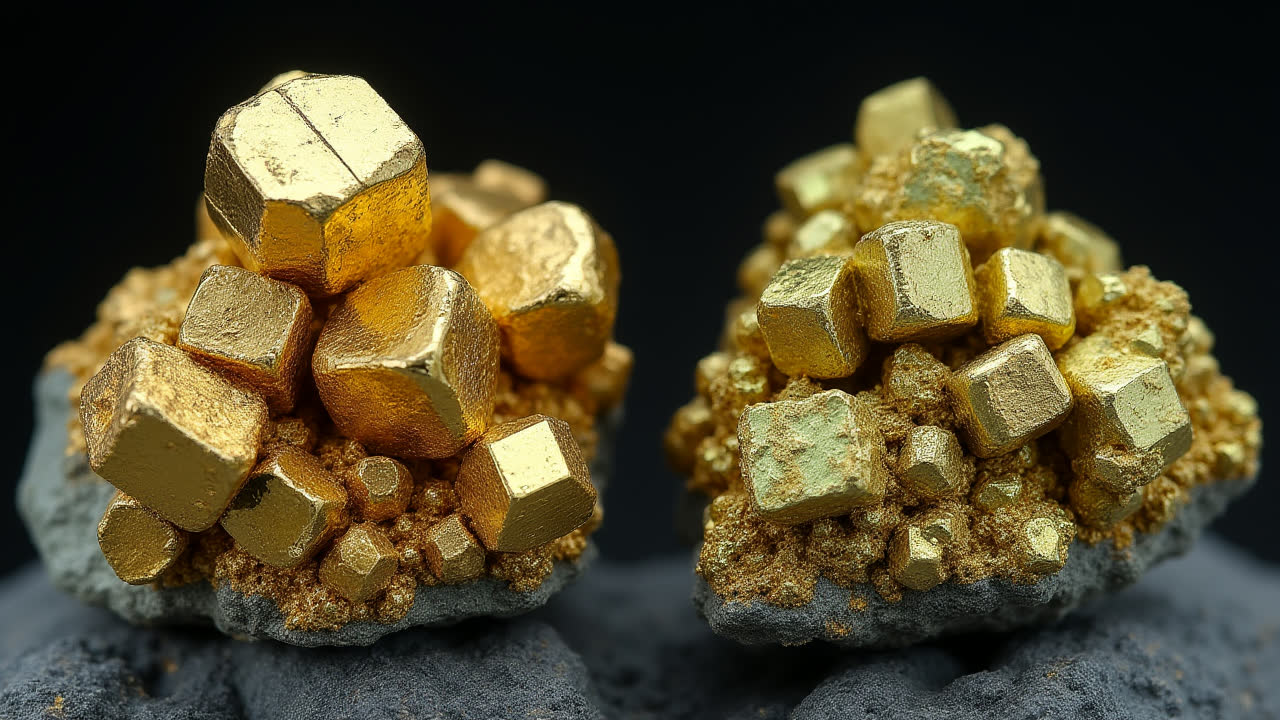
Have you ever picked up a shiny, golden-looking rock and wondered if you've struck gold? Chances are, you've found one of two common minerals that often confuse amateur rockhounds and prospectors alike: pyrite or chalcopyrite. These gleaming minerals might look similar at first glance, but they have distinct characteristics that set them apart. Understanding the difference between pyrite and chalcopyrite is essential for anyone interested in geology, mineral collecting, or mining.
I've been fascinated by these minerals since I stumbled upon a piece of pyrite during a hiking trip years ago. That golden glimmer caught my eye, and for a brief moment, I thought I'd found a gold nugget! That excitement quickly turned into a learning opportunity when a more experienced friend pointed out my "fool's gold." Since then, I've been studying these minerals and helping others identify their finds.
What Is Pyrite? The Famous "Fool's Gold"
Pyrite, commonly known as "fool's gold," is one of the most widespread sulfide minerals on Earth. Its name comes from the Greek word "pyr," meaning fire, as it can create sparks when struck against metal or another hard object. With its brassy-yellow color and metallic luster, pyrite has been mistaken for gold by inexperienced prospectors throughout history, earning its infamous nickname.
Chemically, pyrite consists of iron disulfide (FeS₂), making it a compound of iron and sulfur. This mineral forms in a variety of geological environments, from high-temperature hydrothermal veins to low-temperature sedimentary deposits. It can develop in virtually any rock type—igneous, metamorphic, or sedimentary—which explains its widespread occurrence. Have you ever noticed those perfect cubic crystals in some rock specimens? That's one of pyrite's characteristic formation patterns, though it can also form in octahedral or pyritohedral shapes.
Despite containing iron, pyrite isn't used as an iron ore due to its high sulfur content, which would make the resulting metal brittle. Historically, pyrite was used to create sparks for firearms and later as a source of sulfur for producing sulfuric acid. Today, its primary value lies in sometimes containing small amounts of gold and other precious metals. When I examine a piece of pyrite, I'm always struck by how its perfect geometric crystals can form naturally—it's like finding miniature sculptures created by the Earth itself.
Interestingly, pyrite isn't stable when exposed to air and water for long periods. It slowly decomposes through a process called oxidation, forming iron oxides and sulfates. This decomposition can lead to acid mine drainage, an environmental concern in mining areas where exposed pyrite creates acidic runoff that can harm waterways. When you find pyrite specimens for your collection, you're essentially capturing a moment in their ongoing cycle of formation and breakdown.
What Is Chalcopyrite? The Copper-Bearing Mineral
Chalcopyrite might look similar to pyrite at first glance, but it has a distinct composition and importance. The name chalcopyrite comes from the Greek words "chalkos" (copper) and "pyrites" (strike fire), reflecting both its copper content and its similarity to pyrite. With its brassy-yellow to golden-yellow color, chalcopyrite is also sometimes mistaken for gold, though it typically has a more iridescent tarnish than pyrite.
Chemically, chalcopyrite is composed of copper iron sulfide (CuFeS₂), containing the elements copper, iron, and sulfur. This combination makes it the most important ore of copper worldwide, accounting for approximately 70% of the world's copper production. When I worked briefly at a mining museum, visitors were often surprised to learn that the electronic devices they used daily contained copper that likely came from this unassuming mineral.
Unlike pyrite's isometric crystal system, chalcopyrite forms in the tetragonal system, though well-formed crystals are relatively rare. More commonly, it occurs as massive or granular deposits within larger rock formations. The mineral forms primarily in hydrothermal veins, contact metamorphic zones, and as disseminated grains in igneous rocks. I've found that chalcopyrite often occurs alongside other sulfide minerals like pyrite, bornite, and galena, making mineral identification an interesting puzzle for collectors.
When exposed to air, chalcopyrite develops a distinctive iridescent tarnish with blues, purples, and greens, which mineral enthusiasts sometimes call "peacock ore" (though true peacock ore is actually bornite). This tarnishing provides one visual clue for distinguishing it from pyrite. Additionally, chalcopyrite is softer than pyrite, with a hardness of 3.5-4 on the Mohs scale compared to pyrite's 6-6.5, meaning it can be scratched with a knife or nail, while pyrite cannot.
Key Differences Between Pyrite and Chalcopyrite
| Property | Pyrite | Chalcopyrite |
|---|---|---|
| Chemical Formula | FeS₂ (Iron disulfide) | CuFeS₂ (Copper iron sulfide) |
| Color | Brass-yellow, often with a pale gold tone | Brass-yellow with possible iridescent tarnish |
| Hardness (Mohs scale) | 6-6.5 | 3.5-4 |
| Crystal System | Isometric (cubic) | Tetragonal |
| Streak Color | Greenish-black to brownish-black | Greenish-black |
| Specific Gravity | 4.9-5.2 | 4.1-4.3 |
| Primary Use | Sulfuric acid production, sometimes contains gold | Major ore of copper |
| Scratch Test | Cannot be scratched with a nail | Can be scratched with a nail |
While both minerals share a similar appearance at first glance, several key characteristics can help you tell them apart. The copper content in chalcopyrite gives it slightly different physical properties and makes it economically valuable for different reasons than pyrite. When examining specimens, I've found that the hardness test is one of the quickest ways to differentiate between them—try scratching the mineral with a steel nail (but be careful not to damage valuable specimens).
Another distinguishing feature is their behavior when exposed to the elements. Pyrite tends to decompose into iron oxides and sulfates, while chalcopyrite weathers to form various copper minerals like malachite and azurite. This weathering process often creates beautiful green and blue secondary minerals that mineral collectors prize. During a field trip to an old mining district, I was amazed to see how chalcopyrite exposures had transformed over time into vibrant displays of these secondary copper minerals.
Identification Tips and Common Mistakes
Distinguishing between pyrite and chalcopyrite—and telling both apart from real gold—requires attention to several characteristics. Gold's malleability sets it apart from both minerals; it can be dented with a needle, while pyrite and chalcopyrite will shatter or flake. Pyrite typically forms perfect cubic or octahedral crystals, whereas chalcopyrite rarely shows well-defined crystal forms. When I teach mineral identification workshops, I always bring samples of all three for hands-on comparison.
The streak test is another reliable method for identification. Both pyrite and chalcopyrite leave a greenish-black to brownish-black streak on an unglazed porcelain plate, while gold leaves a yellow streak. Additionally, pyrite has a brighter, more silvery-gold appearance, while chalcopyrite often has a deeper brass-yellow color that may display iridescent tarnishing. I've helped dozens of hopeful "gold discoverers" identify their finds using these simple tests, and yes, occasionally someone does bring in actual gold!
One of the most common mistakes beginners make is assuming that anything with a golden color must be either gold or pyrite. Several other minerals, including chalcopyrite, marcasite, and certain micas, can display golden hues. Another misconception is that pyrite is worthless—while it's certainly not as valuable as gold, well-formed pyrite crystals can be prized specimens for collectors and can command respectable prices. During my stint working at a mineral shop, I sold a spectacular pyrite specimen from Spain for several hundred dollars—not bad for "fool's gold"!
Geological Significance and Formation
Both pyrite and chalcopyrite serve as important indicator minerals for geologists. Their presence can signal environments suitable for the formation of other valuable minerals and resources. Pyrite often forms in reducing environments where organic matter decomposes without oxygen, such as in black shales or coal deposits. In contrast, chalcopyrite typically forms in hydrothermal environments associated with intrusive igneous activity. When exploring potential mining sites, geologists look for these minerals as signs of possible larger ore deposits.
The formation processes of these minerals reveal fascinating aspects of Earth's chemistry. Pyrite can form at various temperatures and pressures, making it one of the most common sulfide minerals. Chalcopyrite generally requires a specific set of conditions involving copper-rich fluids interacting with iron-bearing rocks. I once visited a research laboratory where scientists were studying the formation conditions of these minerals to better understand ore deposit development, and it was fascinating to see how they could simulate these processes under controlled conditions.
Both minerals play roles in the sulfur cycle and can contribute to acid mine drainage when exposed through mining activities. This environmental concern has prompted significant research into mitigation strategies and has influenced modern mining practices. Some innovative companies are now finding ways to extract valuable trace elements from pyrite while also neutralizing its potential environmental impact—turning a problem into an opportunity.
Frequently Asked Questions About Pyrite and Chalcopyrite
How can I tell if I have found gold, pyrite, or chalcopyrite?
The simplest tests include checking malleability (gold is malleable while pyrite and chalcopyrite are brittle), hardness (gold is soft, pyrite is hard, and chalcopyrite is moderately hard), and streak color (gold leaves a yellow streak, while both pyrite and chalcopyrite leave a greenish-black streak). Gold doesn't tarnish or decompose in air, while both pyrite and chalcopyrite will oxidize over time.
Are pyrite and chalcopyrite valuable to collectors?
Yes, both minerals can be valuable to collectors, particularly specimens with well-formed crystals, unusual formations, or aesthetic appeal. Large, perfect pyrite cubes or "pyrite suns" (disk-shaped specimens) can sell for significant amounts. Chalcopyrite specimens with iridescent tarnish or associated secondary minerals like malachite or azurite are also prized by collectors.
Where are pyrite and chalcopyrite commonly found?
Pyrite is found worldwide in various geological environments, including sedimentary, metamorphic, and igneous rocks. Notable localities include Peru, Spain, Italy, and numerous sites across North America. Chalcopyrite is also globally distributed, with significant deposits in Chile, Peru, Mexico, Australia, and the United States. Amateur collectors can often find these minerals in old mining districts, quarries, and exposed rock formations with proper permissions.
Conclusion: Appreciating Earth's Golden Imposters
While pyrite and chalcopyrite might not have the monetary value of gold, they offer something equally valuable to those with a scientific curiosity: windows into Earth's geological processes. These minerals tell stories of ancient hydrothermal systems, volcanic activity, and the chemical reactions that have shaped our planet. The next time you come across a gleaming golden mineral in the field, take a moment to appreciate it not for what it isn't (gold), but for what it is—a fascinating example of nature's mineralogical diversity.
Whether you're a serious collector, an amateur rockhound, or simply curious about that shiny specimen you found on a hike, understanding the differences between pyrite and chalcopyrite enhances your appreciation of the natural world. And who knows? Learning to distinguish these minerals might one day help you recognize when you've actually found real gold!