Sepals vs Petals: 7 Essential Differences Explained
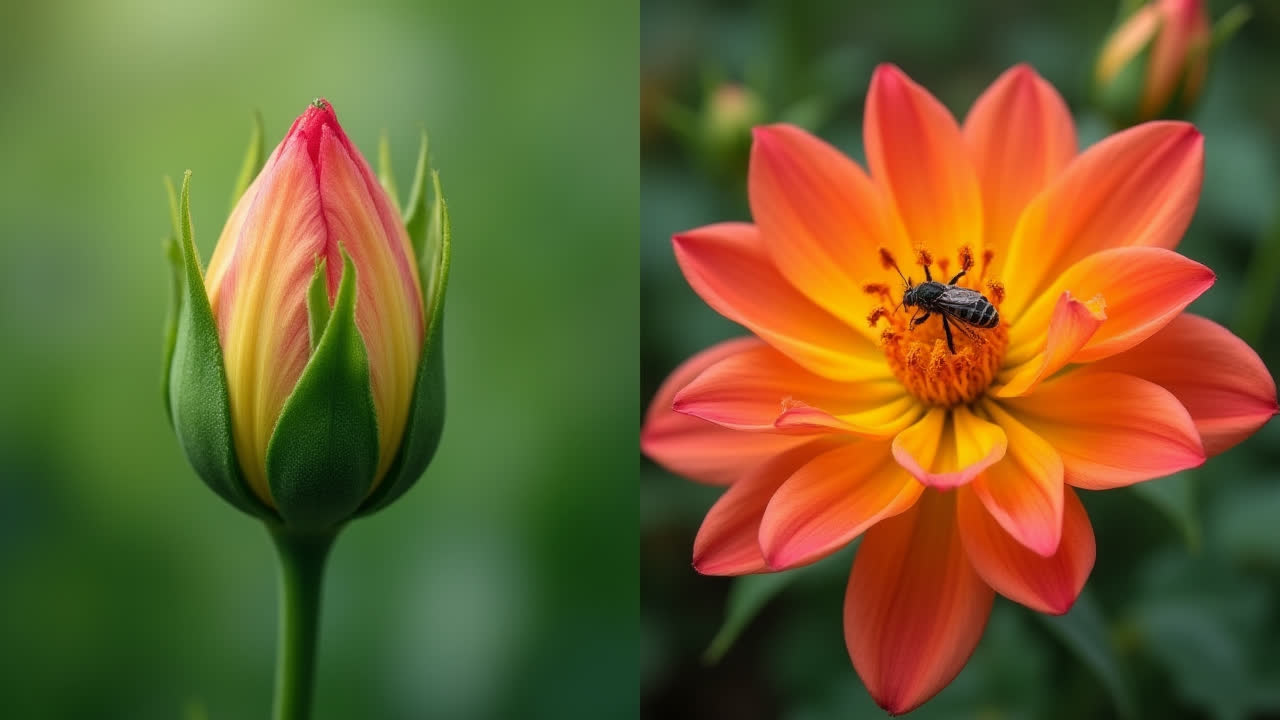
Sepals vs Petals: Understanding the Essential Flower Parts
When examining a flower, you'll notice several distinct parts, with sepals and petals being two of the most visible components. While they may seem similar at first glance, these floral structures serve remarkably different purposes. The difference between sepals and petals is fundamental to understanding how flowers function and reproduce. Let's explore these fascinating botanical features in detail.
What Are Sepals?
Sepals are the protective outer layer of a flower, appearing as green, leaf-like structures that form what botanists call the calyx. These often overlooked parts play a crucial role in a flower's development. During the bud stage, sepals act like nature's armor, shielding the delicate inner parts from harsh weather conditions, insects, and potential damage. I find it fascinating how something so simple can be so essential!
Interestingly, sepals can be either polysepalous (separate) or gamosepalous (fused together). In some flowers, sepals can even form a tube-like structure. Some plant species have evolved to create colorful sepals that mimic petals, creating an intriguing botanical phenomenon called tepals.
Understanding Petals
Petals are the showy, colorful parts of a flower that immediately catch our attention. These modified leaves form the corolla and come in virtually every color imaginable. Their primary mission? To attract pollinators! Whether it's bees, butterflies, birds, or even bats, petals have evolved to meet their target audience perfectly.
The structure of petals is quite sophisticated. They typically consist of two parts: the blade (the broad, visible portion) and the claw (the narrow base that attaches to the flower). This design isn't just aesthetic - it's functional, helping petals stand erect or curve in ways that suit their specific pollinators.
Detailed Comparison Table
| Feature | Sepals | Petals |
|---|---|---|
| Position in Flower | Outermost whorl | Inner whorl to sepals |
| Color | Usually green | Bright and varied colors |
| Structure | Leaf-like appearance | Petaloid (petal-like) |
| Collective Name | Calyx | Corolla |
| Primary Function | Protect flower bud | Attract pollinators |
| Secondary Function | Support petals | Protect reproductive parts |
| After Flowering | Often wither or persist | Typically fall off |
| Number in Flowers | Species dependent | Varies by plant type |
Understanding Flower Classification
Did you know that the number of sepals and petals can actually help botanists classify plants? This characteristic is called merosity. In eudicots (the largest group of flowering plants), you'll typically find flowers with four or five sepals and petals. Monocots, on the other hand, usually have three or six of each.
This numerical pattern isn't just random - it's tied to the plant's evolutionary history. I often think of it as nature's version of a barcode, helping us identify and understand the relationships between different plant families.
The Protective Journey
From bud to bloom, both sepals and petals play protective roles, though in different ways. Sepals are like the flower's initial bodyguards, providing complete coverage during the vulnerable bud stage. They shield against temperature fluctuations, rain, and hungry insects. Once the flower opens, petals take over some of this protective duty, though their primary focus shifts to attracting partners for pollination.
It's remarkable how these structures work in tandem. The sepals get the plant through its most vulnerable stage, and then the petals ensure its genetic legacy continues. It's like a perfectly choreographed botanical dance!
Evolutionary Adaptations
Over millions of years, sepals and petals have evolved some truly remarkable adaptations. Some flowers have developed colorful sepals to extend their pollinator-attracting surface area. Others have specialized petal shapes - from the trumpet-like petals of morning glories to the intricate structure of orchid petals.
These adaptations are responses to specific pollinator needs. For instance, night-blooming flowers often have pale or white petals to reflect moonlight, while flowers pollinated by bees might have UV-reflective patterns invisible to human eyes. It's a brilliant example of co-evolution in action.
Common Misconceptions
Many people confuse sepals with petals, especially when sepals are colorful. Here's a fun fact: in roses, what we often think of as petals might actually include some modified sepals! Similarly, in some tulips, sepals and petals look so similar that botanists refer to them collectively as tepals.
Another misconception is that all flowers have both sepals and petals. Actually, some flowers lack one or the other - we call flowers without petals apetalous and those without sepals asepalous. Nature really does love variety!
Practical Applications
Understanding the difference between sepals and petals isn't just academic knowledge. For gardeners, recognizing these parts can help identify plant problems. For example, if sepals start yellowing in a closed bud, it might indicate stress conditions. Petals showing unusual patterns might suggest viral infections.
In traditional medicine and perfumery, both sepals and petals have found uses. While petals are more commonly used due to their oils and fragrances, certain plant species utilize their sepals for medicinal purposes as well.
The Botanical Partnership
Sepals and petals represent a beautiful example of botanical partnership. While they may appear separately in most dichotomous keys and botanical descriptions, in reality, they work together seamlessly. The sepals lay the groundwork for successful flowering, while petals ensure the continuation of the species.
This partnership extends beyond just protection and attraction. In some species, sepals continue to play a role after flowering, protecting developing fruits or seeds. Meanwhile, petals might provide landing platforms for specific pollinators or create visual barriers to guide them to nectar.
Cultural and Symbolic Significance
Throughout human history, petals have held special cultural significance. We use them in ceremonies, create perfumes from them, and find inspiration in their beauty. Sepals, while less celebrated, have their own cultural roles - particularly in traditional medicine and spiritual practices in various cultures.
It's interesting how human perception has created this cultural divide between sepals and petals, when botanically, they're equally important for plant survival and reproduction.
Educational Importance
Teaching about sepals and petals provides an excellent introduction to plant biology. These structures are visible, accessible, and demonstrate key biological concepts like protection, reproduction, and adaptation. For students learning about flower structure, distinguishing between sepals and petals is often one of the first steps in understanding botanical complexity.
Personally, I find that once people understand the difference between these two structures, they develop a deeper appreciation for the sophistication of even the simplest flower.
Future Research and Applications
Current research in botany continues to uncover fascinating aspects of sepal and petal development. Scientists are studying how genetic mutations affect these structures, potentially leading to new flower varieties or understanding evolutionary pathways better.
Biomimicry research also looks at petal and sepal structures for inspiration in materials science and engineering. The protective properties of sepals, for instance, might inspire new protective coatings, while the light-manipulating properties of petals could influence optical technologies.