Shred vs Grate: Essential Differences for Perfect Food Preparation
Have you ever found yourself staring at a recipe that calls for shredded cheese and wondered if you could just grate it instead? You're not alone! The confusion between shredding and grating is common among both novice and experienced home cooks. While these techniques might seem interchangeable at first glance, understanding the crucial distinctions between them can significantly impact your cooking results.
I've been there – hastily substituting one method for another only to end up with a dish that didn't quite turn out as expected. The texture was off, the cooking time was wrong, or the ingredients just didn't blend properly. After years of kitchen experiments (and occasional disasters), I've come to appreciate that these seemingly small preparation details can make a world of difference in your final dish.
Understanding the Basics: What Is Shredding?
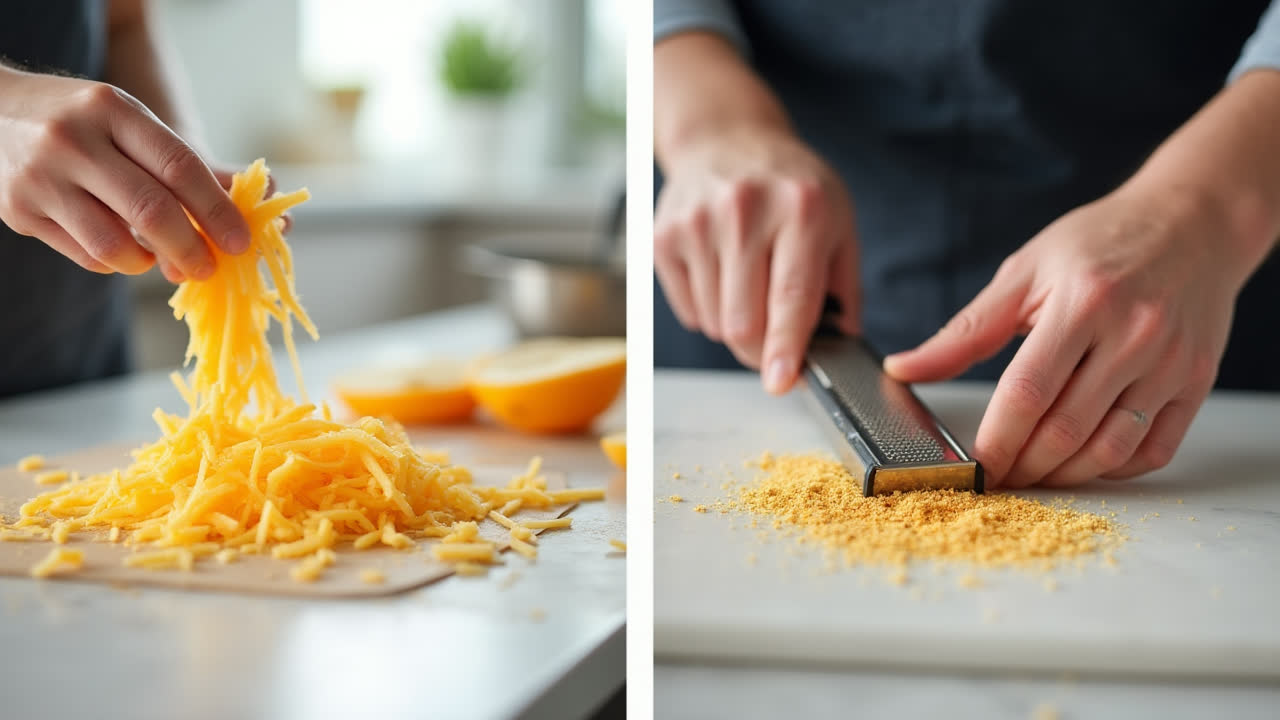
Shredding is a food preparation technique that involves cutting ingredients into thin, relatively long strips. When you shred food, you're creating pieces that have a certain uniformity in their shape – think of the classic strips of cheese that stretch beautifully on top of a pizza or the strands of cabbage in coleslaw. The process typically results in pieces that maintain some of the ingredient's structural integrity.
Most kitchens accomplish shredding using the larger holes on a box grater or hand grater. These holes are specifically designed to create longer fragments that retain some of the food's original structure. You can also use food processors with shredding attachments, which make quick work of larger quantities. For cheese and firmer vegetables like carrots, a simple technique of pushing the food along the larger holes of a grater from top to bottom will give you those perfect shreds.
The beauty of shredding lies in how it allows ingredients to maintain their individual presence in a dish. When you bite into a taco with shredded cheese, you get those satisfying strands that stretch and provide texture. Similarly, shredded carrots in a salad offer a pleasant bite and visual appeal. The longer strands also create air pockets in dishes like hash browns, resulting in that perfect crispy exterior and tender interior that we all love.
One important thing I've learned from experience: shredded ingredients cook more slowly than their grated counterparts. This is actually an advantage in many recipes where you want the ingredient to maintain its structure throughout the cooking process. For instance, shredded cheese on top of a casserole will melt gradually, creating that perfect golden crust without completely disappearing into the dish.
What Does Grating Mean in Cooking?
Grating, by contrast, is a technique that produces much smaller, often powder-like fragments of food. When you grate an ingredient, you're essentially breaking it down into tiny pieces that have a significantly increased surface area compared to shredded foods. The result is more uniform and fine, sometimes resembling a coarse powder rather than distinct pieces.
To achieve this fine texture, you'll want to use the smaller holes on your grater. These tiny openings create much smaller fragments as the food is pushed against them. The technique is particularly useful for ingredients like nutmeg, ginger, garlic, or hard cheeses when you want their flavors to distribute evenly throughout a dish without distinct pieces being noticeable.
I remember the first time I properly grated Parmesan over pasta instead of using the pre-shredded stuff – it was a revelation! The fine, snow-like particles melted instantly, creating a creamy, integrated sauce rather than distinct pieces of cheese. That's the magic of grating – it allows ingredients to blend more seamlessly into the overall dish.
The increased surface area of grated food also means it cooks or melts much faster than shredded alternatives. This quality makes grated cheese perfect for quick-melting applications like mixing into a roux for mac and cheese or sprinkling over hot pasta. Similarly, grated vegetables release their moisture more readily, which can be desirable in dishes like fritters or veggie-based batters.
Key Similarities Between Shredding and Grating
Despite their differences, shredding and grating share several commonalities that make them related techniques in the kitchen. Understanding these similarities helps clarify when either technique might be appropriate for your cooking needs.
Both techniques involve breaking down larger pieces of food into smaller ones, increasing their usability in various recipes. They're typically applied to similar types of ingredients – primarily firm vegetables like carrots, zucchini, and potatoes, as well as various cheeses. Both can also be used for other foods like chocolate, coconut, and certain fruits.
The equipment used for these techniques is often the same – a standard box grater typically has surfaces for both shredding and grating, with differently sized holes for each purpose. Many food processors come with attachments that can perform either function, simply by switching the blade or disc. This shared equipment sometimes contributes to the confusion between the two techniques.
Both methods increase the surface area of ingredients, which enhances their flavor distribution throughout a dish. Whether shredded or grated, these preparation methods allow ingredients to cook more quickly than they would in larger pieces, though grated food cooks even faster than shredded. They also both improve the visual appeal of many dishes, adding texture and dimension to salads, garnishes, and toppings.
Side-by-Side Comparison: Shred vs Grate
| Feature | Shredding | Grating |
|---|---|---|
| Resulting Size | Longer, thin strips | Small, often powder-like pieces |
| Grater Holes Used | Larger holes | Smaller holes |
| Cooking/Melting Time | Slower | Faster |
| Texture in Finished Dish | More distinct, visible pieces | More integrated, less noticeable |
| Best Uses | Toppings, texture components, garnishes | Quick-melting applications, flavor infusion |
| Ideal for Cheeses | Cheddar, mozzarella, Swiss | Parmesan, Romano, hard cheeses |
| Ideal for Vegetables | Cabbage, carrots for salads, potatoes for hash browns | Vegetables for fritters, quick-cooking applications |
| Visual Appearance | Strands, threads, visible pieces | Fine, often snow-like appearance |
When to Shred vs When to Grate
Knowing when to shred and when to grate can elevate your cooking from good to great. The choice between these techniques should be guided by your desired outcome in terms of texture, cooking time, and the role the ingredient plays in your dish. Let me share some practical guidelines based on my own kitchen experiences.
Choose shredding when you want the ingredient to maintain its identity in the final dish. This is perfect for foods that serve as toppings or mix-ins where texture is important. For instance, shredded cheese on tacos or pizza provides that satisfying stretch and bite that grated cheese simply can't deliver. Similarly, shredded vegetables in salads or slaws maintain their crunch and visual appeal better than their grated counterparts.
Shredding is also preferable when you're looking for ingredients that will cook more gradually. The larger pieces created by shredding release moisture more slowly and maintain their structure better during cooking. This is why shredded potatoes make superior hash browns compared to grated potatoes – they create that crispy exterior while maintaining some moisture within.
On the other hand, grating is the technique of choice when you want ingredients to blend seamlessly into a dish. When I make a quick pasta sauce and need Parmesan to melt instantly, I reach for the fine side of my grater. The tiny pieces created by grating dissolve almost immediately, distributing flavor evenly throughout. This makes grating ideal for hard cheeses, aromatic ingredients like garlic or ginger, and spices like nutmeg.
Grated ingredients also cook much faster due to their increased surface area, making them perfect for recipes with short cooking times. If you're making vegetable fritters, for example, grating will help ensure your vegetables cook through quickly enough to match the brief cooking time of the batter. This technique also works well when you want vegetables to release their moisture rapidly, such as in zucchini bread or carrot cake.
Tips for Perfect Shredding and Grating
Over the years, I've picked up several tricks that make these techniques easier and more effective. First, temperature matters enormously when shredding or grating cheese. For clean shreds, refrigerate cheese until firm but not hard. For grating hard cheeses like Parmesan, room temperature often works better as the cheese is less likely to crumble.
When shredding vegetables, consider their moisture content. For vegetables with high water content like zucchini, you might want to shred them onto a clean kitchen towel and give them a gentle squeeze before adding to your recipe. This prevents excess water from diluting your dish. For grating, applying gentle, consistent pressure typically yields better results than forcing the food against the grater.
Safety is paramount with both techniques. Always use the guard that comes with your box grater, or invest in a cut-resistant glove. I learned this lesson the hard way after a particularly nasty encounter between my knuckle and a grater! As you get down to the last bit of whatever you're shredding or grating, switch to a safer tool like a food processor, or accept that it's better to waste a small amount than risk injury.
Cleaning your grater immediately after use prevents food from drying and becoming difficult to remove. A brush specifically designed for cleaning graters can be a worthwhile investment, as it reaches into the small holes without risking your fingertips. For particularly stubborn residue, especially from cheese, try spraying the grater with cooking oil before use – this creates a slick surface that food is less likely to stick to.
Common Questions About Shredding and Grating
Can I use pre-shredded cheese if a recipe calls for grated cheese?
In most cases, you shouldn't substitute pre-shredded cheese when a recipe specifically calls for grated cheese. Pre-shredded cheese typically has anti-caking agents that can affect melting properties. More importantly, the size difference matters – grated cheese melts much faster and more evenly, which might be crucial for your recipe's success. If you only have pre-shredded cheese, you can pulse it in a food processor to create smaller pieces that more closely resemble grated cheese.
Which vegetables are better shredded vs grated?
Vegetables with firmer texture like cabbage, carrots, and potatoes typically work better shredded when you want them to maintain some structure in dishes like slaws, salads, or hash browns. More watery vegetables like zucchini are often better grated for baking applications (like zucchini bread) where you want them to practically disappear into the batter. Root vegetables can go either way – shred them for more texture in a dish, or grate them when you want quicker cooking and less noticeable pieces.
What's the best way to store shredded vs grated ingredients?
Both shredded and grated ingredients have increased surface area, which makes them more perishable than their whole counterparts. Store them in airtight containers in the refrigerator, but be aware of different shelf lives. Shredded items typically last a bit longer than grated ones because they have less exposed surface area. For example, shredded cheese might last 5-7 days while finely grated cheese should be used within 3-5 days. For vegetables, similar principles apply – grated vegetables release moisture faster and typically don't store as well as shredded ones. If you're not using them immediately, shredded vegetables can be patted dry and stored with a paper towel to absorb excess moisture.
Final Thoughts: Choosing the Right Technique
The difference between shredding and grating might seem subtle, but it can have a significant impact on your cooking results. Texture, cooking time, and flavor distribution are all affected by which method you choose. By understanding the unique characteristics of each technique, you can make more informed decisions in the kitchen and achieve better results in your recipes.
Remember that the best choice depends entirely on your specific dish and desired outcome. There's no universally "better" technique – just the right tool for the right job. Sometimes a recipe might even benefit from using both techniques on different ingredients! Don't be afraid to experiment and see which approach works best for your favorite dishes.
Whether you're shredding cheese for that perfect pizza topping or grating ginger for an aromatic curry, mastering these basic food preparation techniques will give you more control over your cooking and help you create dishes with the exact texture and flavor profile you're aiming for. Happy cooking!