Typology vs Taxonomy: Understanding the Key Differences Between Classification Systems
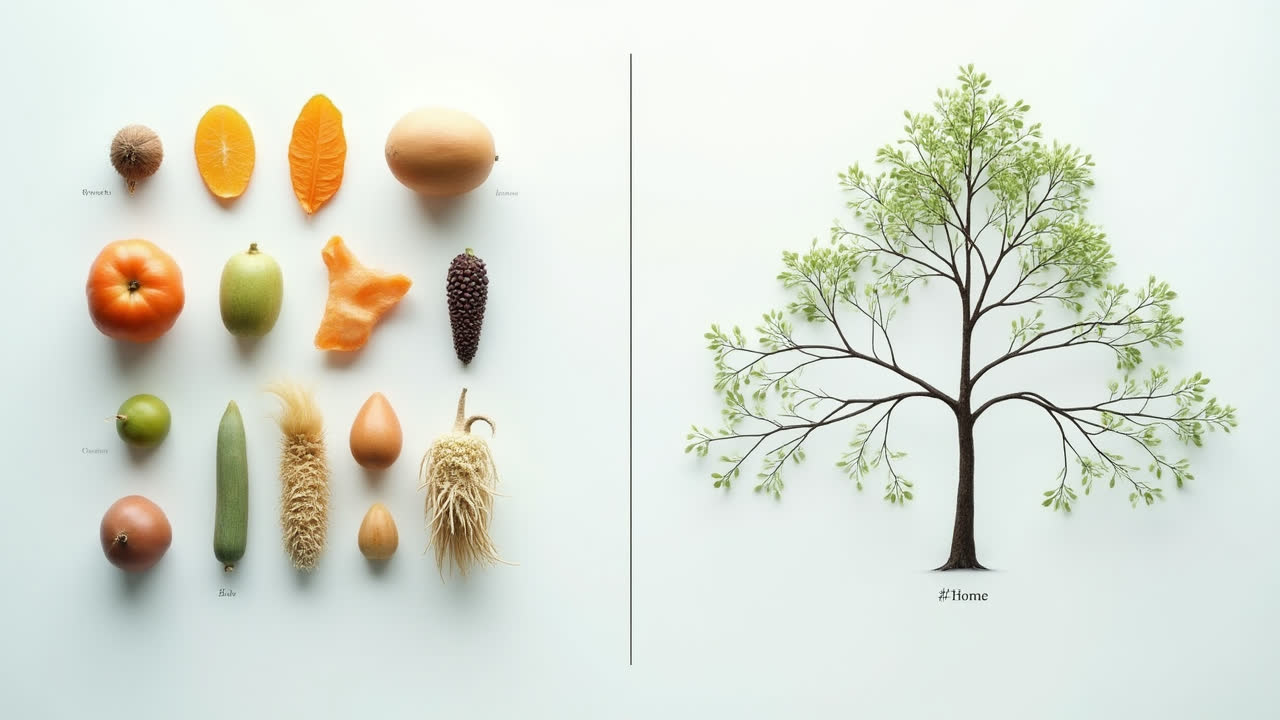
Have you ever wondered how scientists organize the complex world around us? From plants and animals to personality types and archaeological artifacts, classification systems help us make sense of our reality. The two most prominent approaches to categorization are typology and taxonomy, but many people confuse these similar-sounding concepts. Knowing the difference isn't just academic trivia—it can fundamentally change how you understand organized knowledge.
I've spent years studying different classification methods, and I'm still amazed at how these systems shape our understanding of everything from biology to psychology. In this comprehensive guide, we'll explore the fascinating world of organizational frameworks and reveal exactly how typology differs from taxonomy in both theory and practice.
What is Typology? Definition and Key Characteristics
Typology is a classification system that organizes items into groups based on their shared characteristics or traits. Unlike some other classification methods, typology is primarily conceptual in nature. It focuses on creating meaningful categories that help us understand relationships between different objects or concepts.
I remember when I first encountered typology in a psychology class—it was like someone had handed me a map to human behavior! Suddenly, complex personality differences made more sense when viewed through frameworks like the Myers-Briggs Type Indicator or the Big Five personality traits. These typological systems don't just describe differences; they provide insight into why those differences exist.
Typologies are particularly useful in fields where strict hierarchical classification might be too rigid. For example, in archaeology, artifacts might be classified by function, material, or time period without necessarily placing them in a strict evolutionary sequence. In sociology, social structures might be categorized by their characteristics rather than by assuming one evolved from another.
The beauty of typological classification lies in its flexibility. It allows researchers to create categories that are meaningful for specific research questions without requiring a complete classification of all possible variations. However, this same flexibility can sometimes lead to overlapping or inconsistent categories if not carefully constructed.
What is Taxonomy? Definition and Key Characteristics
Taxonomy, derived from the Greek words "taxis" (arrangement) and "nomos" (law), is a systematic classification of organisms based on shared characteristics and evolutionary relationships. Unlike typology, taxonomy is empirically developed and follows strict hierarchical structures. When I visited the Natural History Museum last year, I was struck by how the entire living world had been meticulously organized into kingdoms, phyla, classes, orders, families, genera, and species.
The most famous taxonomic system is undoubtedly the one developed by Carl Linnaeus in the 18th century, which revolutionized how we classify living organisms. This system gave us the binomial nomenclature we still use today—those Latin-sounding scientific names like Homo sapiens for humans or Canis familiaris for domestic dogs.
What makes taxonomy particularly powerful is its predictive capability. Because taxonomic classifications are based on evolutionary relationships, they can help scientists predict characteristics of newly discovered species based on their taxonomic placement. When researchers discovered a new frog species in the Amazon rainforest last month, they could immediately make educated guesses about its biology based on related species in its taxonomic family.
Modern taxonomy has evolved beyond simple morphological comparisons to include genetic analysis, biochemical data, and behavioral studies. This comprehensive approach has led to numerous reclassifications as our understanding of evolutionary relationships has improved. Did you know that pandas were once classified with raccoons rather than bears until genetic evidence proved otherwise?
The precision of taxonomy comes at a cost, however. It requires extensive data collection and analysis, making it more resource-intensive than typological classification. But for fields like biology where understanding evolutionary relationships is crucial, this investment pays dividends in scientific understanding.
Key Similarities Between Typology and Taxonomy
Despite their differences, typology and taxonomy share some important similarities that make them both valuable classification methods. Both systems attempt to bring order to complexity by identifying patterns and relationships among diverse elements. Whether categorizing personality types or biological species, both approaches help us navigate and understand our world more effectively.
Both classification methods also serve as communication tools within their respective disciplines. When a psychologist mentions an "INTJ personality type" or a biologist references "Felidae family," colleagues immediately understand the characteristics implied by these classifications. This shared language facilitates efficient information exchange and builds upon collective knowledge.
Another similarity I've noticed in my research is that both typology and taxonomy are iterative processes. As new information becomes available or new analytical techniques are developed, classifications may be revised or refined. Neither system claims to be the final word on categorization—both acknowledge that our understanding continues to evolve.
Finally, both classification systems ultimately aim to reveal underlying patterns and relationships that might not be immediately obvious. Whether grouping personalities by cognitive functions or organisms by genetic similarities, both approaches seek to uncover hidden order within apparent diversity. I've always found it fascinating how these systems can reveal connections we might otherwise miss in our complex world.
Comprehensive Comparison: Typology vs Taxonomy
To understand the nuanced differences between these classification systems, let's examine how typology and taxonomy compare across several important dimensions. The table below highlights the key differences that distinguish these approaches:
| Comparison Factor | Typology | Taxonomy |
|---|---|---|
| Development Approach | Conceptually developed configurations | Empirically developed configurations |
| Primary Fields of Application | Psychology, archaeology, linguistics, anthropology, sociology | Biology, botany, zoology, microbiology |
| Classification Structure | Non-hierarchical, often matrix-based | Strictly hierarchical (e.g., kingdom to species) |
| Basis for Classification | Shared characteristics, traits, or functions | Evolutionary relationships and shared ancestry |
| Naming Conventions | Varied by field, often descriptive | Standardized binomial nomenclature |
| Flexibility | More flexible, allows overlapping categories | More rigid, mutually exclusive categories |
| Historical Development | Developed independently in multiple fields | Systematic development beginning with Linnaeus |
| Primary Goal | Understanding relationships and functions | Establishing evolutionary relationships |
The differences outlined above help explain why certain fields gravitate toward one classification system over the other. For example, I've noticed that social sciences tend to prefer typological approaches because human behavior rarely fits into neat, mutually exclusive categories. Meanwhile, biological sciences rely heavily on taxonomic classifications because evolutionary relationships provide crucial context for understanding organisms.
Applications and Real-World Examples
The abstract differences between typology and taxonomy become clearer when we look at specific applications. In psychology, the Myers-Briggs Type Indicator uses a typological approach to classify personalities into 16 distinct types based on four dimensions of psychological preferences. This system doesn't attempt to place personalities in a hierarchical structure or suggest that one type evolved from another—it simply identifies patterns of psychological traits.
By contrast, biological taxonomy classifies the red fox as Vulpes vulpes, placing it within the genus Vulpes, family Canidae, order Carnivora, class Mammalia, phylum Chordata, and kingdom Animalia. Each level of this classification reflects evolutionary relationships, with organisms in the same group sharing a common ancestor. When I visited a natural history museum last summer, I was fascinated by how specimens were organized according to this hierarchical system—you could literally walk through evolutionary history!
In archaeology, typological classification might group pottery by shape, decoration, or function without necessarily implying an evolutionary sequence. I recall seeing an exhibit where ancient ceramic vessels were arranged by their use (storage, cooking, ritual) rather than chronologically, demonstrating a typological approach that emphasized function over historical development.
Meanwhile, in linguistics, typology classifies languages based on structural features like word order or morphological complexity. Languages with similar features may be grouped together even if they aren't historically related. A fascinating example is how Turkish and Japanese share similar grammatical structures despite having completely different origins—something a taxonomic approach based purely on language families would miss entirely.
These examples illustrate how the choice between typological and taxonomic classification depends largely on the questions researchers are trying to answer. Are they more interested in functional relationships or evolutionary connections? The answer often determines which classification system will be most useful.
When to Use Typology vs Taxonomy
Choosing between typology and taxonomy isn't about determining which system is superior—it's about selecting the right tool for your specific needs. In my experience working with different classification systems, I've found certain contexts where each approach shines.
Typology works particularly well when:
- You're dealing with complex phenomena that don't fit into strict hierarchical relationships
- Your primary goal is understanding functional relationships rather than evolutionary history
- You need flexibility to accommodate overlapping categories
- You're working in fields like psychology, sociology, or cultural anthropology
- You want to create a classification system that's intuitive and accessible to non-specialists
Taxonomy is often the better choice when:
- You're classifying biological organisms or other entities with clear evolutionary relationships
- You need a standardized, universally accepted classification system
- Your research requires precise naming conventions
- You want to make predictions based on evolutionary relationships
- You're working in fields like biology, botany, or zoology
Of course, these guidelines aren't absolute. Some research questions might benefit from both approaches used in combination. I worked with an interdisciplinary team last year that used taxonomic classification to establish evolutionary relationships among plant species, then applied typological thinking to understand their ecological functions across different environments. The complementary insights proved incredibly valuable for conservation planning.
Conclusion: Bringing Order to Complexity
Both typology and taxonomy represent human attempts to bring order to a complex world. While taxonomy classifies organisms empirically based on evolutionary relationships, typology creates conceptual classifications based on shared characteristics or functions. Each approach has its strengths and appropriate applications across different fields of study.
Understanding the difference between these classification systems isn't merely academic—it affects how we interpret categorized information in fields ranging from biology to psychology. Whether you're reading about personality types or biological species, recognizing the underlying classification approach will help you better understand the relationships being described.
In our increasingly complex and data-rich world, effective classification systems are more important than ever. Both typology and taxonomy will continue to evolve as our knowledge expands, helping us navigate complexity and discover new insights about our world and ourselves. Isn't it amazing how something as seemingly simple as how we organize information can profoundly shape our understanding of everything around us?
Frequently Asked Questions About Typology and Taxonomy
Can a field use both typology and taxonomy simultaneously?
Yes, many fields use both classification systems for different purposes. For example, in biology, while organisms are primarily classified using taxonomic hierarchies based on evolutionary relationships, researchers might also create typological classifications based on ecological roles or physiological adaptations. These complementary approaches provide different insights into the same organisms. Similarly, in archaeology, artifacts might be classified taxonomically to show historical development while also being organized typologically by function or material. The key is recognizing which system is being used and what kinds of relationships it reveals.
How has modern genetic research affected traditional taxonomy?
Genetic research has revolutionized taxonomy by providing molecular evidence of evolutionary relationships that sometimes contradicts classifications based on physical characteristics alone. This has led to numerous reclassifications across the tree of life. For instance, whales were reclassified as being more closely related to hippos than to other marine mammals based on genetic evidence. The field of taxonomy now incorporates multiple lines of evidence, including genetic sequences, morphological characteristics, and behavioral traits. This integrated approach, sometimes called integrative taxonomy, provides a more accurate picture of evolutionary relationships but also creates challenges as researchers work to reconcile conflicting evidence from different sources.
Are there any new approaches to classification emerging beyond traditional typology and taxonomy?
Yes, several innovative approaches to classification have emerged in recent years. Network-based classification systems use complex algorithms to identify relationships between entities without forcing them into rigid hierarchical structures. Machine learning approaches can discover patterns and relationships that might not be obvious to human researchers. In biodiversity research, DNA barcoding enables rapid identification of species based on short genetic sequences. The field of bioinformatics has developed numerous computational tools for classifying and organizing biological information at scales and complexities that would be impossible through traditional methods. These emerging approaches don't necessarily replace typology and taxonomy but often build upon them while addressing some of their limitations.