When vs While: Complete Guide to Using These Conjunctions Correctly
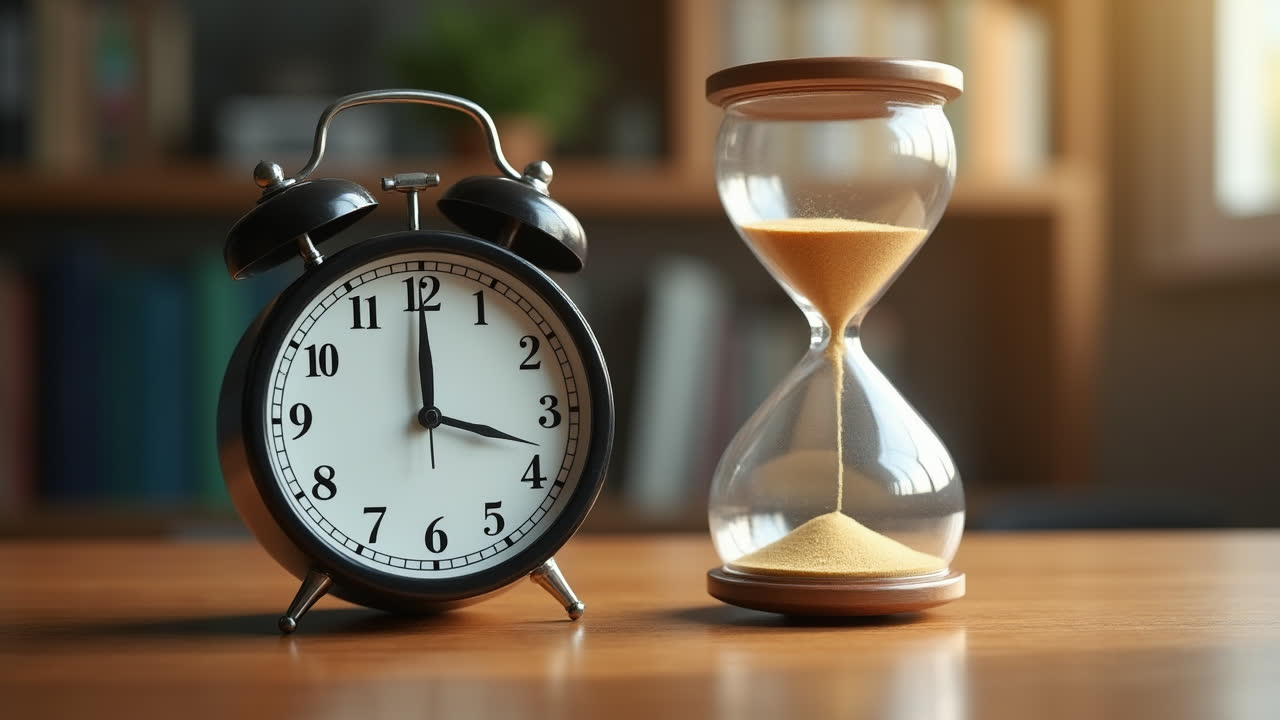
Have you ever found yourself pausing mid-sentence, uncertain whether to use when or while in your writing? You're definitely not alone! These two seemingly similar conjunctions trip up even experienced English speakers, causing countless grammar headaches and second-guessing. While they might appear interchangeable at first glance, understanding the subtle distinctions between them can dramatically improve your writing clarity and precision.
As an English teacher, I've witnessed countless students struggle with this exact issue. Just last week, one of my advanced learners confidently declared that "when" and "while" were perfect synonyms—and was shocked to discover the nuanced differences that actually exist between them. The good news? Once you grasp the core principles governing these conjunctions, you'll never mix them up again.
In this comprehensive guide, we'll explore the distinct uses of when and while, provide practical examples that clarify their differences, and offer easy-to-remember tips that will help you choose the right one every time. Let's untangle this common grammar confusion once and for all!
The Main Difference Between When and While
At their core, both "when" and "while" are conjunctions that connect two actions or situations occurring at the same time. They're frequently used with past continuous tense to describe background events or ongoing actions. But don't be fooled by their surface similarities! The fundamental difference lies in how they relate to time and duration.
The most significant distinction is that when can be used to talk about ages and periods of life, whereas while cannot serve this purpose. For example, you might say, "When I was a teenager, I loved skateboarding," but using "while" in the same context would sound awkward to native speakers.
Another key difference involves how these conjunctions handle events. "When" typically introduces a specific moment or a completed action, often marking a point where something changes. In contrast, "while" usually describes two parallel actions happening simultaneously over a period. Isn't it fascinating how such small words can carry such different meanings?
Consider this practical difference: if you're describing two long activities happening simultaneously, "while" is generally more appropriate. But if you're indicating a brief moment or specific point in time, "when" is typically your better choice. These distinctions might seem subtle at first, but they're crucial for achieving clarity in your communication.
Understanding "When" - Meaning and Usage
As a conjunction, "when" primarily means "at the time that" and serves multiple grammatical purposes. One of the most common uses of "when" is to connect two actions that happened simultaneously or an action that immediately follows another. For instance, in the sentence "The lights went out when the storm hit," the two events occur at virtually the same moment.
"When" also excels at introducing a single completed event that takes place during a longer activity. Think about this example: "She was walking through the park when she found a rare coin." Here, finding the coin is a brief moment that happens during the longer action of walking. I remember using this principle while teaching English abroad—students would often have an "aha!" moment once they visualized these timelines.
One of the most distinctive uses of "when" is talking about ages and periods in life. We can freely use it to discuss past, present, and future life stages. For example:
- "When I was in college, I studied abroad twice." (past)
- "When I'm older, I want to travel the world." (future)
- "When she's focused, she produces amazing work." (present/habitual)
An interesting quirk of English grammar appears when we use "when" to talk about the future. Despite referring to future events, we typically use simple present or present perfect tense—not future tenses. For example, we say "Call me when you arrive" (not "when you will arrive") and "When he finishes the project, we'll celebrate" (not "when he will finish"). This rule often confuses language learners but follows the logical structure of time clauses in English.
Examples of "When" in Action:
- "I always feel nostalgic when I hear that song."
- "When the phone rang, the baby woke up."
- "She was 25 when she started her own business."
- "When you complete all the exercises, you can take a break."
Understanding "While" - Meaning and Usage
"While" is a conjunction that specifically emphasizes simultaneity—actions happening at the same time. Unlike "when," which can indicate a specific moment, "while" typically suggests an ongoing duration. This makes it particularly useful for describing two long activities or events occurring in parallel. Wouldn't you agree that timing is everything in language?
The classic usage of "while" involves pairing two continuous actions. For example, "The children played board games while their parents prepared dinner." Both activities are happening simultaneously over an extended period. This characteristic makes "while" especially suitable for setting a background scene against which other actions take place.
Beyond temporal relationships, "while" has another distinct function: indicating contrast between two ideas. When you say, "John prefers fiction while his sister loves non-fiction," you're not necessarily talking about timing but highlighting a contrast between preferences. This versatility adds another layer to "while" that "when" doesn't possess.
"While" works perfectly in present, past, and future contexts when discussing simultaneous actions. For instance:
- "While I work, I listen to classical music." (present)
- "She read a book while waiting for her flight." (past)
- "I'll water the plants while you clean the kitchen." (future)
I've noticed that many of my students find it helpful to think of "while" as creating a time frame or window during which another action occurs. This mental picture often clarifies when to choose "while" over "when." During my years teaching English, I've developed a simple visual: "while" forms a timeline with two parallel tracks, whereas "when" often marks a specific point where these tracks intersect.
Examples of "While" in Action:
- "He likes to listen to podcasts while driving to work."
- "The audience remained silent while the musician performed."
- "While some people enjoy winter sports, others prefer summer activities."
- "Try not to use your phone while attending the meeting."
When vs While: Comprehensive Comparison
Now that we've explored both conjunctions individually, let's put them side by side to highlight their differences and similarities. This comparison will help crystallize your understanding and make it easier to choose the right conjunction in your everyday communication. After all, mastering these distinctions is what separates good English from great English!
| Feature | When | While |
|---|---|---|
| Grammatical Function | Can be used as an interrogative adjective, relative adverb, and conjunction | Used primarily as a conjunction and occasionally as a noun |
| Timing Relation | Often indicates a specific moment or point in time | Typically suggests an ongoing duration or period |
| Action Length | Better for brief actions or specific moments | Preferable for extended actions happening simultaneously |
| Life Periods Usage | Can be used to discuss ages and life periods | Not typically used for ages and life periods |
| Contrast Function | Does not typically indicate contrast | Can be used to show contrast between ideas |
| Future Tense Usage | Uses simple present or present perfect for future events | Also uses simple present or present perfect for future events |
| Interchangeability | Sometimes interchangeable with "while" for simultaneous actions | Sometimes interchangeable with "when" for simultaneous actions |
| Common Collocations | "When I was young," "when it happens," "when the time comes" | "While watching TV," "while studying," "while on vacation" |
This comparison highlights why choosing between "when" and "while" matters. The right conjunction not only improves grammatical accuracy but also conveys your intended meaning more precisely. In some contexts, they might be interchangeable, but in others, using the wrong one could change the meaning of your sentence entirely or make it sound unnatural to native speakers.
Common Mistakes and How to Avoid Them
Even advanced English speakers sometimes stumble when choosing between "when" and "while." Let's explore some of the most common mistakes and provide practical strategies to avoid them. Through my years of teaching, I've collected these recurring errors that you might recognize in your own writing or speech.
One frequent error involves using "while" to talk about life periods. For example, saying "While I was a child, I lived in Chicago" sounds slightly off to native speakers. The correct version would be "When I was a child, I lived in Chicago." Remember that life stages and ages call for "when," not "while."
Another common mistake is using "when" for extended parallel actions. If you say "I listened to music when I was cleaning the house," it suggests that the music listening might have been brief or happened at a specific point during cleaning. If both activities continued simultaneously, "while" would be more appropriate: "I listened to music while I was cleaning the house."
Many English learners also struggle with the contrast function of "while." They might incorrectly use "when" to indicate contrast, saying something like "When Tom likes action movies, Mary prefers comedies." The correct conjunction here would be "while" to show the contrast: "While Tom likes action movies, Mary prefers comedies."
Pro Tip: If you're describing two activities that happen over an extended period simultaneously, "while" is usually your best choice. If you're referencing a specific moment or brief action, "when" typically works better.
I've found that visualizing a timeline can help tremendously. Draw a horizontal line representing time, then:
- For "while" situations, draw two parallel activities spanning a segment of the timeline
- For "when" situations, mark a specific point on the timeline or a brief activity
This visual technique has helped countless students grasp these distinctions more intuitively. Isn't it amazing how a simple drawing can clarify such a nuanced grammar point?
Practical Examples in Different Contexts
Let's see how "when" and "while" function in various real-world contexts. These practical examples will cement your understanding and give you templates you can adapt for your own communication needs. I've grouped these by context to make them more relevant to everyday situations.
In Professional Settings
- "Please notify the IT department when you encounter system errors." (specific moment)
- "While attending the conference, I made several valuable business connections." (extended period)
- "The company expanded rapidly when Johnson was CEO." (life period/role)
- "Many employees catch up on emails while commuting to work." (parallel activities)
In Academic Contexts
- "When the professor asked the question, nobody raised their hand." (specific moment)
- "Students often retain more information while taking handwritten notes." (ongoing activity)
- "When I was in graduate school, I specialized in cognitive psychology." (life period)
- "While some theories emphasize nature, others focus on nurture." (contrast)
In Everyday Conversation
- "Call me when you get home safely." (specific future moment)
- "We saw a shooting star while camping in the mountains." (during the activity of camping)
- "When I was your age, smartphones didn't exist." (life period)
- "I prefer to listen to audiobooks while exercising." (parallel activities)
Through these examples, you can see how the choice between "when" and "while" subtly shapes the meaning of each sentence. I've found that students who practice identifying the appropriate conjunction in varied contexts develop a more intuitive feel for making the right choice in their own communication.
Remember: Context matters tremendously when choosing between "when" and "while." Always consider whether you're referring to a specific moment, a life period, parallel activities, or a contrast.
Frequently Asked Questions
Can "when" and "while" ever be completely interchangeable?
Yes, in some contexts involving simultaneous actions, "when" and "while" can be interchangeable without significantly changing the meaning. For example, both "I was reading when she called" and "I was reading while she called" are grammatically correct, though they create slightly different impressions about the timing. The first suggests the call interrupted the reading (a specific moment), while the second might suggest the reading continued during the call (parallel activities). Native speakers often choose based on the subtle timing relationship they want to emphasize rather than strict grammatical rules.
How do "when" and "while" behave differently in conditional sentences?
"When" can be used in conditional sentences to indicate time-based conditions, suggesting certainty that the event will occur: "When you finish your homework, we'll go to the movies." This differs from "if," which suggests uncertainty. "While," on the other hand, is rarely used for pure conditions. Instead, it appears in conditional-like contexts to express contrast or ongoing circumstances: "While I understand your concern, I cannot make an exception." In conditional sentences, "when" indicates "at the time that" something happens, whereas "while" typically maintains its meaning of "during the time that" or introduces a contrasting element.
Are there any dialects or regional variations in how "when" and "while" are used?
Yes, there are some interesting regional variations. In some Southern American dialects, "while" is occasionally used to mean "until" ("Wait while I get back"), which differs from standard usage. In certain British dialects, particularly Northern English and Scottish varieties, "while" can mean "until" or even "as long as." Some dialects also show a preference for one conjunction over the other in borderline cases where both could work. For example, British English sometimes favors "whilst" (a formal variant of "while") in contexts where American English might prefer "when." These regional differences add richness to the language but generally don't affect the core grammatical distinctions between the two conjunctions.
Conclusion
Mastering the distinction between "when" and "while" might seem like a small detail, but it's these nuances that elevate your English from good to exceptional. We've explored how "when" typically indicates specific moments or life periods, while "while" emphasizes parallel activities or contrasts. These conjunctions, though sometimes interchangeable, each bring their own flavor and precision to your communication.
Remember that language is ultimately about clear communication. Choosing the right conjunction helps ensure your meaning comes across exactly as intended. The next time you find yourself hesitating between "when" and "while," recall the examples and guidelines we've discussed. With practice, your selection will become more intuitive and confident.
Have you noticed any patterns in your own use of these conjunctions? Perhaps you tend to default to one over the other? Understanding your habits is the first step toward more precise language use. I'd encourage you to pay attention to how native speakers deploy these conjunctions in different contexts—there's no better teacher than attentive observation.
Grammar rules aren't just arbitrary restrictions but tools that help us communicate our thoughts with clarity and nuance. By mastering the subtle differences between "when" and "while," you've added another valuable tool to your English language toolkit.