WiFi vs LiFi: Which Wireless Technology Is Better?
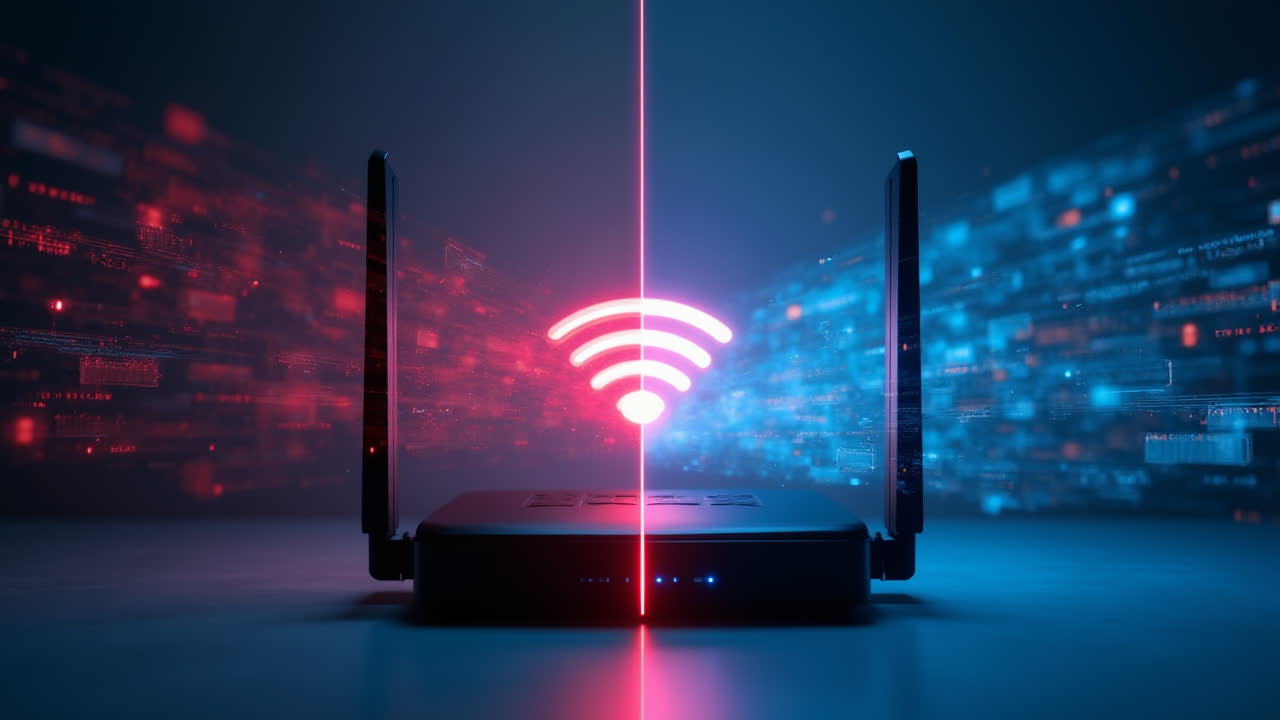
WiFi vs LiFi: The Future of Wireless Technology
In our increasingly connected world, wireless technology plays a crucial role in how we access information and communicate. While WiFi has dominated the wireless communication landscape for years, a groundbreaking alternative called LiFi has emerged as a potential game-changer. Have you ever wondered if there's a faster and more secure way to connect to the internet than traditional WiFi? The answer might surprise you.
I remember when WiFi first became widespread in cafes and hotels – it felt revolutionary to connect without cables. Now, we might be on the verge of another wireless revolution with light-based technology. This article explores the key differences between WiFi and LiFi, comparing their speeds, applications, and technological foundations to help you understand which might better serve your connectivity needs in the future.
Understanding WiFi Technology
WiFi, short for Wireless Fidelity, has become an essential part of our daily lives. It's the technology that allows us to browse the internet, stream videos, and connect with others without the need for physical cables. I've set up countless WiFi networks over the years, and it's amazing how this technology has evolved to become faster and more reliable.
At its core, WiFi uses radio frequency waves to transmit data between devices. The technology operates within specific frequency bands, typically 2.4GHz and 5GHz. When you connect to a WiFi network, your device communicates with a wireless router or access point that serves as the central hub for your connection. This router is connected to the internet via an Ethernet cable and acts as a bridge between your device and the online world.
The process of data transmission in WiFi is fascinating. Your device's wireless adapter converts data into radio signals during transmission. These signals are then decoded by the router. The same process happens in reverse when data travels from the internet to your device – the router encodes the information into radio signals that your device's adapter can understand and process.
WiFi has become ubiquitous in modern society. You'll find it in homes, offices, libraries, airports, coffee shops, and countless other locations. These areas with WiFi availability are commonly known as "hotspots." Most modern laptops and smartphones come with built-in wireless adapters, making it incredibly convenient to connect to these networks.
Despite its widespread adoption, WiFi does have some limitations. Radio waves can be affected by physical barriers like walls and floors, which can reduce signal strength. Additionally, in densely populated areas with many WiFi networks, interference can become an issue, leading to slower speeds and less reliable connections. And let's be honest – we've all experienced the frustration of a WiFi connection dropping at the worst possible moment!
Introducing LiFi Technology
Imagine using the same light that illuminates your room to connect to the internet. That's essentially what LiFi technology offers – a revolutionary approach to wireless communication that utilizes LED light bulbs to transmit data. I first heard about this concept a few years ago and was skeptical, but the advancements in the field have been truly impressive.
LiFi, which stands for Light Fidelity, transforms ordinary LED bulbs into data transmitters with just the addition of a small microchip. These enhanced bulbs serve a dual purpose – they continue to light up spaces while simultaneously transmitting data at remarkable speeds. The technology works by modulating the intensity of the light at speeds too rapid for the human eye to detect, effectively creating a binary code of 1s and 0s that can carry information.
What makes LiFi particularly exciting is its incredible speed potential. Recent tests have demonstrated that LiFi can achieve data transfer rates of up to 1 Gbps – approximately 100 times faster than typical WiFi connections. This dramatic increase in speed is made possible by the use of visible light, which has a much broader bandwidth than the radio frequency spectrum used by WiFi.
Another significant advantage of LiFi is its enhanced security. Unlike radio waves that can pass through walls, light cannot penetrate solid objects. This natural limitation actually becomes a security benefit, as it means the LiFi signal is confined to the physical space where the light is present. If you're in a room with a LiFi-enabled light and the door is closed, the signal cannot be intercepted from outside – providing an inherent layer of protection against potential eavesdropping.
LiFi also opens up possibilities in environments where radio frequency communications are problematic or restricted. For instance, it can be safely used in aircraft, hospitals, or underwater environments where traditional radio-based communications might face limitations or safety concerns. The technology shows particular promise for the Internet of Things (IoT), as the ubiquity of light fixtures could potentially provide connectivity for countless smart devices throughout homes and businesses.
Key Differences Between WiFi and LiFi
When comparing WiFi and LiFi, several crucial distinctions become apparent. These differences not only highlight their technical disparities but also indicate the scenarios where each technology might excel. From my experience working with network technologies, I've found that understanding these differences is essential for making informed decisions about connectivity solutions.
| Feature | WiFi | LiFi |
|---|---|---|
| Full Name | Wireless Fidelity | Light Fidelity |
| Technology Used | Radio waves | Visible light from LED bulbs |
| Data Transfer Speed | Up to 150 Mbps (WLAN-11n) | Up to 1 Gbps (potentially higher) |
| Frequency Range | 2.4GHz, 4.9GHz, and 5GHz | 400-800 terahertz (visible light spectrum) |
| Coverage Range | Approximately 32 meters (varies with equipment) | About 10 meters |
| Security | Can penetrate walls, requiring encryption | Cannot pass through walls, naturally more secure |
| Interference | Subject to radio interference | Minimal interference issues |
| Components | Router and subscriber device | LED bulb, photodetector, and lamp driver |
Beyond these technical specifications, there are practical considerations that affect how and where each technology might be deployed. For instance, WiFi's ability to penetrate walls makes it ideal for providing coverage throughout homes and offices from a single access point. However, this same characteristic creates potential security vulnerabilities that must be addressed through encryption and other security measures.
In contrast, LiFi's inability to pass through solid objects means that a separate light source would be needed in each room to maintain connectivity. While this might seem like a limitation, it actually creates naturally segmented networks that provide enhanced security for sensitive information. I've spoken with cybersecurity experts who are particularly interested in this aspect of LiFi for high-security environments.
Practical Applications and Future Prospects
Both WiFi and LiFi have unique strengths that make them suitable for different applications. Understanding where each technology shines can help us envision how they might coexist in our future connectivity landscape. From my perspective, we're likely heading toward a hybrid approach rather than a complete replacement of one technology with the other.
WiFi continues to excel in providing broad coverage across homes, offices, and public spaces. Its ability to penetrate walls and cover relatively large areas from a single access point makes it cost-effective for general internet access. Additionally, the vast ecosystem of WiFi-compatible devices means it will remain relevant for the foreseeable future. Even as I write this article, I'm connected to my home WiFi network, which seamlessly connects multiple devices throughout my apartment.
LiFi, on the other hand, shows particular promise in specialized environments where WiFi faces limitations. In hospitals, where radio frequency interference with medical equipment is a concern, LiFi could provide safe connectivity. On aircraft, where radio signals can potentially interfere with navigation systems, LiFi could offer passengers high-speed internet without safety concerns. The technology also holds significant potential for underwater applications, as light can penetrate water more effectively than radio waves.
Looking ahead, smart cities might leverage both technologies in complementary ways. Street lights equipped with LiFi could provide connectivity in outdoor public spaces, while WiFi continues to serve indoor environments. In industrial settings, LiFi could offer precise location-based services and connectivity in radio-frequency-sensitive environments. The Internet of Things (IoT) landscape might particularly benefit from LiFi's potential to connect thousands of devices in close proximity without the bandwidth limitations of WiFi.
While LiFi technology is still in its relative infancy compared to the mature WiFi ecosystem, major technology companies are investing in its development. As LED lighting becomes increasingly common in homes and workplaces, the infrastructure for potential LiFi deployment is inadvertently being established. I recently visited a tech demonstration where a standard-looking LED bulb was providing both illumination and high-speed internet – the experience was quite remarkable and felt like a glimpse into the future.
Frequently Asked Questions About WiFi and LiFi
Can LiFi completely replace WiFi in the near future?
While LiFi offers impressive advantages in terms of speed and security, it's unlikely to completely replace WiFi in the near future. The technologies have complementary strengths and limitations. LiFi requires line-of-sight and cannot penetrate walls, making it less practical for whole-home coverage from a single source. Additionally, the massive existing infrastructure of WiFi-compatible devices would make a complete transition challenging. However, we may see hybrid approaches where both technologies are used in different contexts – LiFi in security-sensitive or interference-prone environments, and WiFi for general connectivity where convenience and range are priorities.
How does LiFi work when the lights are turned off?
This is a common question about LiFi implementation. For LiFi to function, the LED lights must be on, but they don't necessarily need to be visibly bright. The LED can be dimmed to a level where they appear off to the human eye but still emit enough light for data transmission. Some advanced LiFi systems also use infrared light rather than visible light, allowing data transmission even when visible lights are turned off. However, this remains one of the practical challenges for LiFi adoption in residential settings where lights are frequently switched off. Potential solutions include dedicated LiFi transmitters that operate independently of room lighting or hybrid systems that default to WiFi when LiFi is unavailable.
What equipment would I need to start using LiFi at home?
Currently, LiFi remains primarily in the development and specialized commercial application stage rather than being widely available for consumer use. To implement LiFi at home, you would need specialized LED light bulbs with LiFi capabilities, photodetectors (receivers) for your devices, and appropriate driver software. Most consumer devices don't yet have built-in LiFi receivers, so you would typically need USB dongles or other adapters for your computers, phones, or tablets. As the technology advances and becomes more mainstream, we may see devices with integrated LiFi capabilities and more plug-and-play solutions for home use. For now, WiFi remains the more practical and accessible option for home connectivity, though this could change as LiFi technology matures and becomes more commercially available.
Conclusion: The Coexistence of WiFi and LiFi
As we've explored the differences between WiFi and LiFi technologies, it becomes clear that each has distinct advantages and limitations. Rather than viewing them as competitors, it's more productive to consider how they might complement each other in our increasingly connected world. I've seen this pattern repeat throughout tech history – new technologies often augment rather than entirely replace their predecessors.
WiFi's established infrastructure, broad device compatibility, and ability to provide coverage through physical barriers ensure its continued relevance for general connectivity needs. Meanwhile, LiFi's superior speed, reduced interference, and enhanced security make it ideal for specialized applications and environments where these characteristics are paramount.
The future of wireless connectivity likely involves a hybrid approach that leverages the strengths of both technologies. In environments requiring ultra-fast, secure connections within defined spaces – such as financial institutions, military facilities, or data centers – LiFi could become the standard. For everyday use across homes and public spaces, WiFi might continue to serve as the primary connectivity method, perhaps with LiFi supplementing it in specific contexts.
As LED lighting becomes increasingly ubiquitous and the technology for LiFi continues to develop and become more affordable, we may find ourselves naturally transitioning toward a world where light provides both illumination and connectivity. The potential for LiFi to alleviate the increasingly crowded radio frequency spectrum while offering dramatically faster data rates represents an exciting frontier in wireless communication.
Whether you're streaming your favorite show, conducting sensitive business operations, or simply browsing the web, the evolution of wireless technology continues to expand the possibilities for how we connect and communicate. By understanding the unique capabilities of technologies like WiFi and LiFi, we can better appreciate the innovation that powers our digital lives and anticipate the connected experiences of tomorrow.